THE CLASSIC COLLECTION✦Heu-Heu, or The monsterCLASSIC FREE BOOKS
Heu-Heu, or The monster
H. Rider (Henry Rider) Haggard
THE CLASSIC COLLECTION · 1911
"Red Eve" by H. Rider Haggard is a historical novel published in the early 20th century, around the 1910s. Set against the backdrop of medieval England, the story revolves around two main characters—Cousin Eve Clavering, a strong-willed young woman caught in complex familial and romantic rivalries, and Hugh de Cressi, a humble merchant's son with noble lineage. The novel explores themes of love, honor, and the clash of social statuses within the setting of impending conflict. The opening of "Red Eve" presents a rich tapestry of narrative that alternates between a grim procession in an Eastern land, led by a mysterious figure referred to as Murgh, and a poignant meeting between Eve and Hugh amidst the frozen marshes of Suffolk in February 1346. As the two young lovers navigate the treacherous social landscape shaped by their families' historic feud, they confront not only their feelings for each other but also the looming threat posed by Eve's newly betrothed, a French lord. The intricacies of their societal roles, the burdens of family legacy, and the tensions of an approaching war set the stage for an epic tale that blends passion with danger.
Introduction adapted from the source catalogue; source summaries may be automatically generated.
Free to read · English · 100,270 words · No account needed
MAKE TIME FOR A GOOD BOOK
On by default. Untick to stop anonymous reading totals. Each page counts after 10 seconds in view. How this works.
Anonymous counting is on unless you have switched it off.
“Most Illustrious,” said Ambrosio, in bad, guttural Italian, “my mother
was a Swiss.”
“Then congratulations to the Swiss, Ambrosio, but what of it?”
“Very Illustrious,” replied the captain in his hollow voice, “the Swiss are brave and do not swallow insults. That lad whom the Englishman kicked, or smote, or tossed like a bull,” and he pointed to the poor page, who, still senseless, was being carried from the hall, “is my youngest brother, who resembles our Venetian father somewhat more than I do.”
“We see it, we see it. Indeed are you sure that the father was----” and the Doge checked himself. “The point, captain; we would dine.”
“Illustrious, I would avenge my brother and myself on the Englishman, whom I will beat to a jelly,” said the giant. “I crave leave to fight him to-morrow when the lord Cattrina fights his master,” and advancing toward Grey Dick he made as though he would pull his nose.
“What is it he wants?” asked Grey Dick, staring up at the great fellow with a look in his eyes that caused Ambrosio to cease flourishing his fists.
The challenge was translated to him, and its reason. “Oh,” said Dick, “tell him I am much obliged and that I will fight him with the bow or with the axe and dagger, or with all three. Then we will see whether he beats me to a jelly, or whether I cut him into collops, who, as I think, needs shortening.”
Now the Captain Ambrosio consulted with his friends, who with much earnestness prayed him have nothing to do with arrows. They pointed out that there his bulk would put him at a disadvantage, especially in dealing with an English archer who had an eye like a snake and a face like that of death itself.
In short, one and all they recommended the battle-axe and the dagger as his most appropriate weapons--since his adversary refused swords. The battle-axe with which to knock him down, as he could easily do, being so strong, and the dagger with which to finish him.
When this was explained to Grey Dick he assented to the proposal with a kind of unholy joy that was almost alarming to those who saw it. Moreover, as neither of them had gauntlets to throw down or pick up, he stretched out his hand to seal the bargain, which, incautiously enough, the huge, half-breed Swiss accepted.
Dick’s grasp, indeed, was so firm and long that presently the giant was observed first to move uneasily, secondly to begin to dance and thirdly to shout out with pain.
“What is the matter?” asked his friends.
Your reading position is saved on this browser. Take it to another device with a library code. Reading pages adapt to text, rather than matching a printed edition.
H. Rider (Henry Rider) Haggard
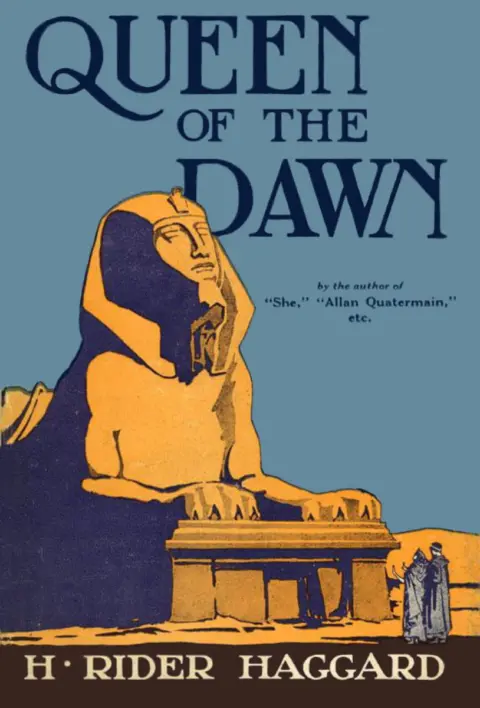
H. Rider (Henry Rider) Haggard
H. Rider (Henry Rider) Haggard
H. Rider (Henry Rider) Haggard
BEHIND THE BOOK
This eBook is for the use of anyone anywhere in the United States and most other parts of the world at no cost and with almost no restrictions whatsoever. You may copy it, give it away or re-use it under the terms of the Project Gutenberg License included with this eBook or online at www.gutenberg.org. If you are not located in the United States, you will have to check the laws of the country where you are located before using this eBook. Read the source licence.
The original source file, including credits and licence, is retained by this library. Request an original-format copy at no charge. Please include the book title and Project Gutenberg identifier #3094.
KEEP YOUR CURIOSITY GOING
Cécile Tormay

Moritz Busch
Coulson Kernahan
John L. Ransom

Maurice Baring
Frances Wright