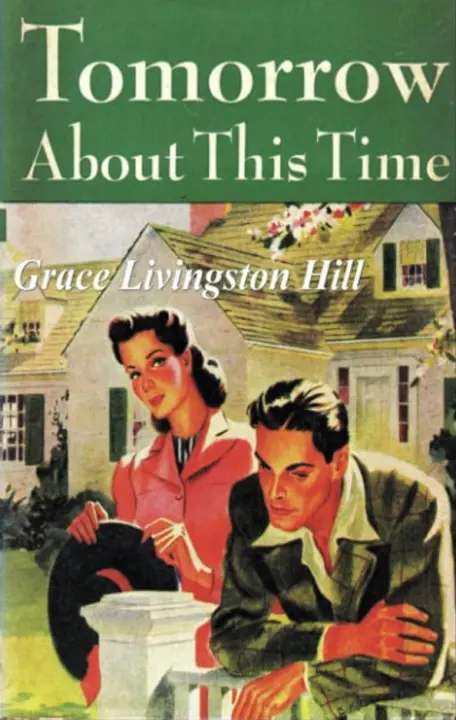
Tomorrow about this time
Grace Livingston Hill
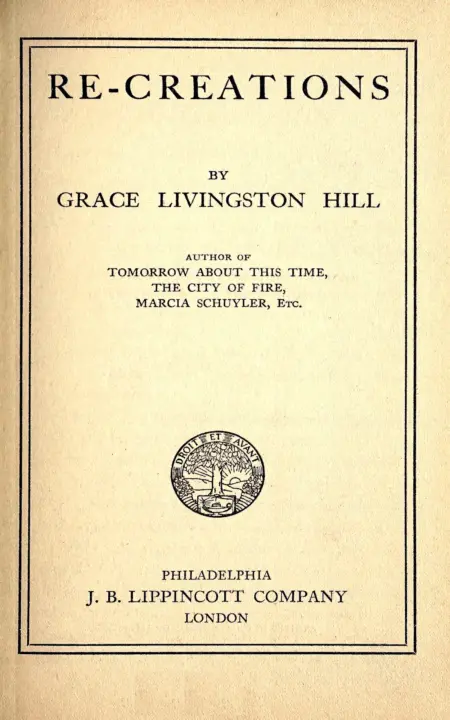
THE CLASSIC COLLECTION · 1921
"Re-creations" by Grace Livingston Hill is a novel written in the early 20th century. The story centers around Cornelia Copley, a young woman who finds herself abruptly leaving college to return home due to her mother's health issues, ultimately feeling disillusioned with the new reality her family faces. As she grapples with the loss of her academic dreams and the struggles of her family, the narrative explores themes of sacrifice, responsibility, and the pursuit of personal aspirations against familial obligations. The opening of the novel introduces Cornelia as she departs from college, filled with sadness over her unfulfilled dreams and a lack of understanding from her family about her ambitions. After receiving a distressing letter from her father about her mother's illness, she boards the train reluctantly, reflecting on her past joys and lamenting her future. Upon arriving home, she is confronted with the disarray of her new living situation, including the challenges of her father's change in circumstances and the evident struggles of her siblings. As her realization of the family's needs deepens, Cornelia begins to take on the responsibility of homemaking, vowing to make her family's life better despite her own disappointments. This sets the stage for her journey of self-discovery and growth as she learns to balance her dreams with the reality of her family's situation.
Introduction adapted from the source catalogue; source summaries may be automatically generated.
Free to read · English · 104,492 words · No account needed
MAKE TIME FOR A GOOD BOOK
On by default. Untick to stop anonymous reading totals. Each page counts after 10 seconds in view. How this works.
Anonymous counting is on unless you have switched it off.
The color rolled up into the little girl’s face, and she dropped her eyes. “Oh, no, Nellie; they went long ago,” she said, “before we even moved to the State Street house.”
“The State Street house?”
“Why, yes, father sold the Glenside house just after you went to college. You knew that, didn’t you? And then we moved to an old yellow house down farther toward the city. But it was pulled down to make room for a factory; and I was glad, for it was horrid, and a long walk to school. And then we went to a brick row down near the factory, and it was convenient for father, but—”
“Factory? Father? What do you mean, dear? Has father gone into business for himself? He was a bookkeeper at Dudley and Warner’s when I left.”
“Oh, but he lost that a long, long time ago, after he was sick so
long.”
“Father sick? Louie! And I not told?”
“Why, I didn’t know they hadn’t told you. Maybe mother wouldn’t like
it——”
“Tell me everything, dear. How long was father sick?”
“About a year. He lost his position, and then wasn’t able to do anything for ever so long; and, when he got out of the hospital, he hunted and hunted, and there wasn’t anything for him. He got one good job; but they said he had to dress better, and he lost that.”
Cornelia sank down on the floor again, and buried her face in her
hands.
“O Louie! And I was wearing nice clothes, and doing nothing to help! Oh, why didn’t mother let me know?”
“Oh, mother kept saying she thought she could manage and it was father’s dream you should get your education,” quoted the little girl with dreamy eyes and the memory of many sacrifices sweetly upon her.
“Go on, Louie; what next?”
“Oh, nothing much. Mother sold the furniture to an ‘antique’ woman that was hunting old things; and that paid for father’s medicine, and they said they wouldn’t touch the money they had put in the bank for your college; and then father got the place at the factory. It’s kind of hard work, I guess; but it’s good pay, and father thought he’d manage to let you finish; only mother gave out, and then everything went to pieces.”
The small, red lips puckered bravely, and suddenly the child threw her arms around her sister’s neck, and cried out, sobbing, “Oh, I’m so glad you’ve come!” and Cornelia wrapped her close to her heart.
Your reading position is saved on this browser. Take it to another device with a library code. Reading pages adapt to text, rather than matching a printed edition.
Grace Livingston Hill
Grace Livingston Hill
Grace Livingston Hill

Grace Livingston Hill
BEHIND THE BOOK
This eBook is for the use of anyone anywhere in the United States and most other parts of the world at no cost and with almost no restrictions whatsoever. You may copy it, give it away or re-use it under the terms of the Project Gutenberg License included with this eBook or online at www.gutenberg.org. If you are not located in the United States, you will have to check the laws of the country where you are located before using this eBook. Read the source licence.
The original source file, including credits and licence, is retained by this library. Request an original-format copy at no charge. Please include the book title and Project Gutenberg identifier #71094.
KEEP YOUR CURIOSITY GOING
Coulson Kernahan

Maurice Baring
Frances Wright
Cécile Tormay

Frederic Jesup Stimson

W. H. P. (William Henry Pope) Jarvis