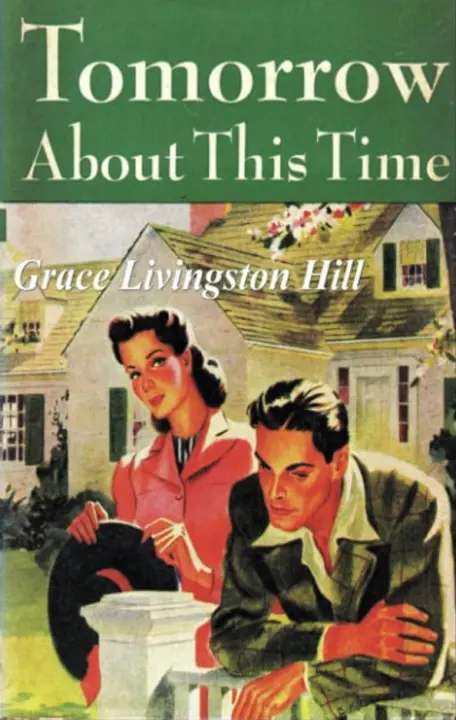
Tomorrow about this time
Grace Livingston Hill
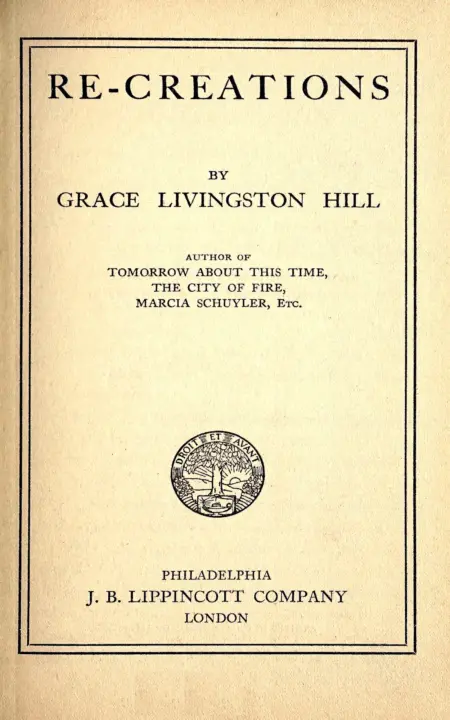
THE CLASSIC COLLECTION · 1921
"Re-creations" by Grace Livingston Hill is a novel written in the early 20th century. The story centers around Cornelia Copley, a young woman who finds herself abruptly leaving college to return home due to her mother's health issues, ultimately feeling disillusioned with the new reality her family faces. As she grapples with the loss of her academic dreams and the struggles of her family, the narrative explores themes of sacrifice, responsibility, and the pursuit of personal aspirations against familial obligations. The opening of the novel introduces Cornelia as she departs from college, filled with sadness over her unfulfilled dreams and a lack of understanding from her family about her ambitions. After receiving a distressing letter from her father about her mother's illness, she boards the train reluctantly, reflecting on her past joys and lamenting her future. Upon arriving home, she is confronted with the disarray of her new living situation, including the challenges of her father's change in circumstances and the evident struggles of her siblings. As her realization of the family's needs deepens, Cornelia begins to take on the responsibility of homemaking, vowing to make her family's life better despite her own disappointments. This sets the stage for her journey of self-discovery and growth as she learns to balance her dreams with the reality of her family's situation.
Introduction adapted from the source catalogue; source summaries may be automatically generated.
Free to read · English · 104,492 words · No account needed
MAKE TIME FOR A GOOD BOOK
On by default. Untick to stop anonymous reading totals. Each page counts after 10 seconds in view. How this works.
Anonymous counting is on unless you have switched it off.
Cornelia stooped and kissed the eager young face tenderly, and wondered how she could have borne to be separated all these years from her little sister and brother, and not have known how satisfactorily they were growing up.
“What are you going to put into them?” asked the little girl.
“Well I haven’t decided yet,” said Cornelia. “Probably salted almonds, don’t you think?”
“Oh, but they’re awful expensive!”
“Not if you make them, dear. You and I will make them. I’ve done tons of them at college for feasts. It’s easy; just blanch them and brown them in a pan with butter and salt or oil and salt.”
“Oh, can you?” More awe in the voice. “And what will we have to eat?”
“Well, I’m not sure yet. We’ll have to count the dishes and let that settle some questions. We must have enough to go around, you know, and all alike. I wonder if there are enough bouillon cups. It takes eight, you know—Father, Carey, you, and Harry, three guests and myself. Yes, that’s eight. Climb up to the top shelf there, dear, and see if there are enough of mother’s rosebud bouillon cups.”
“There are nine and an extra saucer,” announced Louise.
“Well, then we’ll have some kind of soup, just a little; I think maybe spinach, cream of spinach soup, it’s such a pretty color for spring, you know, that pale-green, and matches the dining-room. It’s easy to make, and doesn’t cost much; and then we can have the spinach for a vegetable with the meat course. Now, let’s see, those little clear sherbet glasses, are there enough of those?”
“A whole dozen and seven,” announced Louise.
“Then we’ll use those at the beginning for a fruit cocktail—orange, grapefruit, banana, and I’ll color it pink with a little red raspberry juice. I found a can among the preserves mother had left over from last winter. It makes a lovely pink, and that will match the baskets.”
“Oh, lovely!” exclaimed the little girl ecstatically; “but won’t that
cost a lot?”
“No, dear, I think not. I’ll figure it down pretty close tonight and find out; but it doesn’t take much fruit to fill those tiny glasses, and it’s mostly show, you know—one grapefruit, a couple of oranges, and bananas, and the rest raspberry juice. Spinach is cheap now, you know; and we can make the body of the soup with a can of condensed milk. We can eat corn-meal mush and beans and things for a few days beforehand to make up.”
Your reading position is saved on this browser. Take it to another device with a library code. Reading pages adapt to text, rather than matching a printed edition.
Grace Livingston Hill
Grace Livingston Hill
Grace Livingston Hill

Grace Livingston Hill
BEHIND THE BOOK
This eBook is for the use of anyone anywhere in the United States and most other parts of the world at no cost and with almost no restrictions whatsoever. You may copy it, give it away or re-use it under the terms of the Project Gutenberg License included with this eBook or online at www.gutenberg.org. If you are not located in the United States, you will have to check the laws of the country where you are located before using this eBook. Read the source licence.
The original source file, including credits and licence, is retained by this library. Request an original-format copy at no charge. Please include the book title and Project Gutenberg identifier #71094.
KEEP YOUR CURIOSITY GOING
Coulson Kernahan

Maurice Baring
Frances Wright
Cécile Tormay

Frederic Jesup Stimson

W. H. P. (William Henry Pope) Jarvis