THE CLASSIC COLLECTION✦The wolves and the lambCLASSIC FREE BOOKS
The wolves and the lamb
J. S. (Joseph Smith) Fletcher
THE CLASSIC COLLECTION · 1922
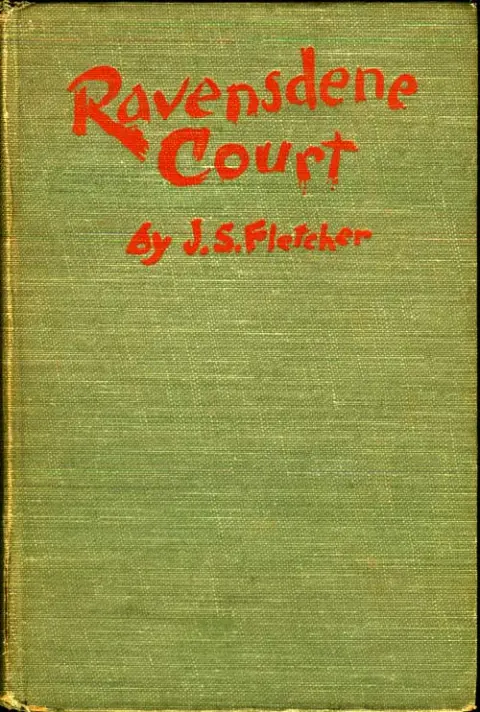
"Ravensdene Court" by J. S. Fletcher is a mystery novel written in the early 20th century. The story unfolds as the protagonist, Leonard Middlebrook, receives an invitation to Ravensdene Court, an old manor house in Northumberland, to evaluate a vast collection of antiquarian books. Upon arrival, he encounters a chilling mystery involving the murder of Salter Quick, a seafaring man, setting the tone for a tale filled with secrets and intrigue. At the start of the narrative, Middlebrook embarks on a journey to Ravensdene Court and receives a letter from Francis Raven, the new owner, inviting him to explore the extensive library left behind by Raven's uncle. As he walks along the dramatic Northumbrian coastline, he meets Salter Quick, who is searching for gravestones of his ancestors. Shortly after their conversation, Middlebrook discovers Quick's lifeless body on the beach, revealing the gruesome act of murder. The discovery raises questions about the connections between Quick and another man also seeking the same family name—Netherfield. This opening sets the stage for a layered mystery as Middlebrook becomes entangled in the search for answers surrounding the crimes linked to the past and the secrets of Ravensdene Court.
Introduction adapted from the source catalogue; source summaries may be automatically generated.
Free to read · English · 79,919 words · No account needed
MAKE TIME FOR A GOOD BOOK
On by default. Untick to stop anonymous reading totals. Each page counts after 10 seconds in view. How this works.
Anonymous counting is on unless you have switched it off.
It was a strange, yet a plain story that Wing told his master and a select few of us a day or two later, when Lorrimore had patched him up. To anybody of a hum-drum life--such as mine had always been until these events--it was, indeed, a stirring story. The queer thing, however--at any rate, queer to me--was that the narrator, as calm and suave as ever in his telling of it--did not seem to regard it as anything strange at all--he might have been explaining to us some new way of making a good cake.
At our request and suggestion, he had journeyed to London and plunged into those quarters of the East End wherein his fellow-countrymen are to be found. His knowledge of the district of which Limehouse Causeway forms a centre soon brought him in touch with Lo Chuh Fen, who, as he quickly discovered, had remained in London during the last two or three years, assisting in the management of a Chinese eating-house. Close by, in a lodging kept by a compatriot, Wing put himself up and cultivated Chuh's acquaintance. Ere many days had passed another Chinaman came on the scene--this was the man whom Baxter had described as a Chinese gentleman. He represented himself to Wing and Chuh as a countryman of theirs who had been engaged in highly successful trading operations in Europe, and was now, in company with two friends, an Englishman and a Frenchman, carrying out another which involved a trip in a small, but well-appointed yacht, across the Atlantic: he wanted these countrymen of his own to make up a crew. An introduction to Baxter and the Frenchman followed, and Wing and Chuh were taken into confidence as regards the treasure hidden on the Northumberland coast. A share of the proceeds was promised them: they secured a third, trustworthy Chinaman in the person of one Ah Wong, an associate of Chuh's, and the yawl, duly equipped, left the Thames and went northward. By this time, Wing had wormed himself completely into Chuh's confidence, and without even discovering whether Chuh was or was not the actual murderer of Salter Quick (he believed him to be and believed Wong to be the murderer of Noah, at Saltash) he had found out that Chuh was in possession of the pearls and rubies which--though Wing had no knowledge of that--Salter had exhibited to Baubenheimer. And as the yawl neared the scene of the next operations, Wing made his own plans. He had found out that its owners, after recovering the monastic treasures, were going to call at Leith, where they were to be met by the private yacht of some American, whose name Wing never heard. Accordingly, he made up his mind to escape from the yawl as soon as it got into Leith, to go straight to the police, and there give information as to the doings of the men he was with. But here his plans were frustrated. He was taken aback by the capture of Miss Raven and myself by Baxter and the Frenchman, and though he contrived to keep out of our way, he was greatly concerned lest we should see him and conclude that he had joined the gang and was privy to its past and present doings. But that very night a much more serious development materialized. The Chinese gentleman, arriving from London, and being met by the Frenchman at Berwick, had a scheme of his own, which, after he had attempted the drugging of his two principal associates, he unfolded to his fellow-countrymen. This was to get rid of Baxter and the Frenchman and seize the yawl and its contents for themselves, sailing with it to some port in North Russia. Wing had no option but to profess agreement--his only proviso was that Miss Raven and myself should be cleared out of the yawl. This proposition was readily assented to, and Chuh was charged with the job of sending us ashore. But almost immediately afterwards, everything went wrong with the conspirator's plans. The drug which had been administered to Baxter and the Frenchman failed to act; Baxter, waking suddenly to find the Chinamen advancing on the cabin with only too evident murderous intent, opened fire on them, and the situation rapidly resolved itself into a free fight, in the course of which Wing barricaded himself into the galley. Before long he saw that of all the men on board, only himself and Baxter remained alive--he saw, too, that Baxter was already wounded. Baxter, evidently afraid of Wing, also barricaded himself into the cabin; for some hours the two secretly awaited each other's onslaught. At last, Wing determined to make a bid for liberty, and cautiously worming his way to the cabin he looked in and as he thought, saw Baxter lying either dead or dying. He then hastily stripped Chuh of the belt in which he knew him to carry the precious stones, and taking to the boat which lay at the side of the yawl, pushed off, only to find Baxter after him with a revolver. In the exchange of shots which followed Wing was hit twice, but a lucky reply of his laid Baxter dead. At that he got away, weak and fainting, managed to make the shore, to bind up as much of his wounded body as he could get at, and set out as well as he was able for his master's house. The rest we knew.
Your reading position is saved on this browser. Take it to another device with a library code. Reading pages adapt to text, rather than matching a printed edition.
J. S. (Joseph Smith) Fletcher

J. S. (Joseph Smith) Fletcher
J. S. (Joseph Smith) Fletcher
J. S. (Joseph Smith) Fletcher
BEHIND THE BOOK
This eBook is for the use of anyone anywhere in the United States and most other parts of the world at no cost and with almost no restrictions whatsoever. You may copy it, give it away or re-use it under the terms of the Project Gutenberg License included with this eBook or online at www.gutenberg.org. If you are not located in the United States, you will have to check the laws of the country where you are located before using this eBook. Read the source licence.
The original source file, including credits and licence, is retained by this library. Request an original-format copy at no charge. Please include the book title and Project Gutenberg identifier #26324.
KEEP YOUR CURIOSITY GOING
Coulson Kernahan

Maurice Baring
Frances Wright
Cécile Tormay

Frederic Jesup Stimson

W. H. P. (William Henry Pope) Jarvis