THE CLASSIC COLLECTION✦The wolves and the lambCLASSIC FREE BOOKS
The wolves and the lamb
J. S. (Joseph Smith) Fletcher
THE CLASSIC COLLECTION · 1922
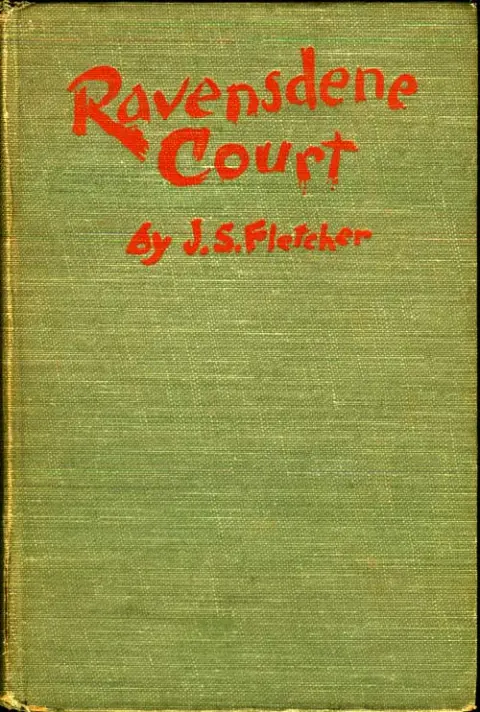
"Ravensdene Court" by J. S. Fletcher is a mystery novel written in the early 20th century. The story unfolds as the protagonist, Leonard Middlebrook, receives an invitation to Ravensdene Court, an old manor house in Northumberland, to evaluate a vast collection of antiquarian books. Upon arrival, he encounters a chilling mystery involving the murder of Salter Quick, a seafaring man, setting the tone for a tale filled with secrets and intrigue. At the start of the narrative, Middlebrook embarks on a journey to Ravensdene Court and receives a letter from Francis Raven, the new owner, inviting him to explore the extensive library left behind by Raven's uncle. As he walks along the dramatic Northumbrian coastline, he meets Salter Quick, who is searching for gravestones of his ancestors. Shortly after their conversation, Middlebrook discovers Quick's lifeless body on the beach, revealing the gruesome act of murder. The discovery raises questions about the connections between Quick and another man also seeking the same family name—Netherfield. This opening sets the stage for a layered mystery as Middlebrook becomes entangled in the search for answers surrounding the crimes linked to the past and the secrets of Ravensdene Court.
Introduction adapted from the source catalogue; source summaries may be automatically generated.
Free to read · English · 79,919 words · No account needed
MAKE TIME FOR A GOOD BOOK
On by default. Untick to stop anonymous reading totals. Each page counts after 10 seconds in view. How this works.
Anonymous counting is on unless you have switched it off.
"He abstracted that, too, easily enough, one morning when the old fellow was bathing," assented Baxter. "Naturally, we weren't going to take any chances about our hidden goods being brought to light. We're highly indebted to Mr. Cazalette for making so much fuss about the tobacco-box, and we're glad there was so much local gossip about it. Eh?"
I remained silent awhile, reflecting.
"It's a very fortunate thing for both of you that you could, if necessary, prove your presence at York on the night of the murder," I remarked at last. "Your doings about the tobacco-box and the other things might otherwise wear a very suspicious look. As it is, I'm afraid the police would probably say--granted that they knew what you've just told us so frankly--that even if you and your French friend didn't murder Salter Quick and his brother, you were probably accessory to both murders. That's how it strikes me, anyway."
"I think you're right," he said calmly. "Probably they would. But the police would be wrong. We were not accessory, either before or since. We haven't the ghost of a notion as to the identity of the Quicks' murderers. But since we're discussing that, I'll tell you both of something that seems to have completely escaped the notice of the police, the detectives, and of you yourself, Middlebrook. You remember that in both cases the clothing of the murdered men had been literally ripped to pieces?"
"Very well," said I. "It had--in Salter's, anyway, to my knowledge."
"And so, they said, it had in Noah's," replied Baxter. "And the
presumption, of course, was that the murderers were searching for
something?"
"Of course," I said. "What other presumption could there be?"
Baxter gave us both a keen, knowing look, bent across the table, and tapped my arm as if to arrest my closer attention.
"How do you know that the murderers didn't find what they were seeking for?" he asked in a low, forceful voice. "Come, now!"
I stared at him; so, too, did Miss Raven. He laughed.
"That, certainly, doesn't seem to have struck anybody," he said. "I'm sure, anyway, it hasn't struck you before. Does it now?"
"I'd never thought of it," I admitted.
"Exactly! Nor, according to the papers--and to my private information--had anybody," he answered. "Yet--it would have been the very first thought that would have occurred to me. I should have said to myself, seeing the ripped-up clothing, 'Whoever murdered these men was in search of something that one or other of the two had concealed on him, and the probability is, he's got it.' Of course!"
Your reading position is saved on this browser. Take it to another device with a library code. Reading pages adapt to text, rather than matching a printed edition.
J. S. (Joseph Smith) Fletcher
J. S. (Joseph Smith) Fletcher
J. S. (Joseph Smith) Fletcher
J. S. (Joseph Smith) Fletcher
BEHIND THE BOOK
This eBook is for the use of anyone anywhere in the United States and most other parts of the world at no cost and with almost no restrictions whatsoever. You may copy it, give it away or re-use it under the terms of the Project Gutenberg License included with this eBook or online at www.gutenberg.org. If you are not located in the United States, you will have to check the laws of the country where you are located before using this eBook. Read the source licence.
The original source file, including credits and licence, is retained by this library. Request an original-format copy at no charge. Please include the book title and Project Gutenberg identifier #26324.
KEEP YOUR CURIOSITY GOING
Coulson Kernahan

Maurice Baring
Frances Wright
Cécile Tormay

Frederic Jesup Stimson

W. H. P. (William Henry Pope) Jarvis