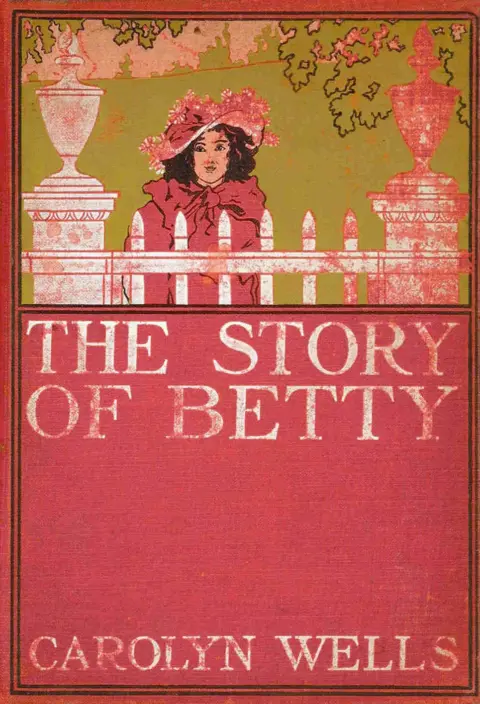
The story of Betty
Carolyn Wells
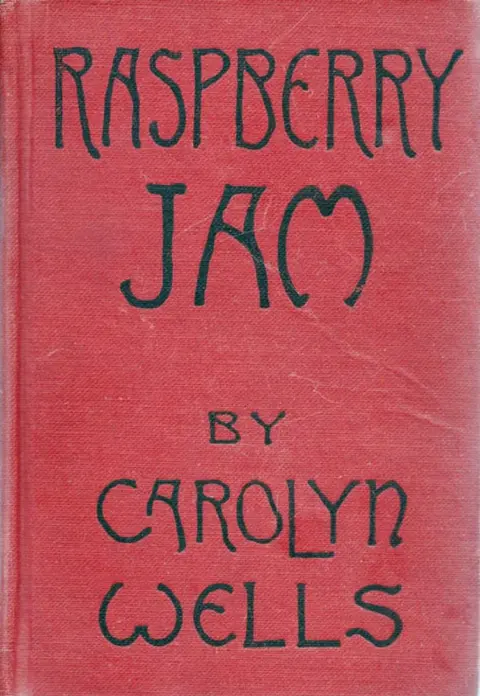
THE CLASSIC COLLECTION · 1920
"Raspberry Jam" by Carolyn Wells is a fictional novel likely written in the early 20th century. The story revolves around the characters Eunice Embury and her eccentric Aunt Abby Ames, who is excited about attending a performance by a man known as Hanlon, who claims to possess the extraordinary ability of mind-reading or telepathy. The novel hints at themes of family dynamics, skepticism towards the supernatural, and various social interactions. At the start of the narrative, the scene is set in the luxurious New York apartment of the Emburys, presenting a lively and somewhat contentious dialogue between Eunice and Aunt Abby. Aunt Abby passionately stresses her desire to see Hanlon's performance, while Eunice expresses her disapproval and skepticism of both the event and her aunt’s interests in the occult. The characters’ personalities come through in their interaction, with Eunice being more practical and composed, in stark contrast to her aunt's whimsical enthusiasm. This introductory clash sets the stage for a story rich with character development and the exploration of belief versus skepticism as they navigate their social world surrounding the intriguing performance.
Introduction adapted from the source catalogue; source summaries may be automatically generated.
Free to read · English · 62,672 words · No account needed
MAKE TIME FOR A GOOD BOOK
On by default. Untick to stop anonymous reading totals. Each page counts after 10 seconds in view. How this works.
Anonymous counting is on unless you have switched it off.
“Yes; I know. But what’s the racket with you two turtle-doves? I come in, and find Eunice wearing the pet expression of a tragedy queen and Sanford, here, doing the irate husband. Going into the movies?”
“Yes, that’s it,” and Eunice smiled bravely, although her lips still quivered from her recent turbulent quarrel, and a light, jaunty air was forced to conceal her lingering nervousness.
“Irate husband is good!” laughed Embury, “considering we are yet
honeymooners.”
“Good dissemblers, both of you,” and Elliott settled himself in an easy chair, “but you don’t fool your old friend. Talk about thought-transference--it doesn’t take much of that commodity to read that you two were interrupted by my entrance in the middle of a real, honest-to-goodness, cats’-and-dogs’ quarrel.”
“All right, have it your own way,” and Embury laughed shortly; “but it wasn’t the middle of it, it was about over.”
“All but the making up! Shall I fade away for fifteen minutes?”
“No,” protested Eunice. “It was only one of the little tiffs that happen in the best families! Now, listen, Mason--”
“My dear lady, I live but on the chance of being permitted to listen to you--only in the hope that I may listen early and often--”
“Oh, hush! What a silly you are!”
“Silly, is it? Remember I was your childhood playmate. Would you have kept me on your string all these years if I were silly? And here’s another of my childhood friends! How do you do, most gracious lady?”
With courtly deference Elliott rose to greet Aunt Abby, who came into the living-room from Eunice’s bedroom.
Her black silk rustled and her old point lace fell yellowly round her slender old hands, for on Sunday afternoon Miss Ames dressed the part.
“How are you, Mason,” she said, but with a preoccupied air. “What time is Mr. Hanlon coming, Eunice?”
“Soon now, I think,” and Eunice spoke with entire composure, her angry excitement all subdued. It was characteristic of her that after a fit of temper, she was more than usually soft and gentle. More considerate of others and even, more roguishly merry.
“You know, Mason, that what we are to be told to-day is a most inviolable secret--that is, it is a secret until tomorrow.”
“Never put off till to-morrow what you can tell to-night,” returned Elliott, but he listened attentively while Eunice and Aunt Abby described the performance of the young man Hanlon.
“Of course,” Elliott observed, a little disappointedly, “if he says he hoaxed the crowd, of course he did; but in that case I’ve no interest in the thing. I’d like it better if he were honest.”
Your reading position is saved on this browser. Take it to another device with a library code. Reading pages adapt to text, rather than matching a printed edition.
Carolyn Wells
Carolyn Wells & Harry Persons Taber

Carolyn Wells
Carolyn Wells
BEHIND THE BOOK
This eBook is for the use of anyone anywhere in the United States and most other parts of the world at no cost and with almost no restrictions whatsoever. You may copy it, give it away or re-use it under the terms of the Project Gutenberg License included with this eBook or online at www.gutenberg.org. If you are not located in the United States, you will have to check the laws of the country where you are located before using this eBook. Read the source licence.
The original source file, including credits and licence, is retained by this library. Request an original-format copy at no charge. Please include the book title and Project Gutenberg identifier #5335.
KEEP YOUR CURIOSITY GOING
Coulson Kernahan

Maurice Baring
Frances Wright
Cécile Tormay

Frederic Jesup Stimson

W. H. P. (William Henry Pope) Jarvis