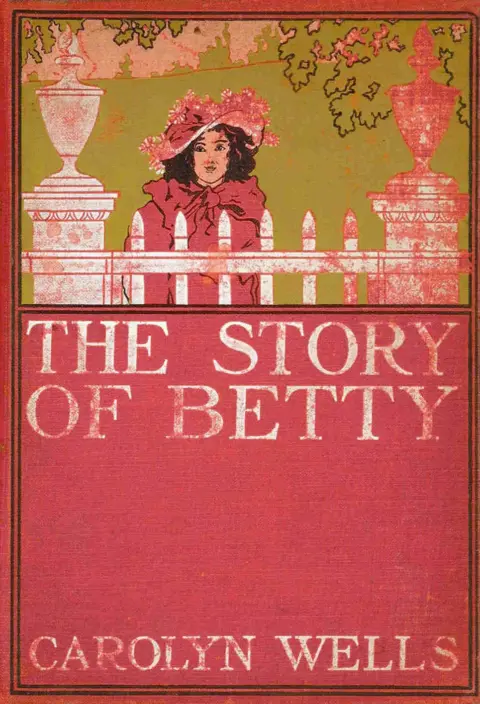
The story of Betty
Carolyn Wells
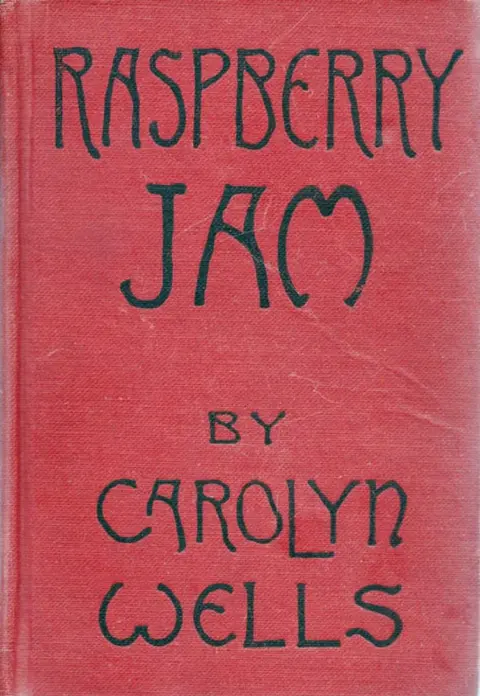
THE CLASSIC COLLECTION · 1920
"Raspberry Jam" by Carolyn Wells is a fictional novel likely written in the early 20th century. The story revolves around the characters Eunice Embury and her eccentric Aunt Abby Ames, who is excited about attending a performance by a man known as Hanlon, who claims to possess the extraordinary ability of mind-reading or telepathy. The novel hints at themes of family dynamics, skepticism towards the supernatural, and various social interactions. At the start of the narrative, the scene is set in the luxurious New York apartment of the Emburys, presenting a lively and somewhat contentious dialogue between Eunice and Aunt Abby. Aunt Abby passionately stresses her desire to see Hanlon's performance, while Eunice expresses her disapproval and skepticism of both the event and her aunt’s interests in the occult. The characters’ personalities come through in their interaction, with Eunice being more practical and composed, in stark contrast to her aunt's whimsical enthusiasm. This introductory clash sets the stage for a story rich with character development and the exploration of belief versus skepticism as they navigate their social world surrounding the intriguing performance.
Introduction adapted from the source catalogue; source summaries may be automatically generated.
Free to read · English · 62,672 words · No account needed
MAKE TIME FOR A GOOD BOOK
On by default. Untick to stop anonymous reading totals. Each page counts after 10 seconds in view. How this works.
Anonymous counting is on unless you have switched it off.
“Who did?” said Shane, coming in at the door as the last words were
spoken.
“Willy Hanlon--a human fly.”
And then Fleming Stone told the whole story--Fibsy adding here and there his bits of information.
“But I don’t understand,” said Shane, at last, “why would that
chap kill Mr. Embury?”
“Hired,” said Fibsy, as Stone hesitated to speak; “hired by a man who paid him ten thousand dollars.”
“Hanlon a gunman!” said Shane, amazed.
“Not a professional one,” Fibsy said, “but he acted as one in this case. The man who hired him knew he was privately learning to be a ‘human fly,’ and he had the diabolical thought of hiring him to climb up this house, and get in at the only available window, and kill Mr. Embury with that henbane stuff.”
“And the man’s name?” shouted Shane, “the name of the real
criminal?”
Fibsy sat silent, looking at Stone.
“His name is Alvord E. Hendricks,” was Stone’s quiet reply.
An instant commotion arose. Eunice, her great eyes full of horror, ran to Aunt Abby, who seemed about to collapse from sheer dismay.
Mason Elliott started up with a sudden “Where is he?” and Shane echoed, with a roar: “Yes, where is he? Can he get away?”
“No,” said Stone; “he can’t. I have him covered day and night by my men. At present, Mr. Shane, he is--I am quite sure--in his office--if you want to go there--”
“If I want to go there! I should say I do! He’ll get his!”
And in less than half an hour, Shane had taken Alvord Hendricks into custody, and in due time that arch criminal received the retribution of justice.
Shane gone, Fibsy went over the whole story once again.
“You see, it was Mr. Stone’s keeping at it what did it. He connected up Hanlon and the jam--he connected up Mr. Hendricks and the Hamlet business--we connected up Hanlon and the gasoline--and Hanlon and the jersey and the motor-cycle and all!” Fibsy grew excited; “then we connected up Hendricks and his ‘perfect alibi.’ Always distrust the perfect alibi--that’s one of Mr. Stone’s first maxims. Well, this Hendricks--he had a pluperfect alibi--couldn’t be shaken--so Mr. Stone, he says, the more perfect the alibi, the more we must distrust it. So he went for that alibi--and he found that Mr. Hendricks was sure in Boston that night, but he didn’t have any real reason, not any imperative reason for going--it was a sorta trumped up trip. Well--that’s the way it was. He had to get Mr. Embury out of the way just then, or be shown up--a ruined man--and, too, he was afraid Mr. Embury’d be president of the club--and, too--he wanted to--”
Your reading position is saved on this browser. Take it to another device with a library code. Reading pages adapt to text, rather than matching a printed edition.
Carolyn Wells
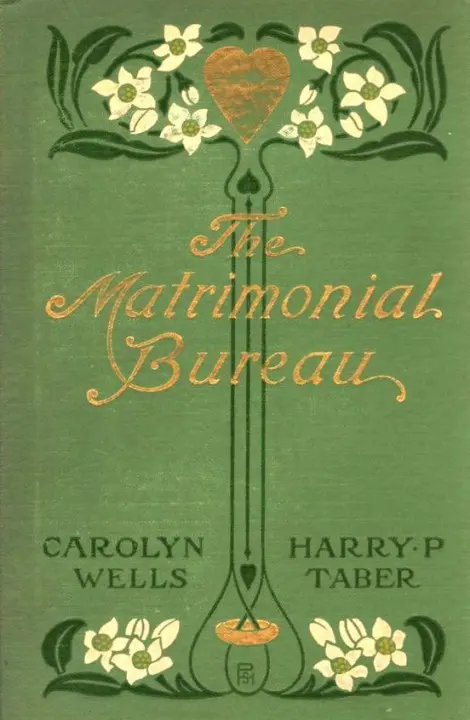
Carolyn Wells & Harry Persons Taber
Carolyn Wells
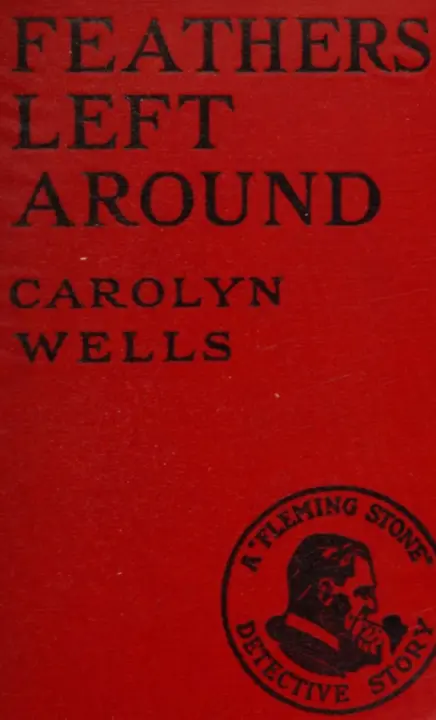
Carolyn Wells
BEHIND THE BOOK
This eBook is for the use of anyone anywhere in the United States and most other parts of the world at no cost and with almost no restrictions whatsoever. You may copy it, give it away or re-use it under the terms of the Project Gutenberg License included with this eBook or online at www.gutenberg.org. If you are not located in the United States, you will have to check the laws of the country where you are located before using this eBook. Read the source licence.
The original source file, including credits and licence, is retained by this library. Request an original-format copy at no charge. Please include the book title and Project Gutenberg identifier #5335.
KEEP YOUR CURIOSITY GOING
Coulson Kernahan

Maurice Baring
Frances Wright
Cécile Tormay

Frederic Jesup Stimson

W. H. P. (William Henry Pope) Jarvis