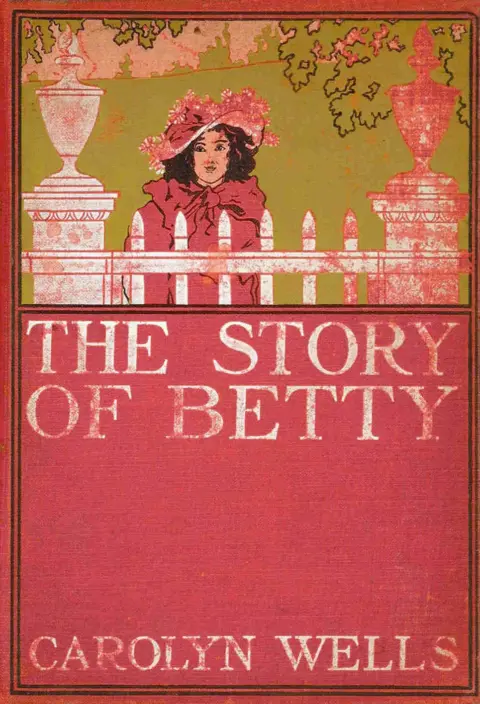
The story of Betty
Carolyn Wells
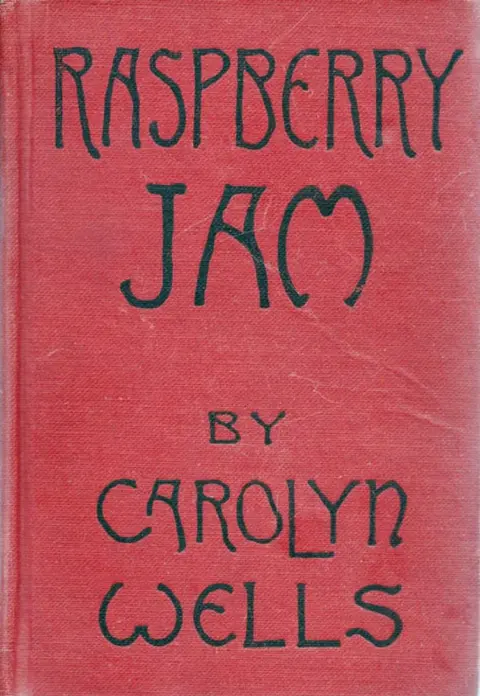
THE CLASSIC COLLECTION · 1920
"Raspberry Jam" by Carolyn Wells is a fictional novel likely written in the early 20th century. The story revolves around the characters Eunice Embury and her eccentric Aunt Abby Ames, who is excited about attending a performance by a man known as Hanlon, who claims to possess the extraordinary ability of mind-reading or telepathy. The novel hints at themes of family dynamics, skepticism towards the supernatural, and various social interactions. At the start of the narrative, the scene is set in the luxurious New York apartment of the Emburys, presenting a lively and somewhat contentious dialogue between Eunice and Aunt Abby. Aunt Abby passionately stresses her desire to see Hanlon's performance, while Eunice expresses her disapproval and skepticism of both the event and her aunt’s interests in the occult. The characters’ personalities come through in their interaction, with Eunice being more practical and composed, in stark contrast to her aunt's whimsical enthusiasm. This introductory clash sets the stage for a story rich with character development and the exploration of belief versus skepticism as they navigate their social world surrounding the intriguing performance.
Introduction adapted from the source catalogue; source summaries may be automatically generated.
Free to read · English · 62,672 words · No account needed
MAKE TIME FOR A GOOD BOOK
On by default. Untick to stop anonymous reading totals. Each page counts after 10 seconds in view. How this works.
Anonymous counting is on unless you have switched it off.
“No;” and Hanlon looked at the boy, regretfully. “I can’t do that. I’m no climber. I make the signs and then they’re put where they belong by other workmen.”
“Oh,” and Fibsy looked disappointed at not finding the daring hero
he sought for.
“I must not presume further on your kindness, Mrs. Embury,” Hanlon said, with an attempt at society jargon, “I merely called in for a minute. Mr. Hendricks, are you going my way? I want to see you about that sign-”
“No, Hanlon--sorry, but I’m not going now,” and Hendricks shook his head. “I’m here for the evening.”
“All right see you later, then. Where can I find you? I’m something
of an owl, myself.”
“I’ll call you up after I get home--if it isn’t too late,”
Hendricks suggested.
“Never too late for me. See that you remember.”
Hanlon looked at Hendricks with more seriousness than the subject appeared to call for, then he went away.
“You got the earache?” asked Fibsy suddenly, of Hendricks, as that gentleman half absently rubbed his ear.
“Bless my soul, no! What do you mean by such a question? Mr. Stone, this boy of yours is too fresh!”
“Be quiet, Terence,” said Stone, paying but slight attention to the
matter.
“Oh, all right, no offense meant,” and the boy grinned at Hendricks. “But didn’t you ever have an earache? If not, you don’t know what real sufferin’ is!”
“No, I never had it, that I remember. Perhaps as a child--”
“Why, Alvord,” said Aunt Abby, “you had it fearfully about a month ago. Don’t you recollect? You were afraid of mastoiditis.”
“Oh, that. Well, that was a serious illness. I was thinking of an ordinary earache, when I said I never had one. But I beg of you drop the subject of my ailments! What a thing to discuss!”
“True enough,” agreed Stone, “I propose we keep to the theme under consideration. I’ve been engaged to look into this murder mystery. I’m here for that purpose. I must insist that I conduct my investigation in my own way.”
“That’s the right talk,” approved Elliott. “Now, Mr. Stone, let’s get right down to it.”
“Very well, the case stands thus: Shane says--and it’s perfectly true--there are five possible suspects. But only one of these had both motive and opportunity. Now, the whole five are here present, and, absurd though it my seem, I’m going to ask each one of you the definite question. Ferdinand,” he raised his voice and the butler came in from the dining-room, “did you kill your master?”
Your reading position is saved on this browser. Take it to another device with a library code. Reading pages adapt to text, rather than matching a printed edition.
Carolyn Wells
Carolyn Wells & Harry Persons Taber

Carolyn Wells
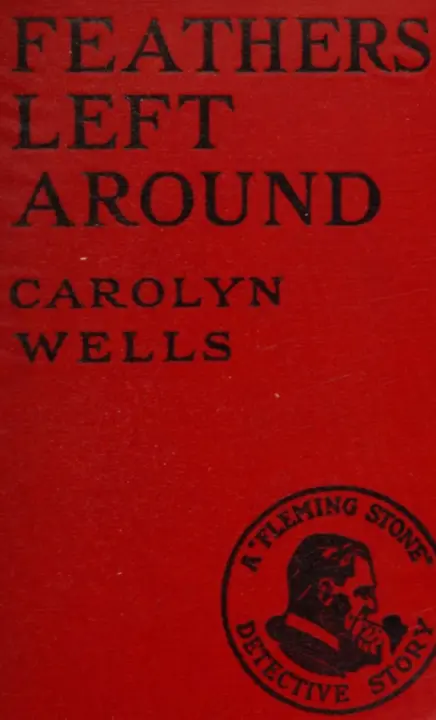
Carolyn Wells
BEHIND THE BOOK
This eBook is for the use of anyone anywhere in the United States and most other parts of the world at no cost and with almost no restrictions whatsoever. You may copy it, give it away or re-use it under the terms of the Project Gutenberg License included with this eBook or online at www.gutenberg.org. If you are not located in the United States, you will have to check the laws of the country where you are located before using this eBook. Read the source licence.
The original source file, including credits and licence, is retained by this library. Request an original-format copy at no charge. Please include the book title and Project Gutenberg identifier #5335.
KEEP YOUR CURIOSITY GOING
Coulson Kernahan

Maurice Baring
Frances Wright
Cécile Tormay

Frederic Jesup Stimson

W. H. P. (William Henry Pope) Jarvis