THE CLASSIC COLLECTION✦Sunshine and snowCLASSIC FREE BOOKS
Sunshine and snow
Harold Bindloss
THE CLASSIC COLLECTION · 1912
"Ranching for Sylvia" by Harold Bindloss is a novel written in the early 20th century. The story centers around George Lansing, a quiet and self-contained man who becomes embroiled in a complex situation following the death of his friend and the return of Sylvia Marston, the widow he has long admired. As the executor of her late husband's will, George finds himself drawn back to the Canadian prairie, where he must grapple with both the harsh realities of ranching life and the intricate dynamics of his relationship with Sylvia. The beginning of "Ranching for Sylvia" introduces George Lansing as he awaits Sylvia's arrival at his cousin's estate, revealing a past filled with bittersweet emotions and unresolved feelings. Sylvia, clad in her widow's black dress, arrives with melancholy memories of her struggles on the harsh Canadian prairie after her husband’s death. Their interaction unfolds through a mixture of supported reminiscence and practical discussions about her farming property, underlining George's deep devotion to Sylvia while hinting at his internal conflicts. As George accepts the task of managing her farm to shield her from financial despair, readers are presented with the story's central theme—navigating duty, sacrifice, and the complexities of love amid the stark backdrop of rural life.
Introduction adapted from the source catalogue; source summaries may be automatically generated.
Free to read · English · 99,053 words · No account needed
MAKE TIME FOR A GOOD BOOK
On by default. Untick to stop anonymous reading totals. Each page counts after 10 seconds in view. How this works.
Anonymous counting is on unless you have switched it off.
"Then if you give me what you have, I'll let you have a check for twice as much on an English bank. Better get your letter written."
Grierson's look was very expressive as he turned away with a word of thanks; and Edgar smiled at George.
"You have bought that fellow--for an advance of four pounds," he said.
George showed a little embarrassment.
"I was thinking of the woman," he explained.
Then he pointed to the prairie.
"There's a rig coming. It looks like visitors."
Soon afterward, Grant, whom they had met on the train, drew up his team and helped his daughter down.
"We were passing and thought we'd look in," he said. "Found out yesterday that you were located here."
George called Grierson to take the team, and leading the new arrivals to the house, which was still in disorder, he found them seats in the kitchen. It was rather roughly and inadequately furnished, and Edgar had decided that Sylvia had spent little of her time there. After they had talked for a while, a man, dressed in blue duck trousers, a saffron-colored shirt, and an old slouch hat, which he did not remove, walked in, carrying a riding quirt. Grant returned his greeting curtly, and then the man addressed George.
"I heard you were running this place," he said.
"That's correct."
"Then I put in the wheat on your summer fallow; Mrs. Marston told me to. Thought I'd come along and let you have the bill."
His manner was assertively offhand, and George did not ask him to sit
down.
"It's a very second-rate piece of work," George said. "You might have used the land-packer more than you did."
"It's good enough. Anyway, I'll trouble you for the money."
Edgar was sensible of indignation mixed with amusement. This overbearing fellow did not know George Lansing.
"I think you had better take off your hat before we go any farther--it's customary. Then you may tell me what I owe you."
The man looked astonished, but he complied with the suggestion, and afterward stated his charge, which was unusually high. Edgar noticed that Grant was watching George with quiet interest.
"I suppose you have a note from Mrs. Marston fixing the price?"
The other explained that the matter had been arranged verbally.
"Was anybody else present when you came to terms?" George asked.
"You can quit feeling, and pay up!" exclaimed the stranger. "I've told
you how much it is."
"The trouble is that you're asking nearly double the usual charge per
acre."
Grant smiled approvingly, but the man advanced with a truculent air to the table at which George was sitting.
Your reading position is saved on this browser. Take it to another device with a library code. Reading pages adapt to text, rather than matching a printed edition.
Harold Bindloss
Harold Bindloss
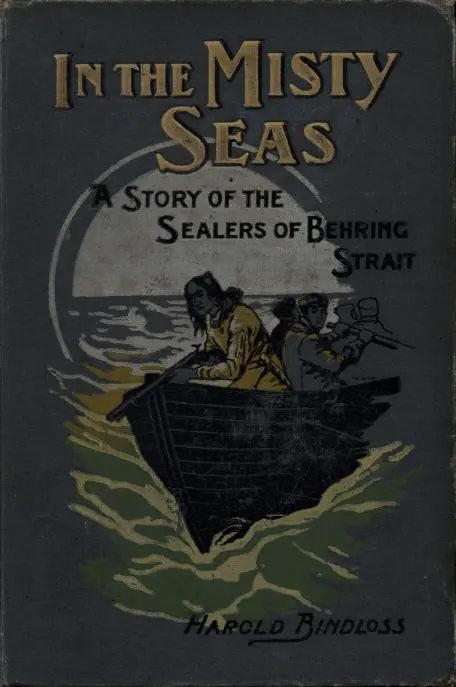
Harold Bindloss
Harold Bindloss
BEHIND THE BOOK
This eBook is for the use of anyone anywhere in the United States and most other parts of the world at no cost and with almost no restrictions whatsoever. You may copy it, give it away or re-use it under the terms of the Project Gutenberg License included with this eBook or online at www.gutenberg.org. If you are not located in the United States, you will have to check the laws of the country where you are located before using this eBook. Read the source licence.
The original source file, including credits and licence, is retained by this library. Request an original-format copy at no charge. Please include the book title and Project Gutenberg identifier #14698.
KEEP YOUR CURIOSITY GOING
Coulson Kernahan

Maurice Baring
Frances Wright
Cécile Tormay

Frederic Jesup Stimson

W. H. P. (William Henry Pope) Jarvis