THE CLASSIC COLLECTION✦Some Diversions of a Man of LettersCLASSIC FREE BOOKS
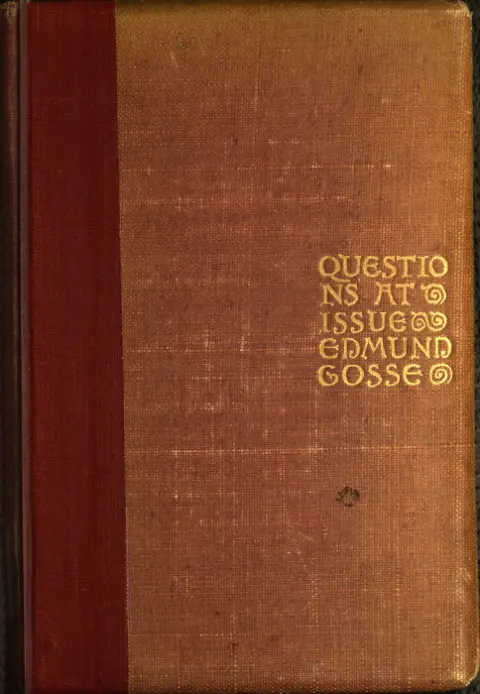
Some Diversions of a Man of Letters
Edmund Gosse
THE CLASSIC COLLECTION · 1886
"Raleigh" by Edmund Gosse is a historical account written in the late 19th century. This biographical work chronicles the life of Sir Walter Raleigh, exploring his multifaceted career as a soldier, explorer, and courtier in Elizabethan England. The book aims to portray Raleigh's personal journey distinct from the broader political and historical context of his times. The opening of the book focuses on Raleigh's early life, detailing his birth in 1552 in Hayes Barton, Devonshire, and his ancestry, which includes notable figures such as his half-brother Sir Humphrey Gilbert. Gosse elaborates on Raleigh’s formative years, including his uncertain education at Oxford, his early military experiences in France, and the influence of his family on his adventurous spirit. The narrative sets the stage for Raleigh's later exploits as a prominent explorer and courtier, hinting at the ambition and complexity that would characterize his career and interactions with key historical figures of his time.
Introduction adapted from the source catalogue; source summaries may be automatically generated.
Free to read · English · 73,271 words · No account needed
MAKE TIME FOR A GOOD BOOK
On by default. Untick to stop anonymous reading totals. Each page counts after 10 seconds in view. How this works.
Anonymous counting is on unless you have switched it off.
Peyton, Sir John, succeeds R. in Jersey, 141; Sir John the younger messenger between Cobham and R., 144
Philip of Spain's Armada, resistance to, 37;
expels Antonio from Portugal, 41;
desire to recover prestige, 105
Philip III. demands R.'s execution, 212;
foiled by R.'s conduct at execution, 219
Phoenix Nest, 34
Pilgrimage, R. writes The, 159
Piratical expedition by R. stopped, 7
Plymouth, 7, 27, 29, 36, 38, 67, 89, 90, 91, 100, 105, 106, 117, 194, 203
Popham, Lord Chief Justice, tries R. at Winchester, 146; hissed at conclusion of R.'s trial, 157; declares R.'s Sherborne conveyance invalid, 164
Popham, Captain George, captures Spanish letters, 66
Portland, R. as governor completes defences of, 38
Portugal, expedition to restore Antonio, 41;
R. serves under Drake at Lisbon, ib.
Potato introduced into Ireland by R., 48;
distributed by ancestor of Lord Southwell, ib.
Prerogative of Parliaments, by R., 112, 180;
its publication and intention, 183;
King James forbids its printing, 184;
issued posthumously, ib.;
MS. in Record Office, ib.
Preston, Captain Amyas, harries Venezuela, 81
Prest, Agnes, her martyrdom, 2;
indirect effect on R.'s religion, 3
'Prudence,' a London ship, 59
Puerto Rico friars, 69
Purchas, his collection of travels, 85
Puritans, Essex and R. their friends, 50
Puttenham's praise of Shepherd's Calender, 44
Queen of James I., R.'s friend, 169, 188;
her father, Christian IV., 169;
Samuel Daniel a servant of, 183;
R.'s rhyming petition to, 209;
exertions to save R., 210;
death of, 223
'Rainbow,' Sir F. Vere's ship at Cadiz, 95
Rakele, R. meets Spenser at, 10;
R.'s treatment of Irish kerns at, 11
Raleigh, Carew, son of Sir Walter, 166;
reference to, 200, 222
Raleigh, George, Sir Walter's nephew, 200
Raleigh nee Gilbert, Mrs., Sir Walter's mother, 1;
her religion, 2
Raleigh town, Virginia, 36
Raleigh, Walter, the elder, his third marriage, 1;
diversity of spelling his name, 2;
family lease of fish tithes, 2;
latest mention of, his age, 16
Raleigh, Sir Walter, Lives of, v.;
correspondence of, v.;
bibliography by Dr. Brushfield, vi.;
love of birthplace, 1;
connections and parentage, 1;
earliest record of, 2;
education and career at Oxford, 3;
convicted of assault, 7;
goes to Ireland, 9;
with Spenser, 10, 43, 48, 49;
character whilst in Ireland, 14;
pecuniary position, 16, 30, 34, 42, 116, 126, 129, 133, 141, 162, 189,
190, 194;
his person in 1582, 20;
mother wit and audacious alacrity, 22;
success as a courtier, 23;
Royal gifts to, 24, 25;
continues Sir H. Gilbert's efforts, 28;
and Virginia, 29, 37, 41, 125;
granted licence to export woollen broad-cloths, their nature and value,
29, 30;
resides at Durham House, 31;
receives knighthood, 31;
successful expedition to Azores, 33;
elegy on Sir Philip Sidney, ib.;
experience as an Irish colonist, 34;
zenith of personal success, 35;
part in fighting Armada, 37;
privateering expeditions, their excuse, 40, 41;
forced return to Ireland, 42;
his poem of Cynthia, 45;
developes his Irish estates, 47;
introduces the potato, 48;
and Puritans, his toleration, 50;
Report on Grenville's fight in the 'Revenge,' 51;
obtains Sherborne Castle, 52-53;
clandestine relations with Elizabeth Throckmorton, 55;
embroilment between Queen and Mrs. Throckmorton, 55-57;
confined in the Tower, 57;
failure in health, 59, 63, 110, 114, 168, 187, 199, 200;
released to quell disturbance in Devon, 61;
his popularity in Devon, 61;
marriage with E. Throckmorton, 63;
eagerness for service, 64;
attracted to Guiana, 66;
and Guiana gold, 75-77;
publishes Discovery of Guiana, 84;
merit as a writer of travel, 85;
his Of the Voyage for Guiana, 87;
naval skill first fully recognised, 89;
taking of Cadiz, brilliant triumph for, 91;
his Relation of the Action in Cadiz Harbour, 92;
details of his Cadiz command, 92-99;
wounded in the leg, 98;
preparation for third Guiana expedition, 101;
lauded by literary classes on return from Cadiz, 102;
intimacy with Cecil and Brooke family, 102;
exertions to provoke second attack on Spain, 105;
sails with fleet to attack Azores; success at Fayal, which provokes
Essex, 105-109;
only nominally in Queen's favour, 111;
his Prerogative of Parliament, 112, 183-184;
seeks various dignities without success, ib.;
increasing enmity with Essex, and friendship with Cobham, 113;
height of fame as a geographer, 114;
his share in the execution of Essex, 118-121;
comes under notice of James of Scotland, 123;
his Dangers of the Spanish Faction in Scotland, 124;
his view of Irish affairs in 1601, ib.;
not a complete loser by his expeditions, 126;
severe action towards Cormac MacDermod, 128;
advises detention of F. MacCarthy in Tower, 129;
good fortune ceases with Elizabeth's death, ib.;
character, condition, and fame in 1603, 130-131;
ungraciously received by King James, 132;
sent from Court of James, 133;
not judicious towards James, 134;
Spanish schemes distasteful to King, 135;
arrested for complicity in Watson's plot, 136;
compromised by Cobham, 136, 137;
committed to the Tower, 137;
attempts suicide, 137, 138, 141;
supposed farewell letter to his lady, 137-140;
stripped of his appointments, 141;
communications with Cobham, 141, 144, 145;
enmity of populace to, 145;
trial at Winchester, 146-157;
letter to K. James suing for life, 158, 159;
poem The Pilgrimage, 159;
reprieved at hour for execution, 160;
confinement in Tower, 160, 164, 167, 168;
efforts for his release, 169;
friendship with Queen and Prince Henry, 169;
asks permission to go to Guiana, 170, 174;
literary pursuits, 171;
consulted by P. Henry in shipbuilding, 173-4;
writing Marriage Discourses, 174;
History of World and Ben Jonson, 175, 176-182;
demands for his MS., 184;
his Cabinet Council; Discourse of War; and Observations on Trade
and Commerce, 185, 186;
his release and conditions, 188, 189;
prepares second voyage to Guiana, 189-191;
intrigues for seizure of Genoa, 192;
leaves for Guiana--fleet vicissitudes, 193-194;
details of outward voyage, 195-200;
meets an old servant in Guiana, 200;
his son slain at San Thome, 201;
fails to discover gold, 201;
his faithful Keymis commits suicide, 202;
mutiny of his fleet ib.;
ignominious return to England, 203, 205;
arrest and attempted escape, 206, 208;
writes Apology for the Voyage to Guiana, 208;
valuables found on his person, 209;
James uninfluenced by Apology, ib.;
rhyming petition to Queen; her exertions, 209, 210;
examined before Commissioners, 210, 212;
written confession to the King, 212;
if pardoned declares ability to reveal State secrets, ib.;
trial, defence, condemnation, 212, 213, 214;
bearing night before execution, 214-5;
last interview with his Lady, 215;
last verses, ib.;
proposed burial at Beddington, 215;
last moments, conduct on scaffold, 216-220;
reason for attempted escape to France, 219;
execution, 221;
body in St. Margaret's, Westminster, 222;
his head embalmed and preserved, ib.;
death roll of his friends, 223
Your reading position is saved on this browser. Take it to another device with a library code. Reading pages adapt to text, rather than matching a printed edition.
Edmund Gosse
Edmund Gosse
Edmund Gosse
Edmund Gosse
BEHIND THE BOOK
This eBook is for the use of anyone anywhere in the United States and most other parts of the world at no cost and with almost no restrictions whatsoever. You may copy it, give it away or re-use it under the terms of the Project Gutenberg License included with this eBook or online at www.gutenberg.org. If you are not located in the United States, you will have to check the laws of the country where you are located before using this eBook. Read the source licence.
The original source file, including credits and licence, is retained by this library. Request an original-format copy at no charge. Please include the book title and Project Gutenberg identifier #27580.
KEEP YOUR CURIOSITY GOING
Cécile Tormay

Moritz Busch
John L. Ransom
Frances Wright
Cécile Tormay

Mabel Potter Daggett