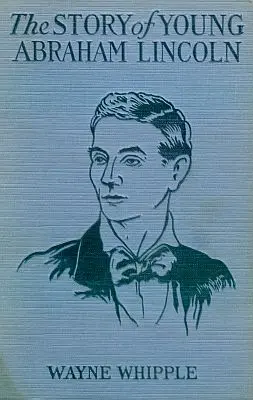
The Story of Young Abraham Lincoln
Wayne Whipple
THE CLASSIC COLLECTION · 1922
"Radio Boys Loyalty; Or, Bill Brown Listens In" by Wayne Whipple and S. F. Aaron is a novel written in the early 20th century. The story centers around two young friends, Bill Brown and Gus Grier, who are eager to start a new chapter of their lives as students at Marshallton Technical School. As they embark on their adventure, they encounter various challenges including the threat of hazing and the trials of adapting to a new environment filled with upperclassmen. At the start of the story, Bill and Gus arrive at their prestigious school, filled with hope and aspirations for their future in engineering and radio technology. Their camaraderie is evident as they discuss the trials awaiting them, particularly the prospect of hazing. They quickly devise a clever plan to defend themselves against potential tormentors, showcasing their inventive nature. As the opening chapters unfold, the boys not only navigate social dynamics but also demonstrate their technical skills, hinting at the exciting adventures and challenges that lie ahead in their pursuit of knowledge and friendship.
Introduction adapted from the source catalogue; source summaries may be automatically generated.
Free to read · English · 37,474 words · No account needed
MAKE TIME FOR A GOOD BOOK
On by default. Untick to stop anonymous reading totals. Each page counts after 10 seconds in view. How this works.
Anonymous counting is on unless you have switched it off.
Davidson, chief mechanical engineer of a great mill building corporation, was especially interested in the personal equation concerning the students, particularly after Bill Brown bad asked him a lot of questions, some of which he had replied to rather lamely. Even more as a matter of getting back at this young investigator who sat with a crutch held before him and regarded these replies with a smile than for the desire to measure minds, Davidson gathered a few catch problems that were stumpers, and upon his third visit, after talking awhile he switched off on the subject of problems, short cuts to solutions and then put a question, looking hard at Bill, as though uttering a challenge.
"Now, how would you go about it," he shot at his audience, "if you were asked to measure the cubic contents of an electric light bulb?"
A number of smiles greeted the question; these may have been from lads mostly in the advanced courses who knew the trick. The lecturer asked for hands to be raised by those who thought they could do it, and noting with satisfaction that the crippled boy was not among the number who responded, he began hearing them, one at a time.
"Measure it outside and allow for the thickness of the glass," said one
fellow.
"But how about the carbon inside?" asked Davidson.
"Break the glass and measure the loop," called out a soph.
"How many of you would go at it in that way?"
A number of hands went up, some rather reluctantly, as though their
owners scented a trick.
Davidson still eyed the cripple. "How would you do it?" he asked.
Bill shook his head and said, "It is that old trick of Edison's and it's dead easy. I guess a good many of our fellows know about it. You simply punch a hole in the bulb, fill it with water, pour it back and measure the water."
"Yes; that's right. It is really the only sure way," said the man, his manner showing disappointment.
"Oh, no; it isn't, begging your pardon. Oh, no, not the only way," said
Bill.
"Well, now, how else----"
"Put water in a graduated glass, stick the bulb in up to the plaster seal and note the increase. Then break the glass and the carbon and put that in separately, deducting the last amount from the first."
Davidson scratched his head. "Yes; that would do it, of course, too,
but----"
"But you said the other was the only way," insisted Bill.
"Oh, well, the only quick and sure way. Of course, there are other
methods."
Your reading position is saved on this browser. Take it to another device with a library code. Reading pages adapt to text, rather than matching a printed edition.
Wayne Whipple
BEHIND THE BOOK
This eBook is for the use of anyone anywhere in the United States and most other parts of the world at no cost and with almost no restrictions whatsoever. You may copy it, give it away or re-use it under the terms of the Project Gutenberg License included with this eBook or online at www.gutenberg.org. If you are not located in the United States, you will have to check the laws of the country where you are located before using this eBook. Read the source licence.
The original source file, including credits and licence, is retained by this library. Request an original-format copy at no charge. Please include the book title and Project Gutenberg identifier #25753.
KEEP YOUR CURIOSITY GOING
Coulson Kernahan

Maurice Baring
Frances Wright
Cécile Tormay

Frederic Jesup Stimson

W. H. P. (William Henry Pope) Jarvis