THE CLASSIC COLLECTION✦The new gas from radiumCLASSIC FREE BOOKS
The new gas from radium
Ernest Rutherford & Harriet Brooks
THE CLASSIC COLLECTION · 1904
"Radio-Activity" by Ernest Rutherford is a scientific publication written in the early 20th century. The book provides a thorough examination of naturally radio-active substances, summarizing experimental findings and the theoretical frameworks that help explain the complex phenomena associated with radioactivity. The opening of "Radio-Activity" introduces the evolution of scientific understanding regarding radio-active materials and their properties. Rutherford reflects on past discoveries, including the works of Henri Becquerel and the early explorations of X-rays, leading to the advancement of theories on spontaneous disintegration of radioactive atoms. He emphasizes the rapid growth of knowledge in the field and outlines the significance of the disintegration theory in correlating a vast array of experimental data. This foundation sets the stage for a more detailed exploration of the ionization theory of gases, the methods of measuring radioactivity, and the ongoing developments in the study of radio-active minerals.
Introduction adapted from the source catalogue; source summaries may be automatically generated.
Free to read · English · 193,474 words · No account needed
MAKE TIME FOR A GOOD BOOK
On by default. Untick to stop anonymous reading totals. Each page counts after 10 seconds in view. How this works.
Anonymous counting is on unless you have switched it off.
A simple and excellent account of the effects produced by the motion of a charged ion and also of the electronic theory of matter was given by Sir Oliver Lodge in 1903 in a paper entitled “Electrons” (Proceedings of the Institution of Electrical Engineers, Part 159, Vol. 32, 1903). See also J. J. Thomson’s Electricity and Matter (Scribner, New York, 1904).
Footnote 84:
J. J. Thomson, Phil. Mag. April, 1887.
Footnote 85:
Heaviside, Collected Papers, Vol. II. p. 514.
Footnote 86:
Searle, Phil. Mag. Oct. 1897.
Footnote 87:
Abraham, Phys. Zeit. 4, No. 1 b, p. 57, 1902.
Footnote 88:
A full account of the path described by a moving ion under various conditions is given by J. J. Thomson, Conduction of Electricity in Gases (Camb. Univ. Press, 1903), pp. 79–90.
Footnote 89:
J. J. Thomson, Phil. Mag. p. 293, 1897.
Footnote 90:
Lenard, Annal. d. Phys. 64, p. 279, 1898.
Footnote 91:
Kaufmann, Annal. d. Phys. 61, p. 544; 62, p. 596, 1897; 65, p. 431,
1898.
Footnote 92:
Simon, Annal. d. Phys. 69, p. 589, 1899.
Footnote 93:
A complete discussion of the various methods employed to measure the velocity and mass of electrons and also of the theory on which they are based will be found in J. J. Thomson’s Conduction of Electricity through Gases.
Footnote 94:
Goldstein, Berlin Sitzber. 39, p. 691, 1896; Annal. d. Phys. 64,
p. 45, 1898.
Footnote 95:
Wien, Annal. d. Phys. 65, p. 440, 1898.
Footnote 96:
Larmor, Phil. Mag. 44, p. 593, 1897.
Footnote 97:
J. J. Thomson, Phil. Mag. Feb. 1897.
Footnote 98:
Barkla, Phil. Mag. June, 1903.
Your reading position is saved on this browser. Take it to another device with a library code. Reading pages adapt to text, rather than matching a printed edition.
Ernest Rutherford & Harriet Brooks
Ernest Rutherford
Ernest Rutherford
BEHIND THE BOOK
This eBook is for the use of anyone anywhere in the United States and most other parts of the world at no cost and with almost no restrictions whatsoever. You may copy it, give it away or re-use it under the terms of the Project Gutenberg License included with this eBook or online at www.gutenberg.org. If you are not located in the United States, you will have to check the laws of the country where you are located before using this eBook. Read the source licence.
The original source file, including credits and licence, is retained by this library. Request an original-format copy at no charge. Please include the book title and Project Gutenberg identifier #64693.
KEEP YOUR CURIOSITY GOING
John Muir
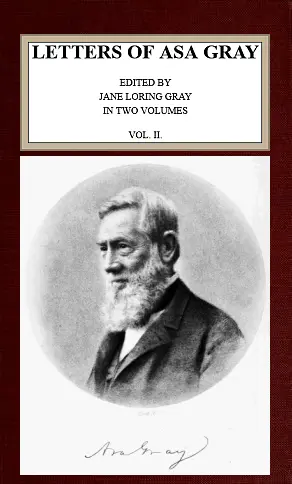
Asa Gray
Asa Gray
Florence Nightingale
Elizabeth Robins Pennell
Denison Olmsted