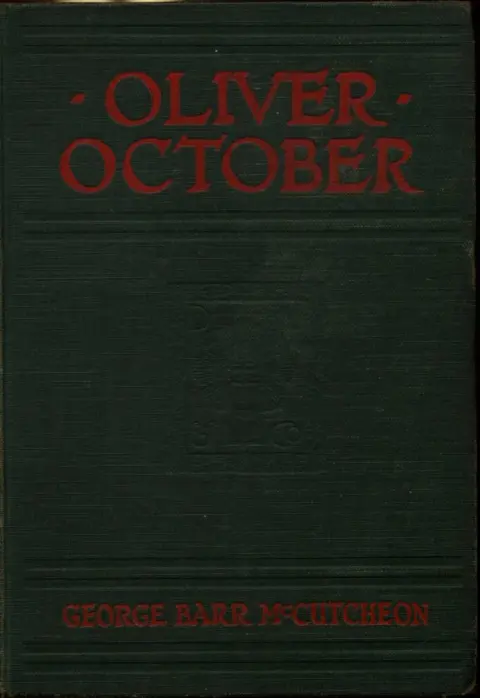
Oliver October
George Barr McCutcheon
THE CLASSIC COLLECTION · 1921
"Quill's Window" by George Barr McCutcheon is a novel likely written in the early 20th century. The story revolves around complex family dynamics and the unfolding drama surrounding the character David Windom, who has a troubled history tied to the mysterious location known as Quill's Window—a cliff with an eerie past and significant emotional weight. The book introduces themes of love, loss, and the intertwining lives of several characters, including Windom's daughter Alix and the significant impact of past actions on present relationships. The opening portion of the novel begins with an engaging scene by the river, where two characters, an older man and a younger man, sit fishing and sharing a conversation that reveals much about their life experiences and the local lore. As they discuss the imposing rock known as Quill's Window, the older man recounts its dark history, including tales of an Irish hermit and a series of tragic events tied to its name. Through their dialogue, the reader is introduced to the intriguing backstory of Quill’s Window and its connection to the Windom family, setting up a rich tapestry of narrative that hints at deeper conflicts and the way haunting memories shape the present lives of the characters involved.
Introduction adapted from the source catalogue; source summaries may be automatically generated.
Free to read · English · 93,036 words · No account needed
MAKE TIME FOR A GOOD BOOK
On by default. Untick to stop anonymous reading totals. Each page counts after 10 seconds in view. How this works.
Anonymous counting is on unless you have switched it off.
Having delivered himself of this felicitous speech, the somewhat relieved Mr. Webster wiped his brow.
"What did he say?" quaked old Mrs. Nichols, putting her hand to
her ear.
"Says he hoped they'd be happy," bawled old Mr. Nichols, close to
her ear.
"Pass the bread, Doc," said Mr. Hatch, getting pinker and pinker.
"When's it to take place, Angle?" inquired Charlie, resuming his seat. He cast a sharp look at Courtney. The young man shifted his gaze immediately.
"As I explained to Mr. Pollock, everything depends on my aunt," said Angie composedly. "She is very old,--eighty-three, in fact."
"You don't mean to say your aunt objects to your marrying old
Tintype," exclaimed Charlie.
"Not at all," replied Angie, somewhat tartly.
"You see, it's this way," volunteered Mr. Pollock. "Miss Angie is the sole support of a venerable and venerated aunt who lives in Frankfort. That is a thing to be considered. Her duty to her father's sister--"
Courtney interrupted, chuckling. "It's too much to ask of any woman. I suppose it must take nearly all you earn, Miss Miller, to support your aged relative, so naturally you do not feel like taking on Mr. Hatch immediately."
There was a moment's silence around the table.
"I see by the Chicago Tribune," said Mr. Pollock, after a hurried gulp of coffee, "that there's likely to be a strike of the street-car men up there."
"You don't say so," said Doc Simpson, looking so concerned that one might have been led to suspect that he was dismayed over the prospect of getting to his office the next day.
"What's the world coming to?" sighed Maude Baggs Pollock nervously. "Strikes, strikes everywhere. Murder, bloodshed, robbery, revolution--"
"Next thing we know," put in Charlie Webster, without looking up from his plate, "God will strike, and when He does there'll be hell to pay, begging your pardon, ladies, for using a word that sounds worse than it tastes."
"I use it every day of my life," said Miss Flora Grady. "It's a grand word, Charlie," she added, a little defiantly.
"Times have changed," remarked Mr. Pollock blandly. "It wasn't so very long ago that women Said 'pshaw' when they wanted to let off steam. Then they got to saying 'shucks,' and from that they progressed to 'darn,' and now they say 'damn' without a quiver. Only yesterday I heard my wife say something that sounded suspiciously like 'dammit to hell' when she upset a bottle of ink on her desk. She hasn't stubbed her toe against a rocking-chair lately, thank goodness."
Doc Simpson stopped Courtney as he was starting upstairs after dinner. The dentist was unsmiling.
Your reading position is saved on this browser. Take it to another device with a library code. Reading pages adapt to text, rather than matching a printed edition.
George Barr McCutcheon
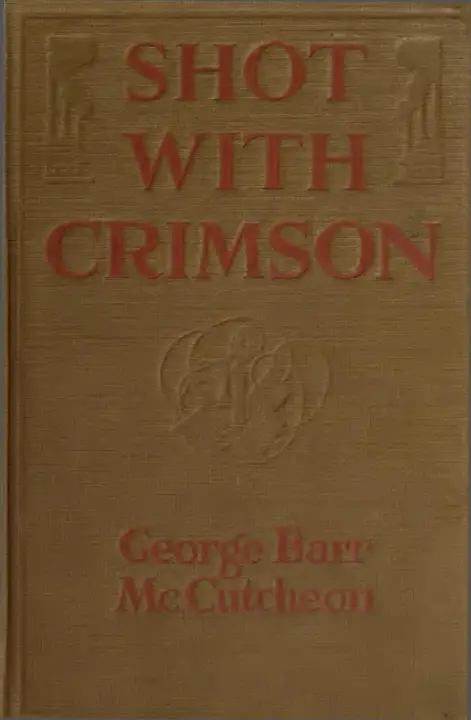
George Barr McCutcheon
George Barr McCutcheon
George Barr McCutcheon
BEHIND THE BOOK
This eBook is for the use of anyone anywhere in the United States and most other parts of the world at no cost and with almost no restrictions whatsoever. You may copy it, give it away or re-use it under the terms of the Project Gutenberg License included with this eBook or online at www.gutenberg.org. If you are not located in the United States, you will have to check the laws of the country where you are located before using this eBook. Read the source licence.
The original source file, including credits and licence, is retained by this library. Request an original-format copy at no charge. Please include the book title and Project Gutenberg identifier #6044.
KEEP YOUR CURIOSITY GOING
Coulson Kernahan

Maurice Baring
Frances Wright
Cécile Tormay

Frederic Jesup Stimson

W. H. P. (William Henry Pope) Jarvis