THE CLASSIC COLLECTION✦An outlaw’s diary: the CommuneCLASSIC FREE BOOKS
An outlaw’s diary: the Commune
Cécile Tormay
THE CLASSIC COLLECTION · 1915
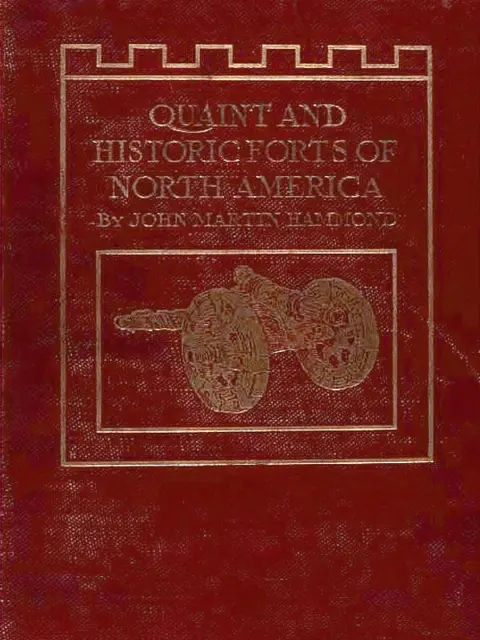
"Quaint and Historic Forts of North America" by John Martin Hammond is a historical account written in the early 20th century. This work explores the military history and significance of notable fortifications throughout North America, covering various periods of conflict and cultural interaction from the colonial era onward. The book emphasizes the unique architectures and historical events associated with these forts, enriching the reader's understanding of their roles in shaping the continent's history. The opening of this volume introduces the concept that the fortifications of North America serve as a cross-section of the continent's military past, detailing the myriad cultures that have engaged in conflict over the land. Hammond highlights the historical significance of locations like Cape Breton Island, referencing the formidable fortress of Louisburg and its role during the War of the Austrian Succession. The narrative hints at the complexities involved in the relationships between indigenous peoples, European settlers, and military endeavors, setting the tone for a detailed examination of individual forts and their stories in subsequent chapters.
Introduction adapted from the source catalogue; source summaries may be automatically generated.
Free to read · English · 75,531 words · No account needed
MAKE TIME FOR A GOOD BOOK
On by default. Untick to stop anonymous reading totals. Each page counts after 10 seconds in view. How this works.
Anonymous counting is on unless you have switched it off.
The largest of the national military parks is Chickamauga and Chattanooga National Park, which comprises 5,688 acres in the State of Georgia, in addition to nearly 150 acres in the State of Tennessee, the park being situated on the line between the States. In Tennessee is located Lookout Mountain. The acquisition of this reservation began under the provisions of an Act of Congress approved August 19, 1890.
On the outskirts of Petersburg, Virginia, the remains of Forts Haskell and Steadman, the scene of the “Crater” episode, and part of the defences of the capital of the Confederacy which fell before Grant in 1865, have been preserved as a private enterprise. For a small consideration the “Crater” and the earthworks will be shown to the visitor. The Federal forces opposed to Fort Steadman--at the suggestion of a miner from Chambersburg, Pa., it is said--constructed a long tunnel from their lines to beneath the Confederate stronghold. An enormous quantity of powder was here, and when it was set off a body of soldiers was to charge through the breach and take the Confederate positions.
The powder was exploded and the plan was successful in so far that it blew several hundred men into eternity, but when the attacking column reached the cavity in the ground its men became confused, giving the Confederates time to reform and to pour in a terrible fire upon the Union men concentrated in the broken ground below. The result was terrible carnage of United States troops. The “Crater” had become a death trap. Nearly three thousand men were killed in it in thirty minutes, the most disastrous loss the Federal forces suffered in so short a time during the war.
The “Crater” to-day is a peaceful spot glorified by tall trees which keep the scene in continual gloom. The depression in the ground is ten feet or more in depth and about two hundred feet in diameter. A short walk brings one to the entrance to the tunnel where the lines of the United States were stretched.
Adams, Fort, Newport, R. I., 222-231
Alamo, Texas, 279-284
Allen, Ethan, 63, 70
Amsterdam, Fort, 37
André, Major, 156
Andros, Edmund, Royal Governor of Mass., 29, 107
Annapolis Royal, 2, 84-92
Arnold, Benedict, 64, 82;
his treason, 154 et seq., 169, 171, 238
Atares Castle, Havana, 206
Baltimore, Fort at, 180-189
Battery, The, New York City, 46
Belfast, Me., 90
Belle Rive, Louis St. Ange de, Commanding Chartres, 12;
stationed at Vincennes, 14;
surrenders Chartres to English, 14
Boston, Fort at, 25-35
Boston Tea Party, 31
Bourbon, Fort, on the Mississippi, 263
Bowie, James, inventor of Bowie knife, 281
Braddock, 18;
his march and death, 19, 53, 127
Bradford, Wm., 106
Brownsville, Pa., 21
Burgoyne, General, 64
Burnet, Governor of New York, 122, 123, 124
Cadillac, La Motte, 132
Caen, Emery de, 75
Canseau, Nova Scotia, expedition against, 2;
fleet arrives at, 7
Castine, Baron Vincent de, 103, 104
Your reading position is saved on this browser. Take it to another device with a library code. Reading pages adapt to text, rather than matching a printed edition.
BEHIND THE BOOK
This eBook is for the use of anyone anywhere in the United States and most other parts of the world at no cost and with almost no restrictions whatsoever. You may copy it, give it away or re-use it under the terms of the Project Gutenberg License included with this eBook or online at www.gutenberg.org. If you are not located in the United States, you will have to check the laws of the country where you are located before using this eBook. Read the source licence.
The original source file, including credits and licence, is retained by this library. Request an original-format copy at no charge. Please include the book title and Project Gutenberg identifier #54746.
KEEP YOUR CURIOSITY GOING
Cécile Tormay

Moritz Busch
John L. Ransom
Frances Wright
Cécile Tormay

Mabel Potter Daggett