READ · DISCOVER · ENJOYClassic literature · Always free
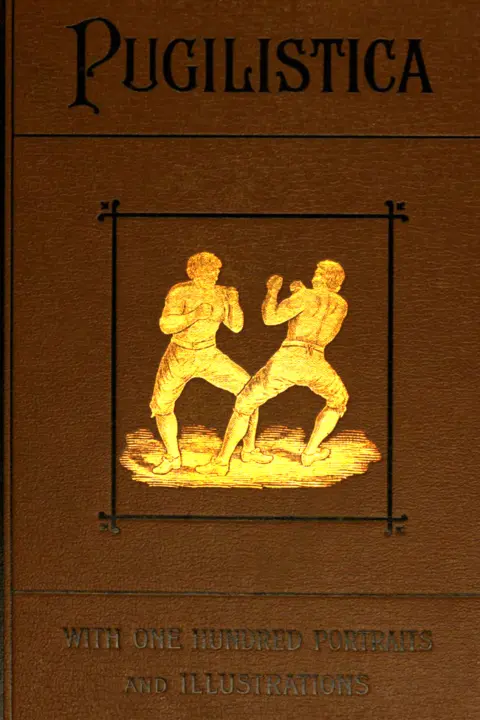
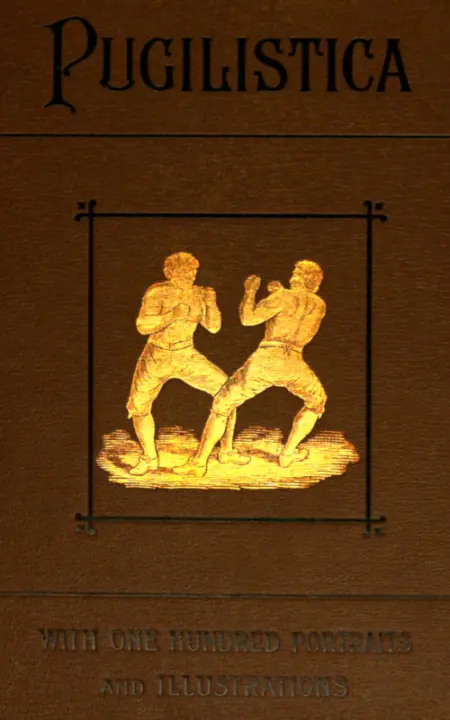
Pugilistica: The History of British Boxing, Volume 3 (of 3) Containing Lives of the Most Celebrated Pugilists; Full Reports of Their Battles from Contemporary Newspapers, With Authentic Portraits, Personal Anecdotes, and Sketches of the Principal Patrons of the Prize Ring, Forming a Complete History of the Ring from Fig and Broughton, 1719-40, to the Last Championship Battle Between King and Heenan, in December 1863 — digital edition cover

THE CLASSIC COLLECTION · 1880

Pugilistica: The History of British Boxing, Volume 3 (of 3) Containing Lives of the Most Celebrated Pugilists; Full Reports of Their Battles from Contemporary Newspapers, With Authentic Portraits, Personal Anecdotes, and Sketches of the Principal Patrons of the Prize Ring, Forming a Complete History of the Ring from Fig and Broughton, 1719-40, to the Last Championship Battle Between King and Heenan, in December 1863

"Pugilistica: The History of British Boxing, Volume 3" by Henry Downes Miles is a historical account written in the early 20th century. This volume provides a detailed examination of British boxing, focusing on significant pugilists and their battles, extending from the era of Bendigo in 1835 to the championship fight in December 1863. It explores the lives, fights, and legacies of notable boxers, capturing the evolution of the sport and its cultural significance during the time. At the start of this volume, the author introduces William Thompson, known as Bendigo, detailing his rise to prominence as a champion pugilist. The text recounts Bendigo's early victories against notable opponents, his fighting style characterized by agility and clever tactics, and the growing excitement surrounding his matches. The narrative sets the stage for exploring both the historical context of boxing in Britain and the captivating anecdotes that shaped the lives of its celebrated fighters, establishing a rich tapestry of boxing's storied past.

Introduction adapted from the source catalogue; source summaries may be automatically generated.

Start reading ↓

Free to read · English · 328,146 words · No account needed

MAKE TIME FOR A GOOD BOOK

Pugilistica: The History of British Boxing, Volume 3 (of 3) Containing Lives of the Most Celebrated Pugilists; Full Reports of Their Battles from Contemporary Newspapers, With Authentic Portraits, Personal Anecdotes, and Sketches of the Principal Patrons of the Prize Ring, Forming a Complete History of the Ring from Fig and Broughton, 1719-40, to the Last Championship Battle Between King and Heenan, in December 1863

On by default. Untick to stop anonymous reading totals. Each page counts after 10 seconds in view. How this works.

Anonymous counting is on unless you have switched it off.

Pugilistica: The History of British Boxing, Volume 3 (of 3) Containing Lives of the Most Celebrated Pugilists; Full Reports of Their Battles from Contemporary Newspapers, With Authentic Portraits, Personal Anecdotes, and Sketches of the Principal Patrons of the Prize Ring, Forming a Complete History of the Ring from Fig and Broughton, 1719-40, to the Last Championship Battle Between King and Heenan, in December 1863

After this public manifestation that whatever “devil” there may be in “Old Nick” his young namesake was endowed with none of that fiery quality, “the Champion’s brother” confined himself to “attitude,” the horse-hair pads, and, in the words of pugilistic M.C.’s., to “walking round and showing his muscle.” Meantime the “cow-cabbage hero” kept continually challenging him to another bout “in the reg’lar ring,” while starring it on sparring tours at Cambridge, Oxford, and elsewhere――for Sambo was an immense favourite among the “’Varsity men.” At last the smoke kindled into a flame, and out came Nick, with a declaration that he would “no longer stand this black buffoon’s bounce.” Articles were accordingly signed, a match made for £50 a side, and the stakes deposited in the hands of old Tom Cribb. Tuesday, the 27th March, 1838, was named as the day, half-way between Birmingham and London as the place of battle; for though the deposits were made in town it was not a metropolitan match. Nick Ward’s money was found by brother Jem and certain Liverpool supporters; while the funds for Sambo were readily raised, principally by some Oxford friends. Ward went into training at Crosby, near Liverpool, under the immediate eye of his brother and Peter Taylor. Sambo did his breathings and gymnastics at a village near Oxford city. Both men were reported to be in tip-top condition, and eager for the fray――Nick to refurbish his tarnished reputation, and rub off the stain of pusillanimity, and Sambo, as he said, “’cos him like to hab anoder slap at Massa Ward, him so clebber at get away――but p’raps not dis time;” and he shook his woolly nob like a black Burleigh. It was the desire of the London division that, under the shadow of the untoward result of the encounter between Owen Swift and Brighton Bill (March 13th, 1838), a postponement of the meeting should take place; but time would not permit, in those days of slow communication, to have a conference on the subject, so matters took their course. Ward, having won the toss, named Bicester, in Oxfordshire (the recent scene of the defeat of Byng Stocks, of Westminster, by Hammer Lane, of Birmingham), a town distinguished for the jovial character and sporting propensities of its inhabitants. Thither were the ropes and stakes sent. The Commissary being laid up with the gout, and unable to accompany them, Jack Clarke was deputed to officiate, he being on the spot, and acting as trainer to Massa Sambo. As we feel best satisfied when we write from personal observation, we may note that on Monday afternoon we found ourselves comfortably seated in a room at the “King’s Arms,” Bicester, a house distinguished for solid customers, and them boasting a host of high sporting quality. There was no bustle in the town, which at that time was quiet as a Quakers’ meeting; none of the “old familiar faces” were visible. The London Fancy――and we think they were right――had determined that all matches should be postponed for a certain period. Hence, not a single familiar phiz graced the scene. It is true the town was enlivened by the presence of Sir Henry Peyton, with his spicy four-in-hand, and there, too, was Lord Chetwynd, on his cover-hack; but we could not help thinking, as his lordship gave us a sly nod of recognition, that there was a curious expression in his jolly face, as he made us aware that there had been “magisterial business” at the Town Hall, as a sort of reason why we saw him there. This was soon confirmed by a sporting friend, whom we fearlessly set down as that lusus naturæ, “an honest lawyer.” He told us, with regret, that “the Philistines were abroad,” and that the Home Office, urged on by the twaddle of “My Grandmother” (the Morning Herald), and the goody-goody papers, with the awful denunciations of the supineness or complicity of the magistracy of Cambridgeshire and Herts in the melancholy affair of Swift and Phelps, had sent down warnings and counsels for extra vigilance to the police and magistracy of Oxford and Bucks. That “all this was sooth” we had afterwards reason to find. Sambo, we learned, had been at Lainton, about two miles from the town, but, as a measure of precaution, he was moved from a public to a private house, and in the domicile of an honest yeoman met with that kindly hospitality by which this class of our countrymen was characterised. Here he was thought perfectly safe, and all that was now wanting was the arrival of Jem Ward, or some emissary from him, to agree upon some less dangerous point of meeting. It was understood that Ward had been advised to stop short of Bicester, but it was fully expected that he would appear at head-quarters to settle upon preliminaries. Every avenue was watched, yet up to nine o’clock no tidings of him were heard, and although the country was scoured over a circuit of three-and-twenty miles, after nine o’clock, in search of him, and every village visited, his presence could not be discovered, for the best of all reasons, that he had stopped short at Banbury, and did not come forward till the morning, nor send any person forward to announce his proximity. This was more than mortifying, for it was soon seen that the magistrates of Buckinghamshire became more active, and a constable was despatched by the venerable and amatory Sir John Chetwood, with a warrant for the apprehension of Sambo, which was backed by an Oxfordshire magistrate. The constable thus entrusted was more than usually active in his vocation, and endeavoured, by every means in his power, to ferret out his sable prey: an activity, no doubt, very praiseworthy, but which led him into an adventure far from agreeable, and certainly likely to remain impressed on his memory. While grunting about, like a boar looking for a pig-nut, he met with a wag who informed him, on a solemn promise of secresy, that Sambo was stowed away in a badger-box, which he knew to be placed in an enclosed paddock behind the house of the honest lawyer to whom we have already alluded, and whose zoological collection was known, far and near, as being of an extensive and curious description. “A nod is as good as a wink to a blind horse,” so Mister Constable, cock-sure of having marked down his game, silently stole into the paddock, where stood the long badger-box, of which he determined, from that instant, never to lose sight until its occupant should disclose himself. Night was fast approaching, but it was clear and fine, so, after duly reconnoitring, the “copper” cautiously approached the box, and, tapping on the lid, in soothing terms invited Mister Sutton to come out and surrender, as he was “wanted,” or else, badger or no badger, he must be “drawn.” As Sambo was about two miles off he made no answer, so the invitation was repeated in more peremptory tones, but with no more success. “Bobby” became irate at what he considered nigger obstinacy, so he turned the button and thrust his hand into the sacking, and so into the round hole at the top, with the view of lifting the lid. Rash experiment! the lawful tenant――a badger, not of African, but of British breed――was “at home,” but not to Home Office visitors. Without growl, bark, or other warning, the sharp-toothed “varmint” revenged the violation of his sanctum by seizing the digits of the assailant of his castle, and nearly severing the top joints of at least three of his fingers. The luckless constable raised so loud an exclamation that forth rushed a favourite old retriever hight “Nelson,” who gave tongue so loudly that, though “his bark was worse than his bite,” it was lucky he was on the chain, or, perchance, the seat of the rural’s inexpressibles might have been absent without leave before he succeeded in clearing the low wall into the high road, whence he lost no time in making his way to the village surgery, and thence, his dexter fin, as the police-reporters say, “enveloped in surgical bandages,” he hastened to “report” himself and his adventure to his superior officers. The mischievous author of the hoax did not fail to spread the story of the success of his severe practical joke, and for some time it was dangerous, but not uncommon, for labourers and impertinent boys to address the query to the Buckinghamshire constables of “Who drew the badger?” without receiving a civil or satisfactory answer.
Your reading position is saved on this browser. Take it to another device with a library code. Reading pages adapt to text, rather than matching a printed edition.

More from this author

BEHIND THE WORDS

About Henry Downes Miles

Henry Downes Miles (1806–1889). Explore Pugilistica: The History of British Boxing, Volume 3 (of 3) Containing Lives of the Most Celebrated Pugilists; Full Reports of Their Battles from Contemporary Newspapers, With Authentic Portraits, Personal Anecdotes, and Sketches of the Principal Patrons of the Prize Ring, Forming a Complete History of the Ring from Fig and Broughton, 1719-40, to the Last Championship Battle Between King and Heenan, in December 1863, Pugilistica: The History of British Boxing, Volume 2 (of 3) Containing Lives of the Most Celebrated Pugilists; Full Reports of Their Battles from Contemporary Newspapers, With Authentic Portraits, Personal Anecdotes, and Sketches of the Principal Patrons of the Prize Ring, Forming a Complete History of the Ring from Fig and Broughton, 1719-1740, to the Last Championship Battle Between King and Heenan, in December 1863, Pugilistica: The History of British Boxing, Volume 1 (of 3) Containing Lives of the Most Celebrated Pugilists; Full Reports of Their Battles from Contemporary Newspapers, With Authentic Portraits, Personal Anecdotes, and Sketches of the Principal Patrons of the Prize Ring, Forming a Complete History of the Ring from Fig and Broughton, 1719-40, to the Last Championship Battle Between King and Heenan, in December 1863 in this collection. These books span history.

Explore this author’s books →

THE READERS’ VERDICT

How did this story stay with you?

Not rated yet
Your rating for Pugilistica: The History of British Boxing, Volume 3 (of 3) Containing Lives of the Most Celebrated Pugilists; Full Reports of Their Battles from Contemporary Newspapers, With Authentic Portraits, Personal Anecdotes, and Sketches of the Principal Patrons of the Prize Ring, Forming a Complete History of the Ring from Fig and Broughton, 1719-40, to the Last Championship Battle Between King and Heenan, in December 1863

Be the first to share your verdict.

One rating per browser, which you can change or remove. A necessary browser identifier remembers your vote. How ratings work

A GOOD STORY DESERVES COMPANY

Pass this book along.

A great read is even better when it’s shared.

SEND A LITTLE INSPIRATION

Share this book

BEHIND THE BOOK

Edition & source details.

Title
Pugilistica: The History of British Boxing, Volume 3 (of 3) Containing Lives of the Most Celebrated Pugilists; Full Reports of Their Battles from Contemporary Newspapers, With Authentic Portraits, Personal Anecdotes, and Sketches of the Principal Patrons of the Prize Ring, Forming a Complete History of the Ring from Fig and Broughton, 1719-40, to the Last Championship Battle Between King and Heenan, in December 1863
Author
Henry Downes Miles
First publication (Open Library catalogue match)
1880
Digital edition publisher
Project Gutenberg
Gutenberg release date
2020-12-22
Language
English
Source edition imprint
Not stated in source catalogue
Source identifier
Project Gutenberg #64111
Contributors
No additional named contributors in source metadata

Public-domain source & licence

This eBook is for the use of anyone anywhere in the United States and most other parts of the world at no cost and with almost no restrictions whatsoever. You may copy it, give it away or re-use it under the terms of the Project Gutenberg License included with this eBook or online at www.gutenberg.org. If you are not located in the United States, you will have to check the laws of the country where you are located before using this eBook. Read the source licence.

Full source licence and obtaining an original copy

The original source file, including credits and licence, is retained by this library. Request an original-format copy at no charge. Please include the book title and Project Gutenberg identifier #64111.

the full Project Gutenberg License must appear
prominently whenever any copy of a Project Gutenberg work (any work
on which the phrase “Project Gutenberg” appears, or with which the
phrase “Project Gutenberg” is associated) is accessed, displayed,
performed, viewed, copied or distributed:

This eBook is for the use of anyone anywhere in the United States and most
other parts of the world at no cost and with almost no restrictions
whatsoever. You may copy it, give it away or re-use it under the terms
of the Project Gutenberg™ License included with this eBook or online
at www.gutenberg.org. If you
are not located in the United States, you will have to check the laws
of the country where you are located before using this eBook.

1.E.2. If an individual Project Gutenberg electronic work is
derived from texts not protected by U.S. copyright law (does not
contain a notice indicating that it is posted with permission of the
copyright holder), the work can be copied and distributed to anyone in
the United States without paying any fees or charges. If you are
redistributing or providing access to a work with the phrase “Project
Gutenberg” associated with or appearing on the work, you must comply
either with the requirements of paragraphs 1.E.1 through 1.E.7 or
obtain permission for the use of the work and the Project Gutenberg
trademark as set forth in paragraphs 1.E.8 or 1.E.9.

1.E.3. If an individual Project Gutenberg electronic work is posted
with the permission of the copyright holder, your use and distribution
must comply with both paragraphs 1.E.1 through 1.E.7 and any
additional terms imposed by the copyright holder. Additional terms
will be linked to the Project Gutenberg License for all works
posted with the permission of the copyright holder found at the
beginning of this work.

1.E.4. Do not unlink or detach or remove the full Project Gutenberg
License terms from this work, or any files containing a part of this
work or any other work associated with Project Gutenberg.

1.E.5. Do not copy, display, perform, distribute or redistribute this
electronic work, or any part of this electronic work, without
prominently displaying the sentence set forth in paragraph 1.E.1 with
active links or immediate access to the full terms of the Project
Gutenberg License.

1.E.6. You may convert to and distribute this work in any binary,
compressed, marked up, nonproprietary or proprietary form, including
any word processing or hypertext form. However, if you provide access
to or distribute copies of a Project Gutenberg work in a format
other than “Plain Vanilla ASCII” or other format used in the official
version posted on the official Project Gutenberg website
(www.gutenberg.org), you must, at no additional cost, fee or expense
to the user, provide a copy, a means of exporting a copy, or a means
of obtaining a copy upon request, of the work in its original “Plain
Vanilla ASCII” or other form. Any alternate format must include the
full Project Gutenberg License as specified in paragraph 1.E.1.

1.E.7. Do not charge a fee for access to, viewing, displaying,
performing, copying or distributing any Project Gutenberg works
unless you comply with paragraph 1.E.8 or 1.E.9.

1.E.8. You may charge a reasonable fee for copies of or providing
access to or distributing Project Gutenberg electronic works
provided that:

• You pay a royalty fee of 20% of the gross profits you derive from
the use of Project Gutenberg works calculated using the method
you already use to calculate your applicable taxes. The fee is owed
to the owner of the Project Gutenberg trademark, but he has
agreed to donate royalties under this paragraph to the Project
Gutenberg Literary Archive Foundation. Royalty payments must be paid
within 60 days following each date on which you prepare (or are
legally required to prepare) your periodic tax returns. Royalty
payments should be clearly marked as such and sent to the Project
Gutenberg Literary Archive Foundation at the address specified in
Section 4, “Information about donations to the Project Gutenberg
Literary Archive Foundation.”

• You provide a full refund of any money paid by a user who notifies
you in writing (or by e-mail) within 30 days of receipt that s/he
does not agree to the terms of the full Project Gutenberg™
License. You must require such a user to return or destroy all
copies of the works possessed in a physical medium and discontinue
all use of and all access to other copies of Project Gutenberg™
works.

• You provide, in accordance with paragraph 1.F.3, a full refund of
any money paid for a work or a replacement copy, if a defect in the
electronic work is discovered and reported to you within 90 days of
receipt of the work.

• You comply with all other terms of this agreement for free
distribution of Project Gutenberg™ works.


1.E.9. If you wish to charge a fee or distribute a Project
Gutenberg™ electronic work or group of works on different terms than
are set forth in this agreement, you must obtain permission in writing
from the Project Gutenberg Literary Archive Foundation, the manager of
the Project Gutenberg™ trademark. Contact the Foundation as set
forth in Section 3 below.

1.F.

1.F.1. Project Gutenberg volunteers and employees expend considerable
effort to identify, do copyright research on, transcribe and proofread
works not protected by U.S. copyright law in creating the Project
Gutenberg™ collection. Despite these efforts, Project Gutenberg™
electronic works, and the medium on which they may be stored, may
contain “Defects,” such as, but not limited to, incomplete, inaccurate
or corrupt data, transcription errors, a copyright or other
intellectual property infringement, a defective or damaged disk or
other medium, a computer virus, or computer codes that damage or
cannot be read by your equipment.

1.F.2. LIMITED WARRANTY, DISCLAIMER OF DAMAGES - Except for the “Right
of Replacement or Refund” described in paragraph 1.F.3, the Project
Gutenberg Literary Archive Foundation, the owner of the Project
Gutenberg™ trademark, and any other party distributing a Project
Gutenberg™ electronic work under this agreement, disclaim all
liability to you for damages, costs and expenses, including legal
fees. YOU AGREE THAT YOU HAVE NO REMEDIES FOR NEGLIGENCE, STRICT
LIABILITY, BREACH OF WARRANTY OR BREACH OF CONTRACT EXCEPT THOSE
PROVIDED IN PARAGRAPH 1.F.3. YOU AGREE THAT THE FOUNDATION, THE
TRADEMARK OWNER, AND ANY DISTRIBUTOR UNDER THIS AGREEMENT WILL NOT BE
LIABLE TO YOU FOR ACTUAL, DIRECT, INDIRECT, CONSEQUENTIAL, PUNITIVE OR
INCIDENTAL DAMAGES EVEN IF YOU GIVE NOTICE OF THE POSSIBILITY OF SUCH
DAMAGE.

1.F.3. LIMITED RIGHT OF REPLACEMENT OR REFUND - If you discover a
defect in this electronic work within 90 days of receiving it, you can
receive a refund of the money (if any) you paid for it by sending a
written explanation to the person you received the work from. If you
received the work on a physical medium, you must return the medium
with your written explanation. The person or entity that provided you
with the defective work may elect to provide a replacement copy in
lieu of a refund. If you received the work electronically, the person
or entity providing it to you may choose to give you a second
opportunity to receive the work electronically in lieu of a refund. If
the second copy is also defective, you may demand a refund in writing
without further opportunities to fix the problem.

1.F.4. Except for the limited right of replacement or refund set forth
in paragraph 1.F.3, this work is provided to you ‘AS-IS’, WITH NO
OTHER WARRANTIES OF ANY KIND, EXPRESS OR IMPLIED, INCLUDING BUT NOT
LIMITED TO WARRANTIES OF MERCHANTABILITY OR FITNESS FOR ANY PURPOSE.

1.F.5. Some states do not allow disclaimers of certain implied
warranties or the exclusion or limitation of certain types of
damages. If any disclaimer or limitation set forth in this agreement
violates the law of the state applicable to this agreement, the
agreement shall be interpreted to make the maximum disclaimer or
limitation permitted by the applicable state law. The invalidity or
unenforceability of any provision of this agreement shall not void the
remaining provisions.

1.F.6. INDEMNITY - You agree to indemnify and hold the Foundation, the
trademark owner, any agent or employee of the Foundation, anyone
providing copies of Project Gutenberg™ electronic works in
accordance with this agreement, and any volunteers associated with the
production, promotion and distribution of Project Gutenberg™
electronic works, harmless from all liability, costs and expenses,
including legal fees, that arise directly or indirectly from any of
the following which you do or cause to occur: (a) distribution of this
or any Project Gutenberg work, (b) alteration, modification, or
additions or deletions to any Project Gutenberg work, and (c) any
Defect you cause.

Section 2. Information about the Mission of Project Gutenberg

Project Gutenberg is synonymous with the free distribution of
electronic works in formats readable by the widest variety of
computers including obsolete, old, middle-aged and new computers. It
exists because of the efforts of hundreds of volunteers and donations
from people in all walks of life.

Volunteers and financial support to provide volunteers with the
assistance they need are critical to reaching Project Gutenberg’s
goals and ensuring that the Project Gutenberg collection will
remain freely available for generations to come. In 2001, the Project
Gutenberg Literary Archive Foundation was created to provide a secure
and permanent future for Project Gutenberg and future
generations. To learn more about the Project Gutenberg Literary
Archive Foundation and how your efforts and donations can help, see
Sections 3 and 4 and the Foundation information page at www.gutenberg.org.

Section 3. Information about the Project Gutenberg Literary Archive Foundation

The Project Gutenberg Literary Archive Foundation is a non-profit
501(c)(3) educational corporation organized under the laws of the
state of Mississippi and granted tax exempt status by the Internal
Revenue Service. The Foundation’s EIN or federal tax identification
number is 64-6221541. Contributions to the Project Gutenberg Literary
Archive Foundation are tax deductible to the full extent permitted by
U.S. federal laws and your state’s laws.

The Foundation’s business office is located at 41 Watchung Plaza #516,
Montclair NJ 07042, USA, +1 (862) 621-9288. Email contact links and up
to date contact information can be found at the Foundation’s website
and official page at www.gutenberg.org/contact

Section 4. Information about Donations to the Project Gutenberg
Literary Archive Foundation

Project Gutenberg™ depends upon and cannot survive without widespread
public support and donations to carry out its mission of
increasing the number of public domain and licensed works that can be
freely distributed in machine-readable form accessible by the widest
array of equipment including outdated equipment. Many small donations
($1 to $5,000) are particularly important to maintaining tax exempt
status with the IRS.

The Foundation is committed to complying with the laws regulating
charities and charitable donations in all 50 states of the United
States. Compliance requirements are not uniform and it takes a
considerable effort, much paperwork and many fees to meet and keep up
with these requirements. We do not solicit donations in locations
where we have not received written confirmation of compliance. To SEND
DONATIONS or determine the status of compliance for any particular state
visit www.gutenberg.org/donate.

While we cannot and do not solicit contributions from states where we
have not met the solicitation requirements, we know of no prohibition
against accepting unsolicited donations from donors in such states who
approach us with offers to donate.

International donations are gratefully accepted, but we cannot make
any statements concerning tax treatment of donations received from
outside the United States. U.S. laws alone swamp our small staff.

Please check the Project Gutenberg web pages for current donation
methods and addresses. Donations are accepted in a number of other
ways including checks, online payments and credit card donations. To
donate, please visit: www.gutenberg.org/donate.

Section 5. General Information About Project Gutenberg electronic works

Professor Michael S. Hart was the originator of the Project
Gutenberg concept of a library of electronic works that could be
freely shared with anyone. For forty years, he produced and
distributed Project Gutenberg eBooks with only a loose network of
volunteer support.

Project Gutenberg eBooks are often created from several printed
editions, all of which are confirmed as not protected by copyright in
the U.S. unless a copyright notice is included. Thus, we do not
necessarily keep eBooks in compliance with any particular paper
edition.

Most people start at our website which has the main PG search
facility: www.gutenberg.org.

This website includes information about Project Gutenberg,
including how to make donations to the Project Gutenberg Literary
Archive Foundation, how to help produce our new eBooks, and how to
subscribe to our email newsletter to hear about new eBooks.


KEEP YOUR CURIOSITY GOING

Your next chapter awaits.

Your privacy choices

Reading is always free. You can change these settings at any time.

Book banners link to our books on simonward.net. They do not use advertising cookies or tracking.

Privacy & cookie policy · Reading data and privacy controls

