
Letters of Marque
Rudyard Kipling
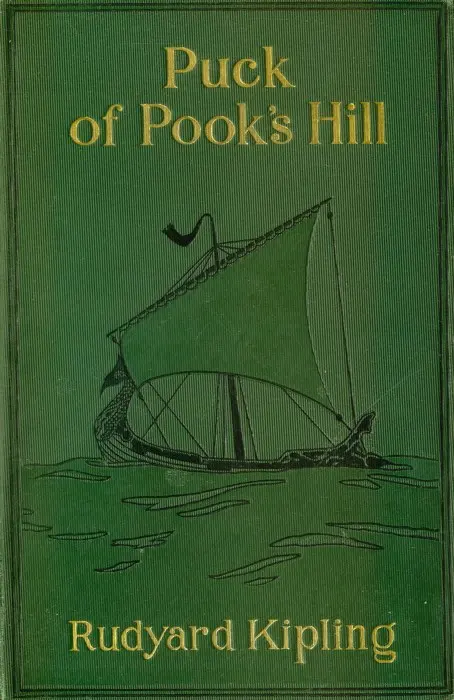
THE CLASSIC COLLECTION · 1905
"Puck of Pook's Hill" by Rudyard Kipling is a fantasy book published in 1906, containing short stories set across different periods of English history. When two children living in Sussex encounter the ancient elf Puck, he summons figures from England's past—Roman soldiers, Norman knights, Danish seafarers—to share their tales. Each story reveals fragments of history, from Hadrian's Wall to the Norman Conquest, blending authentic historical detail with magical elements. Together, these episodes trace England's formation through centuries of conquest, survival, and transformation.
Introduction adapted from the source catalogue; source summaries may be automatically generated.
Free to read · English · 59,945 words · No account needed
MAKE TIME FOR A GOOD BOOK
On by default. Untick to stop anonymous reading totals. Each page counts after 10 seconds in view. How this works.
Anonymous counting is on unless you have switched it off.
‘We guarded the coast too well while Henry was fighting his Barons; and three or four years later, when England had peace, Henry crossed to Normandy and showed his brother some work at Tenchebrai that cured Robert of fighting. Many of Henry’s men sailed from Pevensey to that war. Fulke came, I remember, and we all four lay in the little chamber once again, and drank together. De Aquila was right. One should not judge men. Fulke was merry. Yes, always merry—with a catch in his breath.’
‘And what did you do afterwards?’ said Una.
‘We talked together of times past. That is all men can do when they grow
old, little maid.’
The bell for tea rang faintly across the meadows. Dan lay in the bows of the Golden Hind; Una in the stern, the book of verses open in her lap, was reading from ‘The Slave’s Dream’:—
‘Again in the mist and shadow of sleep
He saw his native land.’
‘I don’t know when you began that,’ said Dan, sleepily.
On the middle thwart of the boat, beside Una’s sun-bonnet, lay an Oak leaf, an Ash leaf, and a Thorn leaf, that must have dropped down from the trees above; and the brook giggled as though it had just seen some joke.
A Smith makes me
To betray my Man
In my first fight.
To gather Gold
At the world’s end
I am sent.
The Gold I gather
Comes into England
Out of deep Water.
Like a shining Fish
Then it descends
Into deep Water.
It is not given
For goods or gear.
But for The Thing
The Gold I gather
A King covets
For an ill use.
The Gold I gather
Is drawn up
Out of deep Water.
Like a shining Fish
Then it descends
Into deep Water.
It is not given
For goods or gear
But for The Thing.
Cities and Thrones and Powers,
Stand in Time’s eye,
Almost as long as flowers,
Which daily die:
But, as new buds put forth,
To glad new men,
Out of the spent and unconsidered Earth,
The Cities rise again.
This season’s Daffodil,
She never hears,
What change, what chance, what chill,
Cut down last year’s;
But with bold countenance,
And knowledge small,
Esteems her seven days’ continuance
To be perpetual.
So Time that is o’er-kind,
To all that be,
Ordains us e’en as blind,
As bold as she:
That in our very death,
And burial sure,
Shadow to shadow, well-persuaded, saith,
‘See how our works endure!’
Your reading position is saved on this browser. Take it to another device with a library code. Reading pages adapt to text, rather than matching a printed edition.
Rudyard Kipling

Rudyard Kipling
Rudyard Kipling

Rudyard Kipling
BEHIND THE BOOK
This eBook is for the use of anyone anywhere in the United States and most other parts of the world at no cost and with almost no restrictions whatsoever. You may copy it, give it away or re-use it under the terms of the Project Gutenberg License included with this eBook or online at www.gutenberg.org. If you are not located in the United States, you will have to check the laws of the country where you are located before using this eBook. Read the source licence.
The original source file, including credits and licence, is retained by this library. Request an original-format copy at no charge. Please include the book title and Project Gutenberg identifier #26027.
KEEP YOUR CURIOSITY GOING
Cécile Tormay

Moritz Busch
Coulson Kernahan
John L. Ransom

Maurice Baring
Frances Wright