
Letters of Marque
Rudyard Kipling
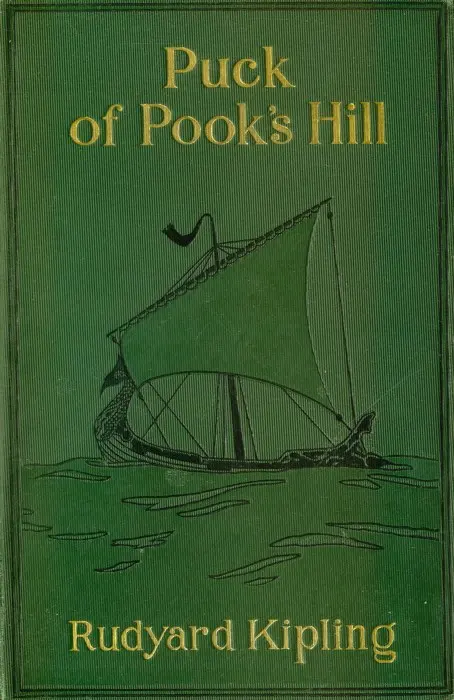
THE CLASSIC COLLECTION · 1905
"Puck of Pook's Hill" by Rudyard Kipling is a fantasy book published in 1906, containing short stories set across different periods of English history. When two children living in Sussex encounter the ancient elf Puck, he summons figures from England's past—Roman soldiers, Norman knights, Danish seafarers—to share their tales. Each story reveals fragments of history, from Hadrian's Wall to the Norman Conquest, blending authentic historical detail with magical elements. Together, these episodes trace England's formation through centuries of conquest, survival, and transformation.
Introduction adapted from the source catalogue; source summaries may be automatically generated.
Free to read · English · 59,945 words · No account needed
MAKE TIME FOR A GOOD BOOK
On by default. Untick to stop anonymous reading totals. Each page counts after 10 seconds in view. How this works.
Anonymous counting is on unless you have switched it off.
They bit hard, and found themselves walking side by side to the lower gate. Their father was leaning over it.
‘And how did your play go?’ he asked.
‘Oh, splendidly,’ said Dan. ‘Only afterwards, I think, we went to sleep. It was very hot and quiet. Don’t you remember, Una?’
Una shook her head and said nothing.
‘I see,’ said her father.
‘Late—late in the evening Kilmeny came home, For Kilmeny had been she could not tell where, And Kilmeny had seen what she could not declare.
But why are you chewing leaves at your time of life, daughter? For fun?’
‘No. It was for something, but I can’t azactly remember,’ said Una.
And neither of them could till—
Of all the trees that grow so fair,
Old England to adorn,
Greater are none beneath the Sun,
Than Oak, and Ash, and Thorn.
Sing Oak, and Ash, and Thorn, good Sirs
(All of a Midsummer morn)!
Surely we sing no little thing,
In Oak, and Ash, and Thorn!
Oak of the Clay lived many a day,
Or ever Æneas began;
Ash of the Loam was a lady at home,
When Brut was an outlaw man;
Thorn of the Down saw New Troy Town
(From which was London born);
Witness hereby the ancientry
Of Oak, and Ash, and Thorn!
Yew that is old in churchyard mould,
He breedeth a mighty bow;
Alder for shoes do wise men choose,
And beech for cups also.
But when ye have killed, and your bowl is spilled,
And your shoes are clean outworn,
Back ye must speed for all that ye need,
To Oak, and Ash, and Thorn!
Ellum she hateth mankind, and waiteth
Till every gust be laid,
To drop a limb on the head of him,
That anyway trusts her shade
But whether a lad be sober or sad,
Or mellow with ale from the horn,
He will take no wrong when he lieth along
’Neath Oak, and Ash, and Thorn!
Oh, do not tell the Priest our plight,
Or he would call it a sin;
But—we have been out in the woods all night
A-conjuring Summer in!
And we bring you news by word of mouth—
Good news for cattle and corn—
Now is the Sun come up from the South,
With Oak, and Ash, and Thorn!
Sing Oak, and Ash, and Thorn, good Sirs
(All of a Midsummer morn)!
England shall bide till Judgment Tide,
By Oak, and Ash and Thorn!
Your reading position is saved on this browser. Take it to another device with a library code. Reading pages adapt to text, rather than matching a printed edition.
Rudyard Kipling

Rudyard Kipling
Rudyard Kipling

Rudyard Kipling
BEHIND THE BOOK
This eBook is for the use of anyone anywhere in the United States and most other parts of the world at no cost and with almost no restrictions whatsoever. You may copy it, give it away or re-use it under the terms of the Project Gutenberg License included with this eBook or online at www.gutenberg.org. If you are not located in the United States, you will have to check the laws of the country where you are located before using this eBook. Read the source licence.
The original source file, including credits and licence, is retained by this library. Request an original-format copy at no charge. Please include the book title and Project Gutenberg identifier #26027.
KEEP YOUR CURIOSITY GOING
Cécile Tormay

Moritz Busch
Coulson Kernahan
John L. Ransom

Maurice Baring
Frances Wright