THE CLASSIC COLLECTION✦An outlaw’s diary: the CommuneCLASSIC FREE BOOKS
An outlaw’s diary: the Commune
Cécile Tormay
THE CLASSIC COLLECTION · 1797
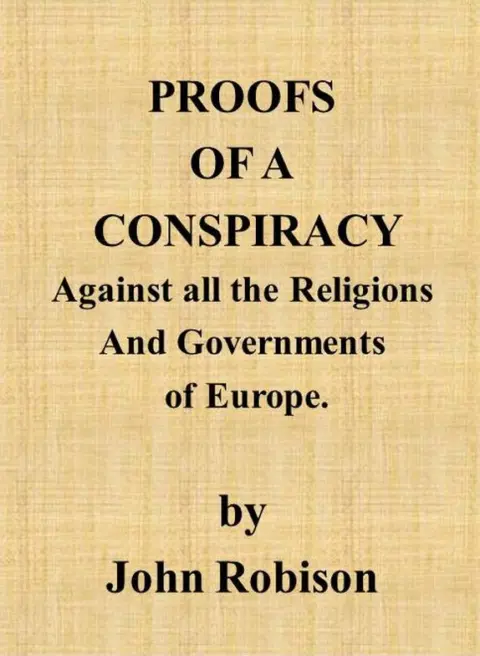
"Proofs of a Conspiracy against all the Religions and Governments of Europe" by John Robison is a historical account likely written in the late 18th century. The book investigates the influence and secrecy of organizations like the Free Masons and Illuminati, suggesting that they played a significant role in undermining traditional religion and government structures throughout Europe. Through an analytical lens, it examines the implications of such secrets societies in the context of the sociopolitical upheaval of the time, particularly in relation to the French Revolution. The opening of the book sets the stage for Robison’s exploration of secret societies, originating from his personal experiences and observations of Freemasonry. He reflects on his time as a Mason and expresses concern about the rising influence of radical ideas within the Masonic Lodges, particularly in France and Germany, where they became hotbeds for controversial doctrines. His introduction reveals a sense of urgency to unveil the concealed agendas behind these organizations, drawing historical parallels and highlighting the threats posed to established governments and religions—a theme that foreshadows the deeper inquiry into the conspiratorial networks that he intends to disclose throughout the text.
Introduction adapted from the source catalogue; source summaries may be automatically generated.
Free to read · English · 119,187 words · No account needed
MAKE TIME FOR A GOOD BOOK
On by default. Untick to stop anonymous reading totals. Each page counts after 10 seconds in view. How this works.
Anonymous counting is on unless you have switched it off.
During this state of things, one Stark, a Protestant divine, well known in Germany by his writings, made another trial of public faith. One Gugomos, (a private gentleman, but who would pass for son to a King of Cyprus), and one Schropfer, keeper of a coffee-house at Nuremberg, drew crowds of Free Masons around them, to learn ghost-raising, exorcism, and alchymy. Numbers came from a great distance to Weisbad to see and learn these mysteries, and Free Masonry was on the point of another revolution. Dr. Stark was an adept in all these things, and had contended with Cagliostro in Courland for the palm of superiority. He saw that this deception could not long stand its ground. He therefore came forward, at a convention at Braunschweig in 1772, and said to the Strict Disciplinarians or Templars, That he was of their Order, but of the spiritual department, and was deputed by the Chapter of K--m--d--t in Scotland, where he was Chancellor of the Congregation, and had the name of Archidemides, Eques ab Aquila fulva: That this Chapter had the superintendance of the Order: That they alone could consecrate the Knights, or the unknown superiors; and that he was deputed to instruct them in the real principles of the Order, and impart its inestimable secrets, which could not be known to Baron Hunde, as he would readily acknowledge when he should converse with him. Johnson, he said, had been a cheat, and probably a murderer. He had got some knowledge from papers which he must have stolen from a missionary, who had disappeared, and was probably killed. Gugomos and Schropfer must have had some similar information; and Schropfer had even deceived him for a time. He was ready to execute his commission, upon their coming under the necessary obligations of secrecy and of submission. Hunde (whose name in the Order was the Eques ab Ense) acquiesced at once, and proposed a convention, with full powers to decide and accept. But a Schubart, a gentleman of character, who was treasurer to the Templar Masons, and had an employment which gave him considerable influence in the Order, strongly dissuaded them from such a measure. The most unqualified submission to unknown superiors, and to conditions equally unknown, was required previous to the smallest communication, or any knowledge of the powers which Archidemides had to treat with them. Many meetings were held, and many attempts were made to learn something of this spiritual court, and of what they might expect from them. Dr. Stark, Baron Weggensak, Baron von Raven, and some others of his coadjutors in the Lodges at Koningsberg in Prussia, and at Wismar, were received into the Order. But in vain--nothing was obtained from these ghostly Knights but some insignificant ceremonials of receptions and consecrations. Of this kind of novelties they were already heartily sick; and though they all panted after the expected wonders, they were so much frightened by the unconditional submission, that they could come to no agreement, and the secrets of the Scotch Congregation of K--m--d--t still remain with Dr. Stark. They did, however, a sensible thing; they sent a deputation to Old Aberdeen, to enquire after the caves where their venerable mysteries were known, and their treasures were hid. They had, as they thought, merited some more confidence; for they had remitted annual contributions to these unknown superiors, to the amount of some thousands of rix dollars. But alas! their ambassadors found the Free Masons of Old Aberdeen ignorant of all this, and as eager to learn from the ambassadors what was the true origin and meaning of Free Masonry, of which they knew nothing but the simple tale of Old Hiram. This broke Stark's credit; but he still insisted on the reality of his commission, and said that the Brethren at Aberdeen were indeed ignorant, but that he had never said otherwise; their expectations from that quarter had rested on the scraps purloined by Johnson. He reminded them of a thing well known to themselves; that one of them had been sent for by a dying nobleman to receive papers on this subject, and that his visit having been delayed a few hours by an unavoidable accident, he found all burnt but a fragment of a capitulary, and a thing in cypher, part of which he (Dr. Stark) had explained to them. They had employed another gentleman, a H. Wachter, to make similar enquiries in Italy, where Schropfer and others (even Hunde) had told them great secrets were to be obtained from the Pretender's secretary Approsi, and others. Wachter told them, that all this was a fiction, but that he had seen at Florence some Brethren from the Holy Land, who really possessed wonderful secrets, which he was willing to impart, on proper conditions. These, however, they could not accede to; but they were cruelly tortured by seeing Wachter, who had left Germany in sober circumstances, now a man of great wealth and expence. He would not acknowledge that he had got the secret of gold-making from the Asiatic Brethren; but said that no man had any right to ask him how he had come by his fortune. It was enough that he behaved honorably, and owed no man any thing. He broke off all connections with them, and left them in great distress about their Order, and panting after his secrets. Risum teneatis amici?
Your reading position is saved on this browser. Take it to another device with a library code. Reading pages adapt to text, rather than matching a printed edition.
BEHIND THE BOOK
This eBook is for the use of anyone anywhere in the United States and most other parts of the world at no cost and with almost no restrictions whatsoever. You may copy it, give it away or re-use it under the terms of the Project Gutenberg License included with this eBook or online at www.gutenberg.org. If you are not located in the United States, you will have to check the laws of the country where you are located before using this eBook. Read the source licence.
The original source file, including credits and licence, is retained by this library. Request an original-format copy at no charge. Please include the book title and Project Gutenberg identifier #47605.
KEEP YOUR CURIOSITY GOING
Cécile Tormay

Moritz Busch
John L. Ransom
Frances Wright
Cécile Tormay

Mabel Potter Daggett