THE CLASSIC COLLECTION✦An outlaw’s diary: the CommuneCLASSIC FREE BOOKS
An outlaw’s diary: the Commune
Cécile Tormay
THE CLASSIC COLLECTION · 1797
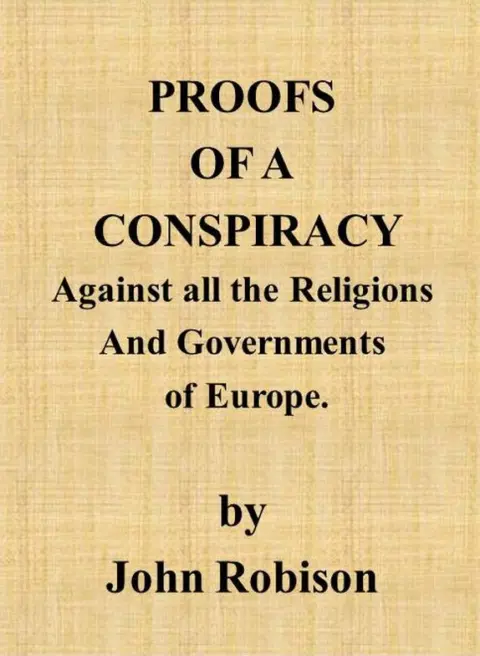
"Proofs of a Conspiracy against all the Religions and Governments of Europe" by John Robison is a historical account likely written in the late 18th century. The book investigates the influence and secrecy of organizations like the Free Masons and Illuminati, suggesting that they played a significant role in undermining traditional religion and government structures throughout Europe. Through an analytical lens, it examines the implications of such secrets societies in the context of the sociopolitical upheaval of the time, particularly in relation to the French Revolution. The opening of the book sets the stage for Robison’s exploration of secret societies, originating from his personal experiences and observations of Freemasonry. He reflects on his time as a Mason and expresses concern about the rising influence of radical ideas within the Masonic Lodges, particularly in France and Germany, where they became hotbeds for controversial doctrines. His introduction reveals a sense of urgency to unveil the concealed agendas behind these organizations, drawing historical parallels and highlighting the threats posed to established governments and religions—a theme that foreshadows the deeper inquiry into the conspiratorial networks that he intends to disclose throughout the text.
Introduction adapted from the source catalogue; source summaries may be automatically generated.
Free to read · English · 119,187 words · No account needed
MAKE TIME FOR A GOOD BOOK
On by default. Untick to stop anonymous reading totals. Each page counts after 10 seconds in view. How this works.
Anonymous counting is on unless you have switched it off.
If therefore there be a foundation for this peculiarity, the Gentry are proper objects of our choice for filling the House of Commons.
If theoretical considerations are of any value in questions of political discussion, I would say, that we have good reasons for giving this class of citizens a great share in the public deliberations. Besides what I have already noticed of their habits of considering things in general points of view, and their feeling a closer connection with the nation than any other class, I would say that the power and influence which naturally attach to their being called to offices of public trust, will probably be better lodged in their hands. If they are generally selected for these offices, they come to consider them as parts of their civil condition, as situations natural to them. They will therefore exercise this power and influence with the moderation and calmness of habit,--they are no novelties to them--they are not afraid of losing them;--therefore, when in office, they do not catch at the opportunities of exercising them. This is the ordinary conduct of men, and therefore is a ground of probable reasoning.--In short, I should expect from our Gentry somewhat of generosity and candour, which would temper the commercial principle, which seems to regulate the national transactions of modern Europe, and whose effects seem less friendly to the best interests of humanity, than even the Roman principle of glory.
The Reader will now believe that I would not recommend the filling the House of Commons with merchants, although they seem to be the natural Representatives of the monied interest of the nation. But I do not wish to consider that House as the Representative of any Orders whatever, or to disturb its deliberations with any debates on their jarring interests. The man of purely commercial notions disclaims all generosity--recommends honesty because it is the best policy--in short, "places the value of a thing in as much money as 'twill bring." I should watch the conduct of such men more narrowly than that of the Nobles. Indeed, the history of Parliament will show that the Gentry have not been the most venal part of the House. The Illumination which now dazzles the world aims directly at multiplying the number of venal members, by filling the senates of Europe with men who may be bought at a low price. Ministerial corruption is the fruit of Liberty, and freedom dawned in this nation in Queen Elizabeth's time, when her minister bribed Wentworth.--A wise and free Legislation will endeavour to make this as expensive and troublesome as possible, and therefore will neither admit universal suffrage nor a very extensive eligibility. These two circumstances, besides opening a wider door to corruption, tend to destroy the very intention of all civil constitutions. The great object in them is, to make a great number of people happy. Some men place their chief enjoyment in measuring their strength with others, and love to be continually employed in canvassing, intriguing, and carrying on some little pieces of a sort of public business; to such men universal suffrage and eligibility would be paradise--but it is to be hoped that the number of such is not very great: for this occupation must be accompanied by much disquiet among their neighbours, much dissension, and mutual offence and ill-will--and the peaceable, the indolent, the studious, and the half of the nation, the women, will be great sufferers by all this. In a nation possessing many of the comforts and pleasures of life, the happiest government is that which will leave the greatest number possible totally unoccupied with national affairs, and at full liberty to enjoy all their domestic and social pleasures, and to do this with security and permanency. Great limitations in the right of electing seems therefore a circumstance necessary for this purpose; and limitations are equally necessary on the eligibility. When the offices of power and emolument are open to all, the scramble becomes universal, and the nation is never at peace. The road to a seat in Parliament should be accessible to all; but it should be long, so that many things, which all may in time obtain, shall be requisite for qualifying the candidate. The road should also be such that all should be induced to walk in it, in the prosecution of their ordinary business; and their admission into public offices should depend on the progress which they have made in the advancement of their own fortunes. Such regulations would, I think, give the greatest chance of filling the offices with persons fittest for them, by their talents, their experience, and their habits of thinking. These habits, and the views of life which a man forms in consequence of his situation, are of the utmost importance.
Your reading position is saved on this browser. Take it to another device with a library code. Reading pages adapt to text, rather than matching a printed edition.
BEHIND THE BOOK
This eBook is for the use of anyone anywhere in the United States and most other parts of the world at no cost and with almost no restrictions whatsoever. You may copy it, give it away or re-use it under the terms of the Project Gutenberg License included with this eBook or online at www.gutenberg.org. If you are not located in the United States, you will have to check the laws of the country where you are located before using this eBook. Read the source licence.
The original source file, including credits and licence, is retained by this library. Request an original-format copy at no charge. Please include the book title and Project Gutenberg identifier #47605.
KEEP YOUR CURIOSITY GOING
Cécile Tormay

Moritz Busch
John L. Ransom
Frances Wright
Cécile Tormay

Mabel Potter Daggett