THE CLASSIC COLLECTION✦An outlaw’s diary: the CommuneCLASSIC FREE BOOKS
An outlaw’s diary: the Commune
Cécile Tormay
THE CLASSIC COLLECTION · 1797
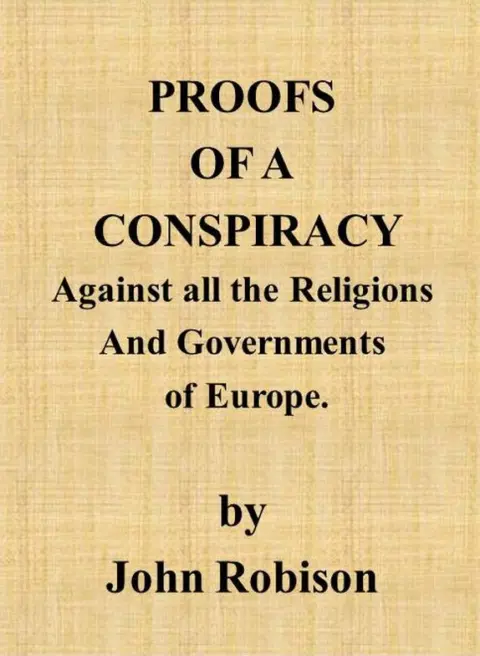
"Proofs of a Conspiracy against all the Religions and Governments of Europe" by John Robison is a historical account likely written in the late 18th century. The book investigates the influence and secrecy of organizations like the Free Masons and Illuminati, suggesting that they played a significant role in undermining traditional religion and government structures throughout Europe. Through an analytical lens, it examines the implications of such secrets societies in the context of the sociopolitical upheaval of the time, particularly in relation to the French Revolution. The opening of the book sets the stage for Robison’s exploration of secret societies, originating from his personal experiences and observations of Freemasonry. He reflects on his time as a Mason and expresses concern about the rising influence of radical ideas within the Masonic Lodges, particularly in France and Germany, where they became hotbeds for controversial doctrines. His introduction reveals a sense of urgency to unveil the concealed agendas behind these organizations, drawing historical parallels and highlighting the threats posed to established governments and religions—a theme that foreshadows the deeper inquiry into the conspiratorial networks that he intends to disclose throughout the text.
Introduction adapted from the source catalogue; source summaries may be automatically generated.
Free to read · English · 119,187 words · No account needed
MAKE TIME FOR A GOOD BOOK
On by default. Untick to stop anonymous reading totals. Each page counts after 10 seconds in view. How this works.
Anonymous counting is on unless you have switched it off.
I have found, after minute enquiry, that I was mistaken as to the expression of an eminent follower of Dr. Priestley, mentioned before. The person alluded to disclaims all sanguinary proceedings, and my information arose from a very erroneous account which was circulated of the conversation. But I still think the caution equally necessary, which I recommended to the hearers of the frequent and violent declamations made by those alluded to, against all religious establishments.
Except the anecdote of Diderot's library, I do not recollect another assertion in the book, for which I have not the authority of printed evidence. This story was told me by so many persons of credit, who were on the spot at the time, that I have no doubt of its truth.
I also find that I was mistaken in my conjecture that Mr. Le Franc communicated his suspicions of the horrid designs of the Free Masons to Archbishop Gobet. It must have been to Mr. Le Clerc de Juigne, a most worthy prelate, whom the hatred of the Jacobins obliged to fly into Switzerland. The Catholic clergy were butchered or banished, and the Jacobins substituted in their places such as would second their views. Gobet was worthy of their confidence, and the Archbishop of Thoulouse (Brienne) himself could not have served the cause of the philosophists more effectually, had they succeeded in their attempts to get him continued Archbishop of Paris.
As the poetical picture of unqualified Liberty and Equality, and the indolent pleasures of the patriarchal life, are the charm by which the Illuminators hope to fascinate all hearts, and as they reprobate every construction of society which tolerates any permanent subordination, and particularly such as found this subordination on distinctions of ranks, and scout all privileges allowed to particular orders of men, I hope that it will not be thought foreign to the general purpose of the foregoing Work, if, I with great deference, lay before the Reader some of my reasons for asserting, without hesitation, in a former part, that the British constitution is the only one that will give permanent happiness to a great and luxurious nation, and is peculiarly calculated to give full exercise to the best propensities of cultivated minds. I am the more desirous of doing this, because it seems to me that most of the political writers on the Continent, and many of my countrymen, have not attended to important circumstances which distinguish our constitution from the States General of France and other countries. The republicans in France have, since the Revolution, employed the pains in searching their records, which ought to have been taken before the convocation of the States, and which would probably have prevented that step altogether. They have shewn that the meetings of the States, if we except that in 1614 and 1483, were uniformly occasions of mutual contests between the different Orders, in which the interests of the nation and the authority of the Crown were equally forgotten, and the kingdom was plunged into all the horrors of a rancorous civil war. Of this they give us a remarkable instance during the captivity of King John in 1355 and 1356, the horrors of which were hardly exceeded by any thing that has happened in our days. They have shewn the same dismal consequences of the assembly of the different Orders in Brabant; and still more remarkably in Sweden and Denmark, where they have frequently produced a revolution and change of government, all of which have terminated in the absolute government, either of the Crown, or of one of the contending Orders. They laugh at the simplicity of the British for expecting that the permanent fruits of our constitution, which is founded on the same jarring principles, shall be any better; and assert, that the peaceable exercise of its several powers for somewhat more than a century, (a thing never experienced by us in former times,) has proceeded from circumstances merely accidental. With much address they have selected the former disturbances, and have connected them by a sort of principle, so as to support their system, "that a States General or Parliament, consisting of a representation of the different classes of citizens, can never deliberate for the general good, but must always occupy their time in contentions about their mutual invasions of privilege, and will saddle every aid to the executive power, with some unjust and ruinous aggrandisement of the victorious Order." They have the effrontery to give the MAGNA CHARTA as an instance of an usurpation of the great feudatories, and have represented it in such a light as to make it the game of their writers and of the tribunes.--All this they have done in order to reconcile the minds of the few thinking men of the nation to the abolition of the different Orders of the State, and to their National Convention in the form of a chaotic mass of Frenchmen, one and indivisible:
Your reading position is saved on this browser. Take it to another device with a library code. Reading pages adapt to text, rather than matching a printed edition.
BEHIND THE BOOK
This eBook is for the use of anyone anywhere in the United States and most other parts of the world at no cost and with almost no restrictions whatsoever. You may copy it, give it away or re-use it under the terms of the Project Gutenberg License included with this eBook or online at www.gutenberg.org. If you are not located in the United States, you will have to check the laws of the country where you are located before using this eBook. Read the source licence.
The original source file, including credits and licence, is retained by this library. Request an original-format copy at no charge. Please include the book title and Project Gutenberg identifier #47605.
KEEP YOUR CURIOSITY GOING
Cécile Tormay

Moritz Busch
John L. Ransom
Frances Wright
Cécile Tormay

Mabel Potter Daggett