THE CLASSIC COLLECTION✦An outlaw’s diary: the CommuneCLASSIC FREE BOOKS
An outlaw’s diary: the Commune
Cécile Tormay
THE CLASSIC COLLECTION · 1797
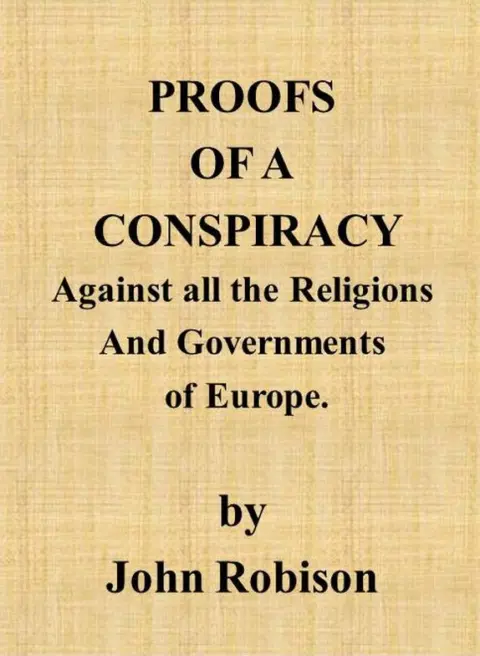
"Proofs of a Conspiracy against all the Religions and Governments of Europe" by John Robison is a historical account likely written in the late 18th century. The book investigates the influence and secrecy of organizations like the Free Masons and Illuminati, suggesting that they played a significant role in undermining traditional religion and government structures throughout Europe. Through an analytical lens, it examines the implications of such secrets societies in the context of the sociopolitical upheaval of the time, particularly in relation to the French Revolution. The opening of the book sets the stage for Robison’s exploration of secret societies, originating from his personal experiences and observations of Freemasonry. He reflects on his time as a Mason and expresses concern about the rising influence of radical ideas within the Masonic Lodges, particularly in France and Germany, where they became hotbeds for controversial doctrines. His introduction reveals a sense of urgency to unveil the concealed agendas behind these organizations, drawing historical parallels and highlighting the threats posed to established governments and religions—a theme that foreshadows the deeper inquiry into the conspiratorial networks that he intends to disclose throughout the text.
Introduction adapted from the source catalogue; source summaries may be automatically generated.
Free to read · English · 119,187 words · No account needed
MAKE TIME FOR A GOOD BOOK
On by default. Untick to stop anonymous reading totals. Each page counts after 10 seconds in view. How this works.
Anonymous counting is on unless you have switched it off.
I cannot help thinking that British sentiment, or British delicacy, is changed; for Paine's book is treated by most of our Reviewers with an affected liberality and candour, and is laid before the public as quite new matter, and a fair field for discussion--and it strikes me as if our critics were more careful to let no fault of his opponents pass unnoticed than to expose the futility and rudeness of this indelicate writer. In the reviews of political writings we see few of those kind endeavours, which real love for our constitutional government would induce a writer to employ in order to lessen the fretful discontents of the people; and there is frequently betrayed a satisfaction at finding administration in straits, either through misconduct or misfortune. Real love for our country and its government would (I think) induce a person to mix with his criticisms some sentiments of sympathy with the embarrassment of a minister loaded with the business of a great nation, in a situation never before experienced by any minister. The critic would recollect that the minister was a man, subject to error, but not necessarily nor altogether base. But it seems to be an assumed principle with some of our political writers and reviewers that government must always be in fault, and that every thing needs a reform. Such were the beginnings on the continent, and we cannot doubt but that attempts are made to influence the public mind in this country, in the very way that has been practised abroad.--Nay,
X. The detestable doctrines of Illuminatism have been openly preached among us. Has not Dr. Priestley said, (I think in one of his letters on the Birmingham riots,) "That if the condition of other nations be as much improved as that of France will be by the change in her system of government, the great crisis, dreadful as it may appear, will be a consummation devoutly to be wished for;--and though calamitous to many, perhaps to many innocent persons, will be eventually glorious and happy?"--Is not this equivalent to Spartacus saying, "True--there will be a storm, a convulsion--but all will be calm again?"--Does Dr. Priestley think that the British will part more easily than their neighbours in France with their property and honours, secured by ages of peaceable possession, protected by law, and acquiesced in by all who wish and hope that their own descendants may reap the fruits of their honest industry?--Will they make a less manly struggle?--Are they less numerous?--Must his friends, his patrons, whom he has thanked, and praised, and flattered, yield up all peaceably, or fall in the general struggle? This writer has already given the most promising specimens of his own docility in the principles of Illuminatism, and has already passed through several degrees of initiation. He has refined and refined on Christianity, and boasts, like another Spartacus, that he has, at last, hit on the true secret.--Has he not been preparing the minds of his readers for Atheism by his theory of mind, and by his commentary on the unmeaning jargon of Dr. Hartley? I call it unmeaning jargon, that I may avoid giving it a more apposite and disgraceful name. For, if intelligence and design be nothing but a certain modification of the vibratiunculæ or undulations of any kind, what is supreme intelligence, but a more extensive, and (perhaps they will call it) refined undulation, pervading or mixing with all others? Indeed it is in this very manner that the universal operation of intelligence is pretended to be explained. As any new or partial undulation may be superinduced on any other already existing, and this without the least disturbance or confusion, so may the inferior intelligences in the universe be only superinductions on the operations of this supreme intelligence which pervades them all,--And thus an undulation (of what? surely of something prior to and independent of this modification) is the cause of all the beings in the universe, and of all the harmony and beauty that we observe,--And this undulation is the object of love, and gratitude, and confidence (that is, of other kinds of undulations.)--Fortunately all this has no meaning.--But surely, if any thing can tend to diminish the force of our religious sentiments, and make all Dr. Priestley's discoveries in Christianity insignificant, this will do it.
Your reading position is saved on this browser. Take it to another device with a library code. Reading pages adapt to text, rather than matching a printed edition.
BEHIND THE BOOK
This eBook is for the use of anyone anywhere in the United States and most other parts of the world at no cost and with almost no restrictions whatsoever. You may copy it, give it away or re-use it under the terms of the Project Gutenberg License included with this eBook or online at www.gutenberg.org. If you are not located in the United States, you will have to check the laws of the country where you are located before using this eBook. Read the source licence.
The original source file, including credits and licence, is retained by this library. Request an original-format copy at no charge. Please include the book title and Project Gutenberg identifier #47605.
KEEP YOUR CURIOSITY GOING
Cécile Tormay

Moritz Busch
John L. Ransom
Frances Wright
Cécile Tormay

Mabel Potter Daggett