THE CLASSIC COLLECTION✦An outlaw’s diary: the CommuneCLASSIC FREE BOOKS
An outlaw’s diary: the Commune
Cécile Tormay
THE CLASSIC COLLECTION · 1797
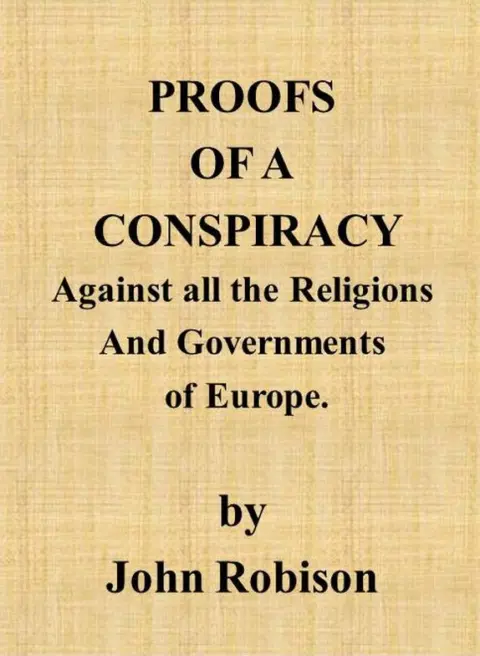
"Proofs of a Conspiracy against all the Religions and Governments of Europe" by John Robison is a historical account likely written in the late 18th century. The book investigates the influence and secrecy of organizations like the Free Masons and Illuminati, suggesting that they played a significant role in undermining traditional religion and government structures throughout Europe. Through an analytical lens, it examines the implications of such secrets societies in the context of the sociopolitical upheaval of the time, particularly in relation to the French Revolution. The opening of the book sets the stage for Robison’s exploration of secret societies, originating from his personal experiences and observations of Freemasonry. He reflects on his time as a Mason and expresses concern about the rising influence of radical ideas within the Masonic Lodges, particularly in France and Germany, where they became hotbeds for controversial doctrines. His introduction reveals a sense of urgency to unveil the concealed agendas behind these organizations, drawing historical parallels and highlighting the threats posed to established governments and religions—a theme that foreshadows the deeper inquiry into the conspiratorial networks that he intends to disclose throughout the text.
Introduction adapted from the source catalogue; source summaries may be automatically generated.
Free to read · English · 119,187 words · No account needed
MAKE TIME FOR A GOOD BOOK
On by default. Untick to stop anonymous reading totals. Each page counts after 10 seconds in view. How this works.
Anonymous counting is on unless you have switched it off.
A signal was given to the nation for engaging "en masse" in political discussion. The Notables were called upon to come and advise the King; and the points were laid before them, in which his Majesty, (infallible till now) acknowledged his ignorance or his doubts. But who were the Notables? Were they more knowing than the King, or less in need of instruction? The nation thought otherwise; nay, the court thought otherwise; for in some of the royal proclamations on this occasion, men of letters were invited to assist with their counsels, and to give what information their reading and experience should suggest as to the best method of convoking the States General, and of conducting their deliberations. When a Minister thus solicits advice from all the world how to govern, he most assuredly declares his own incapacity, and tells the people that now they must govern themselves. This however was done, and the Minister, Neckar the Philosopher and Philanthropist of Geneva, set the example, by sending in his opinion, to be laid on the council-table with the rest. On this signal, counsel poured in from every garret, and the press groaned with advice in every shape. Ponderous volumes were written for the Bishop or the Duke; a handsome 8vo for the Notable Officer of eighteen; pamphlets and single sheets for the loungers in the Palais Royal. The fermentation was astonishing; but it was no more than should have been expected from the most cultivated, the most ingenious, and the least bashful nation on earth. All wrote, and all read. Not contented with bringing forth all the fruits which the illumination of these bright days of reason had raised in such abundance in the conservatories of the Philalethes, and which had been gathered from the writings of Voltaire, Diderot, Rousseau, Raynal, &c. the patriotic counsellors of the Notables had ransacked all the writings of former ages. They discovered THAT FRANCE HAD ALWAYS BEEN FREE! One would have thought, that they had travelled with Sir John Mandeville in that country where even the speeches of former times had been frozen, and were now thawing apace under the beams of the sun of Reason. For many of these essays were as incongruous and mal a-propos as the broken sentences recorded by Mr. Addison in the Spectator. A gentleman who was in Paris at this time, a person of great judgment, and well informed in every thing respecting the constitution and present condition of his country, assured me that this invitation, followed by the memorial of Mr. Neckar, operated like an electrical shock. In the course of four or five days, the appearance of Paris was completely changed. Every where one saw crowds staring at papers pasted on the walls--breaking into little parties--walking up and down the streets in eager conversation--adjourning to coffee-houses--and the conversation in all companies turned to politics alone; and in all these conversations a new vocabulary, where every second word was Morality, Philanthropy, Toleration, Freedom, and Equalisation of property. Even at this early period persons were listened to without censure, or even surprise, who said that it was nonsense to think of reforming their government, and that it must be completely changed. In short, in the course of a month, a spirit of licentiousness and a rage for innovation had completely pervaded the minds of the Parisians. The most conspicuous proof of this was the unexpected fate of the Parliament. It met earlier than usual, and to give greater eclat to its patriotic efforts, and completely to secure the gratitude of the people, it issued an arret on the present state of the nation, containing a number of resolutions on the different leading points of national liberty. A few months ago these would have been joyfully received as the Magna Charta of Freedom, and really contained all that a wise people should desire; but because the Parliament had sometime before given it as their opinion as the constitutional counsel of the Crown, that the States should be convoked on the principles of their last meeting in 1614, which preserved the distinctions of rank, all their past services were forgotten--all their hard struggle with the former administration, and their unconquerable courage and perseverance, which ended only with their downfal, all were forgotten; and those distinguished members whose zeal and sufferings ranked them with the most renowned heroes and martyrs of patriotism, were now regarded as the contemptible tools of Aristocracy. The Parliament now set, in a fiery troubled sky--to rise no more.
Your reading position is saved on this browser. Take it to another device with a library code. Reading pages adapt to text, rather than matching a printed edition.
BEHIND THE BOOK
This eBook is for the use of anyone anywhere in the United States and most other parts of the world at no cost and with almost no restrictions whatsoever. You may copy it, give it away or re-use it under the terms of the Project Gutenberg License included with this eBook or online at www.gutenberg.org. If you are not located in the United States, you will have to check the laws of the country where you are located before using this eBook. Read the source licence.
The original source file, including credits and licence, is retained by this library. Request an original-format copy at no charge. Please include the book title and Project Gutenberg identifier #47605.
KEEP YOUR CURIOSITY GOING
Cécile Tormay

Moritz Busch
John L. Ransom
Frances Wright
Cécile Tormay

Mabel Potter Daggett