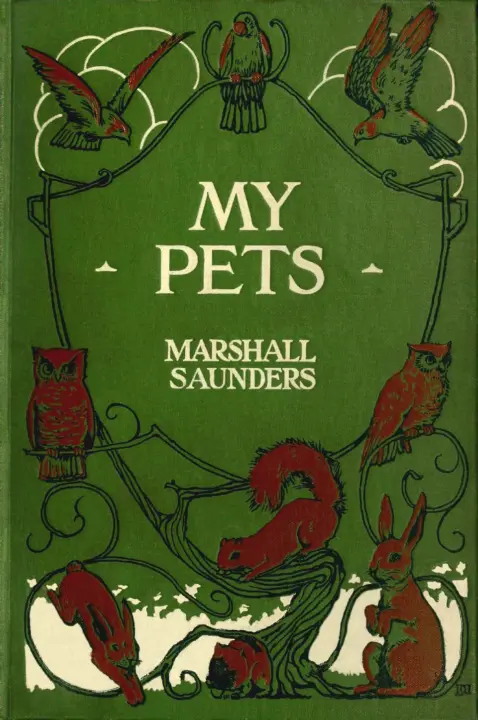
My pets
Marshall Saunders
THE CLASSIC COLLECTION · 1905
"Princess Sukey: The story of a pigeon and her human friends" by Marshall Saunders is a children's novel written in the early 20th century. The story revolves around Princess Sukey, a Jacobin pigeon who begins her life frail and abandoned but is rescued by a boy named Titus Sancroft. The book explores themes of compassion and friendship through the bond between the pigeon and her human companions, particularly focusing on how they navigate their troubles together. The opening of the story introduces Princess Sukey as she dreams by the fire, reflecting on her past and the series of events that led her to her new home. As a sickly chick, she is discarded by her father and nearly left to die when she is discovered by young Titus, who insists on saving her. Supported by a comical series of interactions with Titus, his grandfather Judge Sancroft, and the household staff, the narrative sets the stage for the unfolding relationship between the characters and Princess Sukey. It hints at the themes of kindness toward animals and the emotional journeys of both the boy and the bird as they cope with life’s challenges. The beginnings of friendship and the contrast between wealth and poverty become apparent, suggesting a rich layering of narrative to come.
Introduction adapted from the source catalogue; source summaries may be automatically generated.
Free to read · English · 84,299 words · No account needed
MAKE TIME FOR A GOOD BOOK
On by default. Untick to stop anonymous reading totals. Each page counts after 10 seconds in view. How this works.
Anonymous counting is on unless you have switched it off.
“I’ll make her hear,” said the eldest girl, grimly, and she applied her lips to her parent’s ear, and, without making a steam whistle of herself, as poor Titus did, she said, in a low, blood-curdling tone, “The gemman is tired of Bethany—wants to return her like a parcel sent on approbation.”
Mrs. Tingsby, who had more of the milk of human kindness than this particular one of her offspring, turned to the Judge with an amazed, reproachful air. “Be that true, sir?”
“No,” said the Judge, stoutly, “it isn’t.”
Immediately there ensued an altercation between him and the smart girl. To his own great confusion and astonishment, he, Judge Sancroft, leading citizen of Riverport, actually found himself bandying words with a saucy little shopgirl, for such she appeared to be—and she got the better of him.
At last he appealed to the boarders. “Can’t some of you explain how matters are? The child is a charming little creature. I have no wish to bring her back. I will see that she is comfortably placed.”
The new temporary boarder, or visitor, Barry Mafferty, suddenly began to laugh. The old boarders, at the entrance of the Judge, had been suddenly stricken with bashfulness. This poorly dressed, brown-faced man of middle age had alone preserved his composure. After a slight bow he had taken an unlighted cigarette from his mouth, had calmly looked the Judge over, from his white head to his black overshoes, had bestowed a slight glance of admiration on the half-open, fur-lined coat, and had then again directed his attention to the red-hot bars of the grate in front of the old-fashioned cooking-stove.
Now, as if irresistibly amused by the passage-at-arms between the gentleman and the flippant child of poverty, he did not try to conceal his amusement.
The Judge turned to him.
“Don’t worry yourself, sir,” said Mafferty, easily, “things will all come out right. Our hostess is a good sort.”
The Judge stared. Who was this man?
“Broken down gentleman,” said Mafferty, still more easily; “lots of time to study human nature. I have seen the child you took. I advise you to hold on to her if you value a nice child. She belongs to a different rank in society from these—” and he raised his hand comprehensively at the Tingsby children.
The smart girl immediately turned her attention upon him.
“Easy now, easy,” he said, coolly, nodding his really fine-featured head at her. “Easy, or you will upset your basket of china.”
“China,” she cried, in a fine, thin voice, curiously like her mother’s, “what do you know of china, you low-down, gutter-raggy, broken-weazled, shilly-shally—”
Your reading position is saved on this browser. Take it to another device with a library code. Reading pages adapt to text, rather than matching a printed edition.
Marshall Saunders
Marshall Saunders
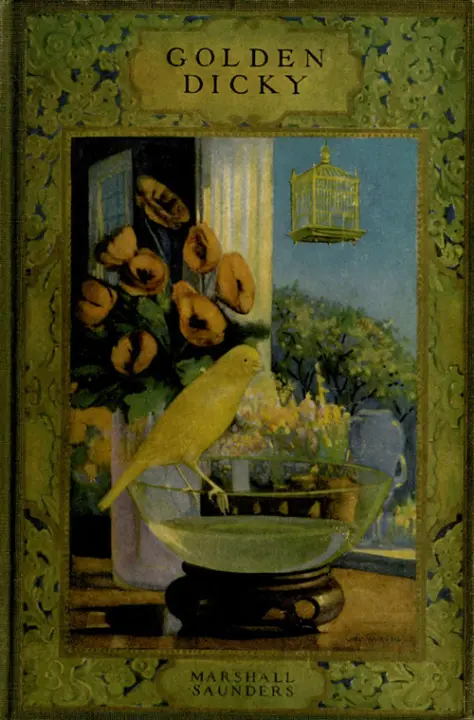
Marshall Saunders
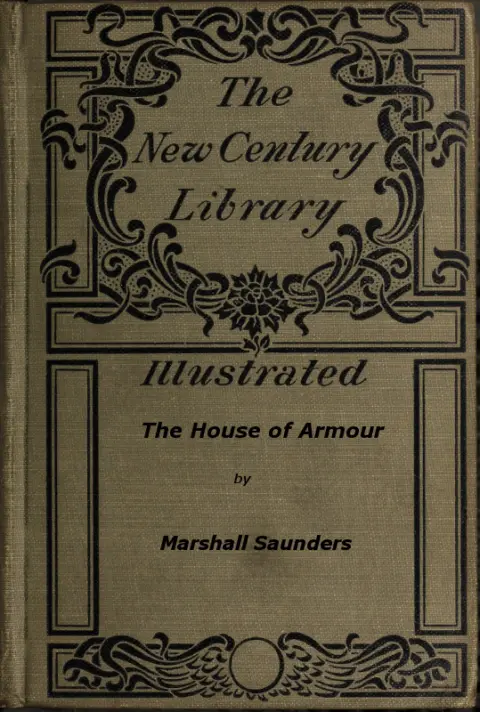
Marshall Saunders
BEHIND THE BOOK
This eBook is for the use of anyone anywhere in the United States and most other parts of the world at no cost and with almost no restrictions whatsoever. You may copy it, give it away or re-use it under the terms of the Project Gutenberg License included with this eBook or online at www.gutenberg.org. If you are not located in the United States, you will have to check the laws of the country where you are located before using this eBook. Read the source licence.
The original source file, including credits and licence, is retained by this library. Request an original-format copy at no charge. Please include the book title and Project Gutenberg identifier #69707.
KEEP YOUR CURIOSITY GOING
Coulson Kernahan

Maurice Baring
Frances Wright
Cécile Tormay

Frederic Jesup Stimson

W. H. P. (William Henry Pope) Jarvis