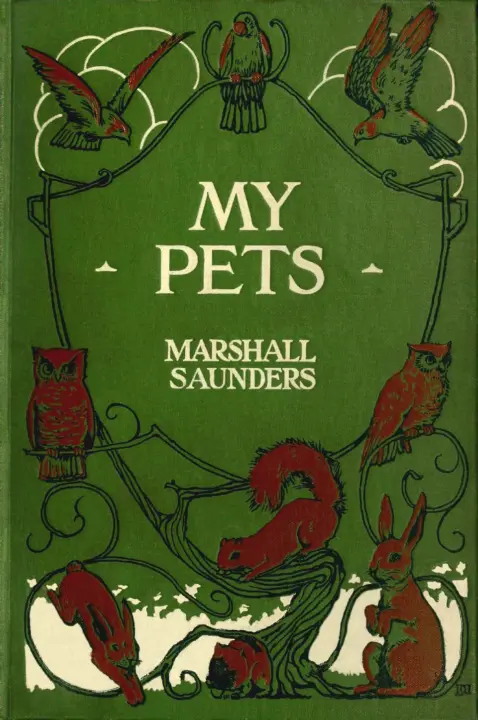
My pets
Marshall Saunders
THE CLASSIC COLLECTION · 1905
"Princess Sukey: The story of a pigeon and her human friends" by Marshall Saunders is a children's novel written in the early 20th century. The story revolves around Princess Sukey, a Jacobin pigeon who begins her life frail and abandoned but is rescued by a boy named Titus Sancroft. The book explores themes of compassion and friendship through the bond between the pigeon and her human companions, particularly focusing on how they navigate their troubles together. The opening of the story introduces Princess Sukey as she dreams by the fire, reflecting on her past and the series of events that led her to her new home. As a sickly chick, she is discarded by her father and nearly left to die when she is discovered by young Titus, who insists on saving her. Supported by a comical series of interactions with Titus, his grandfather Judge Sancroft, and the household staff, the narrative sets the stage for the unfolding relationship between the characters and Princess Sukey. It hints at the themes of kindness toward animals and the emotional journeys of both the boy and the bird as they cope with life’s challenges. The beginnings of friendship and the contrast between wealth and poverty become apparent, suggesting a rich layering of narrative to come.
Introduction adapted from the source catalogue; source summaries may be automatically generated.
Free to read · English · 84,299 words · No account needed
MAKE TIME FOR A GOOD BOOK
On by default. Untick to stop anonymous reading totals. Each page counts after 10 seconds in view. How this works.
Anonymous counting is on unless you have switched it off.
Well, the young princess was a sickly pigeon. There had been two sickly pigeons, for usually two eggs are laid at a time. One had died, and the father Jacobin, thinking that the young Sukey was also going to die, took her in his beak, lifted her from the nest, and gently deposited her on the floor at the other end of the loft.
There is little sentiment among birds. They believe in the survival of the fittest, and the weak are calmly taken from the nest.
The young pigeon was not desperately ill. However, blind and naked as she was, she could not have survived long, away from the warmth of the nest, unless this boy Titus had discovered her.
“H-h-hello, Charlie,” he stuttered, “here’s a squab out of the nest.” Charlie took the bird by the legs.
“W-w-what are you going to do?” asked Titus.
“Strike its head against the wall.”
Titus did not approve of this.
“Wh-why don’t you put it back in the nest?” he asked, excitedly.
“No good—once the old ones put it out they won’t look at it.”
“C-c-can’t you feed it?”
“Too much trouble. I did have some birds that would feed young ones—two fine old feeders, but I sold them.”
Titus had a mercenary little soul. “A-a pity to throw away good money,” he said, looking at the pigeon. “I-I should think you could worry some food down its throat yourself.”
“I could, but it’s an awful bother. I’ve tried it. This is a sick thing anyway. It will be dead in five minutes. See how it’s gasping.”
“B-b-bet you my jackknife it won’t die,” replied Titus.
So they waited five minutes, and, as good fortune would have it, the future princess gasped them out, and Charlie laid her in Titus’s palm. “The squab is yours.”
“B-b-blest if I know what to do with it,” remarked Titus, turning the pigeon over in his hands.
Charlie smiled mischievously. “I guess your grandfather will give you a time if he finds out.”
“H-h-he shan’t find out,” said Titus.
“It’s mean that you can’t have pigeons or something,” observed Charlie. “All the fellows have. Why don’t you make tracks for another grandfather?”
Titus grinned. His grandfather was a great trial to him, but it was only in one respect. In other ways he was a model grandfather.
“Hope it will live,” said Charlie, generously. “Tuck some food down its throat—some feed one way, some another—and mix some sweet oil in it. I’ve heard that’s good when you take them from the parents.”
Your reading position is saved on this browser. Take it to another device with a library code. Reading pages adapt to text, rather than matching a printed edition.
Marshall Saunders
Marshall Saunders
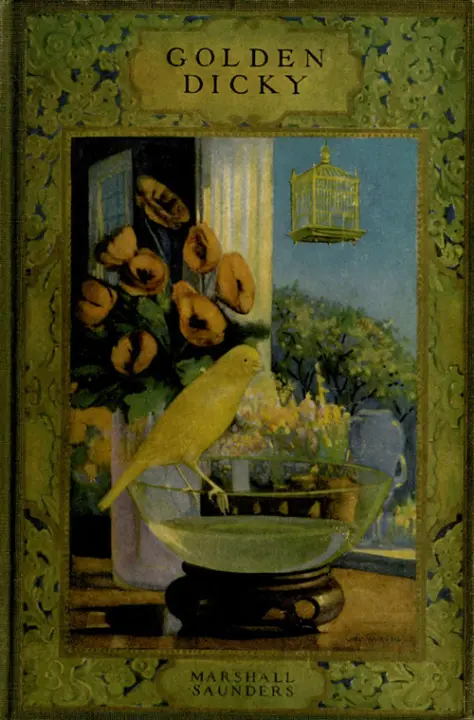
Marshall Saunders
Marshall Saunders
BEHIND THE BOOK
This eBook is for the use of anyone anywhere in the United States and most other parts of the world at no cost and with almost no restrictions whatsoever. You may copy it, give it away or re-use it under the terms of the Project Gutenberg License included with this eBook or online at www.gutenberg.org. If you are not located in the United States, you will have to check the laws of the country where you are located before using this eBook. Read the source licence.
The original source file, including credits and licence, is retained by this library. Request an original-format copy at no charge. Please include the book title and Project Gutenberg identifier #69707.
KEEP YOUR CURIOSITY GOING
Coulson Kernahan

Maurice Baring
Frances Wright
Cécile Tormay

Frederic Jesup Stimson

W. H. P. (William Henry Pope) Jarvis