THE CLASSIC COLLECTION✦£19,000CLASSIC FREE BOOKS
£19,000
Burford Delannoy
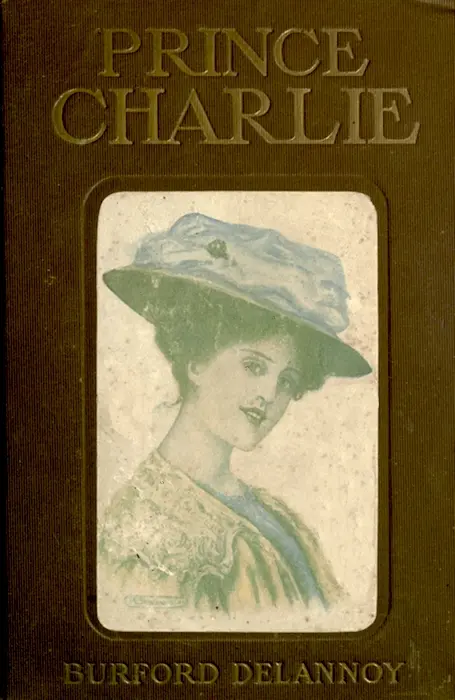
THE CLASSIC COLLECTION · 1900
"Prince Charlie" by Burford Delannoy is a novel written in the early 20th century. This work introduces readers to the character of William Masters, a writer of children's tales, who becomes enamored with the beautiful governess, Miss Mivvins, and her charming charge, little Gracie. The story is set in the seaside town of Wivernsea and revolves around themes of love, creativity, and the complexities of relationships. The opening of the book describes the quiet ambiance of Wivernsea as William Masters enjoys a serene day by the beach, where he encounters Miss Mivvins and her young charge. Their initial meeting revolves around innocent conversation, characterized by playful exchanges between Masters and the inquisitive Gracie. The budding attraction between Masters and Miss Mivvins is palpable, yet both characters exhibit hesitations grounded in their respective personalities and circumstances. As they sit on the same park bench, the scene sets the stage for an exploration of their evolving relationship, which will address deeper emotional currents and the tensions of misunderstanding in the face of growing affections.
Introduction adapted from the source catalogue; source summaries may be automatically generated.
Free to read · English · 57,849 words · No account needed
MAKE TIME FOR A GOOD BOOK
On by default. Untick to stop anonymous reading totals. Each page counts after 10 seconds in view. How this works.
Anonymous counting is on unless you have switched it off.
He really meant it; her distress distressed him. The more she saw that the more tears she shed. Artful little crocodile!
"You w-won't f-f-forgive me!"
She knew all the time that he would.
"Pray, Mrs.--you--I--I--have nothing to forgive. But if you think I have, I forgive you freely, fully."
The road was getting smooth, she thought, but it was not safe to drop the handkerchief yet; plainly that was a strong weapon.
"You m-m-must think me such an awful b-b-brute!"
Wretched little prevaricator! She knew quite well that he thought
nothing of the kind.
"Believe me, I can never think of you in any way but the kindliest."
True; every word of it. His heart was like a photographic plate, capable only of bearing one clear picture.
"I d-daresay you wish me dead, or at the bottom of the s-sea--and I
d-deserve it."
Really she did. It was most unfair--this present performance of hers. It distressed him beyond measure; he said:
"I wish you nothing but the greatest happiness it is possible for you to enjoy; wish it from my heart."
"And I--I--have behaved so--s-s-so ungratefully to you."
She uttered truth; perhaps for a change. But he denied what she said;
answered:
"Not at all! You behaved rightly; as your heart dictated."
She had to flare up at that; could not help it. As a matter of fact all her actions had been in direct opposition to her heart's promptings.
"I did nothing of the sort! My behaviour was quite wrong!"
The handkerchief shifted a little to enable her to look up at him out of the corner of her eye, as she continued:
"Just the reverse of the way my h-h-heart dictated."
His own heart beat a little quicker at that, in expectation, as he asked
eagerly:
"When was that?"
"At that wr-r-retched dinner."
He sat down; somehow they both sat--apparently it was a simultaneous act. He was, however, to windward of her; she engineered that. The faint perfume of the hair of her bent head came to him. It has been already mentioned that Mrs. Seton-Carr devoted attention to details. No wonder the elder Weller warned his son against widows!
"You have said either not enough or too much." He spoke hoarsely, in tense tones. "Tell me--more."
"You want to make it h-h-hard for me; to humble me m-m-more."
She sobbed out the words, the while her disengaged hand, curiously, fell on his. Naturally, his hand closed on hers, and--quite easily--he frustrated her efforts to take it away. He moved closer to her.
Your reading position is saved on this browser. Take it to another device with a library code. Reading pages adapt to text, rather than matching a printed edition.
BEHIND THE BOOK
This eBook is for the use of anyone anywhere in the United States and most other parts of the world at no cost and with almost no restrictions whatsoever. You may copy it, give it away or re-use it under the terms of the Project Gutenberg License included with this eBook or online at www.gutenberg.org. If you are not located in the United States, you will have to check the laws of the country where you are located before using this eBook. Read the source licence.
The original source file, including credits and licence, is retained by this library. Request an original-format copy at no charge. Please include the book title and Project Gutenberg identifier #40611.
KEEP YOUR CURIOSITY GOING
Coulson Kernahan

Maurice Baring
Frances Wright
Cécile Tormay

Frederic Jesup Stimson

W. H. P. (William Henry Pope) Jarvis