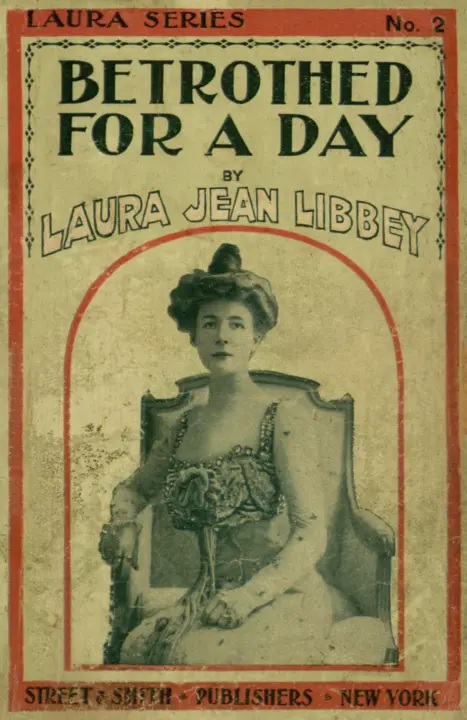
Betrothed for a day: Or, Queenie Trevalyn’s love test
Laura Jean Libbey
THE CLASSIC COLLECTION · 1891
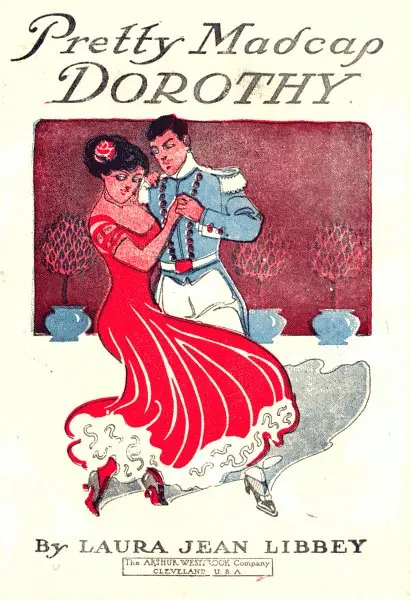
"Pretty Madcap Dorothy; Or, How She Won a Lover" by Laura Jean Libbey is a romantic novel likely written in the late 19th century. The book centers around Dorothy Glenn, a spirited and carefree young woman working in a book-bindery in New York City, as she navigates the complexities of love and friendship amidst her ambitions. The story explores Dorothy's relationships with her fellow working-girls, her flirtation with a dashing streetcar conductor, Harry Langdon, and the challenges she faces as she desires a love that transcends her modest background. At the start of the novel, the reader is introduced to a lively group of young women, led by Dorothy, who is full of hope and vitality. Conversations quickly turn to the prospects of finding love, revealing the girls' aspirations and insecurities. Dorothy becomes infatuated with Harry Langdon, a young man who reveals a mysterious side when he is not just a streetcar operator but also a law student engaged in a wager. Their budding romance is complicated by Dorothy's existing engagement with Jack Garner, a devoted but less affluent young worker. The narrative captures the excitement, naiveté, and the inevitable drama of young love as relationships clash amidst the backdrop of societal expectations and personal desires, foreshadowing deeper conflicts ahead.
Introduction adapted from the source catalogue; source summaries may be automatically generated.
Free to read · English · 66,420 words · No account needed
MAKE TIME FOR A GOOD BOOK
On by default. Untick to stop anonymous reading totals. Each page counts after 10 seconds in view. How this works.
Anonymous counting is on unless you have switched it off.
He stooped and passed his arm lightly around the slim waist, his hand
holding hers.
Dorothy trembled.
"Won't you let me comfort you?" he asked, in that low, winning voice of
his.
The thought flashed across Dorothy's brain that, if she pushed him from her, he would never again put his arms about her, and she meekly endured the caress for an instant; and not being repulsed, he grew bold enough to kiss the rosy cheek that peeped out from between the white fingers.
"I have something to say to you, Dorothy," he whispered. "It is this: I love you! Will you be my wife?"
Dorothy had always imagined just how a lover should propose, but she had never imagined anything so commonplace as this.
He stooped to caress her again, but she drew back.
"You frighten me!" she cried; and at these words he instantly released
her.
"It is alarming--being kissed--and especially when you're not used to it. But that does not answer my question. Will you marry me, or will you not?"
"I don't know!" cried Dorothy, faintly. "You mustn't ask me; you must talk to Mrs. Kemp about it."
"I might talk to Mrs. Kemp about changing my room in the house, or ask her concerning anything belonging to the household, but I couldn't think of asking her to find me a wife and to seal the bargain for me. The 'Yes' or 'No' must be said by the girl herself, as she is the one who is to live with me and to make the best or the worst of the bargain through life. Now, Dorothy, I want a plain, straightforward answer. Tell me, will you be my bride?"
She colored and smiled, and the sort of shy half fear which always assailed her at his approach came over her now more strongly than ever, and the quick blood came rushing to her finger-ends.
"I--don't know what to say!" gasped Dorothy. "I couldn't marry anybody,
I think."
His arms dropped from about her.
"Am I to understand, then," he asked, in a constrained voice, "that you
refuse me?"
"Oh, I don't know!" cried Dorothy, melting into fresh, quick tears. "I--I--should want to ask somebody about it first before I said 'Yes.'"
He had quite believed that she would accept him on the spot the moment he proposed, and her failure to do this made him almost catch his breath in astonishment.
This uncertainty in the matter gave more zest to his ardor.
"You dislike me?" he questioned, wondering if that could possibly be.
"Oh, no, no! I like you. Won't you believe me?"
Your reading position is saved on this browser. Take it to another device with a library code. Reading pages adapt to text, rather than matching a printed edition.
Laura Jean Libbey
Laura Jean Libbey
Laura Jean Libbey
Laura Jean Libbey
BEHIND THE BOOK
This eBook is for the use of anyone anywhere in the United States and most other parts of the world at no cost and with almost no restrictions whatsoever. You may copy it, give it away or re-use it under the terms of the Project Gutenberg License included with this eBook or online at www.gutenberg.org. If you are not located in the United States, you will have to check the laws of the country where you are located before using this eBook. Read the source licence.
The original source file, including credits and licence, is retained by this library. Request an original-format copy at no charge. Please include the book title and Project Gutenberg identifier #29776.
KEEP YOUR CURIOSITY GOING
Coulson Kernahan

Maurice Baring
Frances Wright
Cécile Tormay

Frederic Jesup Stimson

W. H. P. (William Henry Pope) Jarvis