THE CLASSIC COLLECTION✦A dead man’s diaryCLASSIC FREE BOOKS
A dead man’s diary
Coulson Kernahan
THE CLASSIC COLLECTION · 1906
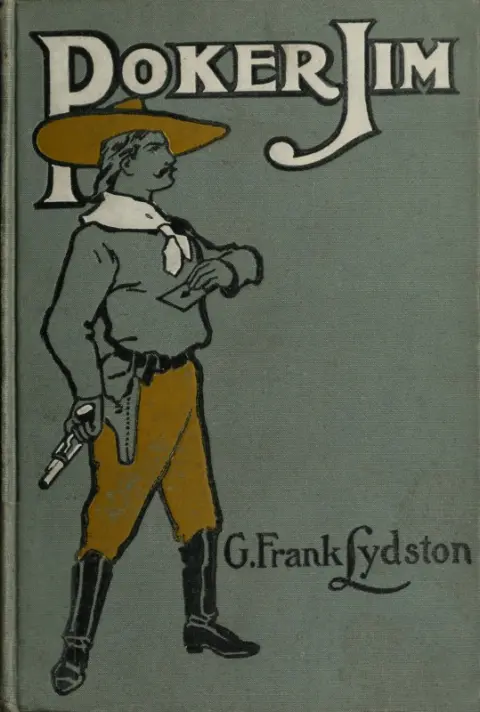
"Poker Jim, Gentleman, and Other Tales and Sketches" by G. Frank Lydston is a collection of adventurous tales written in the early 20th century. The book primarily focuses on the character of Poker Jim, a complex gentleman involved in gambling and other escapades in the tumultuous backdrop of 19th-century California. Through various stories, we are introduced to a vibrant cast of characters and their interactions, set against a landscape rich with excitement and moral dilemmas. The opening of the book establishes the narrator's background as a physician and sets the stage for the introduction of Poker Jim. It describes the protagonist's journey from his medical graduation to his arrival in San Francisco, revealing a world filled with gamblers, drunks, and high stakes. As the narrator observes life in the city's gambling dens, he encounters a young man named Gordon Cabell, who is being led astray by a woman associated with the underbelly of society. Jim, who later emerges as a significant figure, steps in as a mentor, displaying qualities of courage and integrity. This initial chapter piques interest in the themes of loyalty, moral complexity, and the colorful lives of those seeking fortune in the Gold Rush era.
Introduction adapted from the source catalogue; source summaries may be automatically generated.
Free to read · English · 82,495 words · No account needed
MAKE TIME FOR A GOOD BOOK
On by default. Untick to stop anonymous reading totals. Each page counts after 10 seconds in view. How this works.
Anonymous counting is on unless you have switched it off.
“Heigho!” I exclaimed, “I don’t know but you are right, my boy, and yet, I don’t exactly see how I can help matters much.”
“There’s one thing you can do, doctor, you can at least make the effort to impress upon the public the necessity of treating human beings with the same degree of intelligence and consideration that you bestow upon animals. Get rid of that idiotic, sentimental moonshine about ‘joining two souls in wedlock’ and come down to the common-sense basis of a union for a specific, organic purpose between two bipeds, that are or should be, subject to the same laws as other animals. Do this and there will be fewer hideous heads and miserable legs like mine.”
My little friend wept silently.
“Come, come, my lad, cheer up,” I said, “You must remember that the ranks of the immortal geniuses of the world have been largely recruited from such material as yourself.”
“You doubtless mean to be consoling, my dear sir,” replied the child, “but you forget the chief consolation contained in your argument.”
“Pray, what is that?” I asked.
“Why those degenerate geniuses die young, and leave no posterity to perpetuate their misery.”
“You are right,” I said, musingly. “I did not think of that.”
“Do you know, doctor, that the most philosophic bon mot ever perpetrated, and the one which seems most appropriate to my case, is that facetious description which somebody gave of the mule. He said, if I remember correctly, that the mule was an animal which had no ‘pride of paternity and no hope of posterity’.”
“And yet,” I replied, “the mule is not the happiest and most placid animal in the world. The clam is his superior in many respects.”
“Yes, and there are many human clams. I fancy, however, that you do not
envy them, doctor.”
“Well, I am not so sure about that, my dear young friend. The higher emotions and more refined sensibilities are the foundation of most of the sorrows of life.”
“But what of the pleasures, doctor?”
“True, I had forgotten them,” I replied.
We sat for some time, young Smith and I, silently gazing into the fireplace. My cigar having gone out, I relighted it and began puffing vigorously, with the result of blowing some dense clouds of smoke in the direction of my visitor. A sharp cough, followed by a decided sputter, reminded me of my unintentional discourtesy.
“Pardon me, my boy, but I forgot that you are not used to tobacco.”
The wise child smiled, and with a humorous twinkle in his bright eyes
replied:
Your reading position is saved on this browser. Take it to another device with a library code. Reading pages adapt to text, rather than matching a printed edition.
BEHIND THE BOOK
This eBook is for the use of anyone anywhere in the United States and most other parts of the world at no cost and with almost no restrictions whatsoever. You may copy it, give it away or re-use it under the terms of the Project Gutenberg License included with this eBook or online at www.gutenberg.org. If you are not located in the United States, you will have to check the laws of the country where you are located before using this eBook. Read the source licence.
The original source file, including credits and licence, is retained by this library. Request an original-format copy at no charge. Please include the book title and Project Gutenberg identifier #59050.
KEEP YOUR CURIOSITY GOING
Coulson Kernahan

Maurice Baring
Frances Wright
Cécile Tormay

Frederic Jesup Stimson

W. H. P. (William Henry Pope) Jarvis