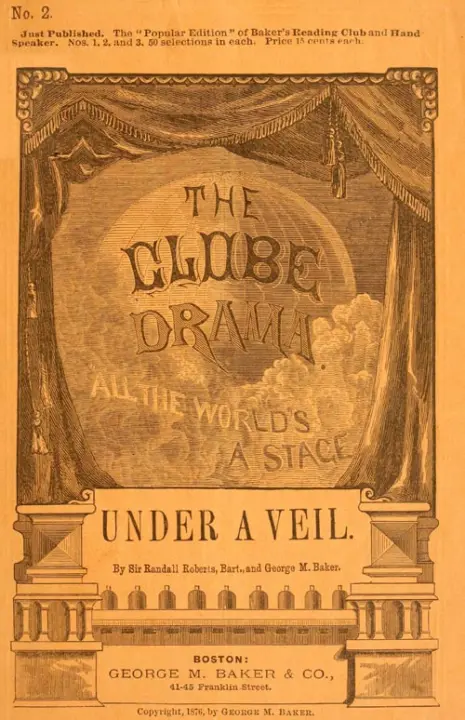
Under a Veil: A Comedietta in One Act
Randal H. (Randal Howland), Sir Roberts & George M. (George Melville) Baker
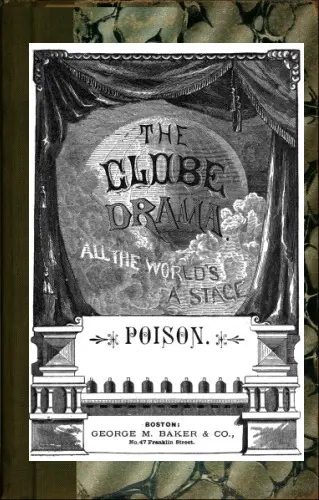
THE CLASSIC COLLECTION · 1876
"Poison: A Farce" by George M. Baker is a comedic play written in the late 19th century. The work is a farce that explores themes of misunderstanding and mistaken identity, centering around the amusing misadventures of its characters. The setting is primarily in the breakfast room of a suburban villa, highlighting the domestic hilarities that ensue. The story revolves around Mr. Theophilus Twitters, a retired sugar merchant, who is beset by a series of comedic complications. As he prepares for a journey, he faces interference from various characters, including his daughter's suitor, Dr. Squillcox, and the mother of his late wife. Amidst the chaos of breakfast interruptions and an ominous letter warning of poison in his sugar, Twitters navigates through misunderstandings that threaten his plans and familial relationships. The characters' interactions lead to humorous situations, culminating in an outrageous resolution where mistaken identities and motives are revealed, making for a lively and entertaining performance.
Introduction adapted from the source catalogue; source summaries may be automatically generated.
Free to read · English · 7,977 words · No account needed
MAKE TIME FOR A GOOD BOOK
On by default. Untick to stop anonymous reading totals. Each page counts after 10 seconds in view. How this works.
Anonymous counting is on unless you have switched it off.
MARY JANE. The equipage, mum? I didn’t see you come in no carriage.
MOTHER. My limited earthly resources do not permit me to provide myself with such luxuries. I shall use one of your master’s. My poor, dear, departed daughter, did not survive to enjoy his prosperity. I do.
MARY JANE. But he wants the carriage to go to the train, mum.
MOTHER. Trains go hourly. (Takes up a box. Exit.)
MARY JANE (standing at window). Well, if the late Mrs. Twitters was like this mother of hers, it ain’t no wonder that master’s kind of fidgety like. There,--she’s got hold of John, now, and she’s stepping into the carriage that was going to take master to the train. And she’s druv off! Oh, deary me. What vicious things elderly women can be. (Enter Twitters hastily.)
TWITTERS (Looking at watch). I shall have a close shave for the 9-20 train, but I think I can manage it. Breakfast’s ready of course, of course?
MARY JANE. It was ready sir.
TWITTERS (approaching table). Why, what on earth does this mean?
MARY JANE. The mother of the late Mrs. Twitters--
TWITTERS. The devil!
MARY JANE. No, sir, the mother of--
TWITTERS. Is she here? (With feeling.)
MARY JANE. No, sir, she’s gone.
TWITTERS. Something ghoulish is going on somewhere, then, or she would have stayed. That women is a perfect vulture. If anything horrible happens to anybody, she comes pouncing down to gloat over it. I’m becoming a fiend, myself; I rejoice in the news of any misfortune, for it means temporary deliverance for me from her--has she eaten everything?
MARY JANE. All there was, sir.
TWITTERS. How soon can you get some more?
MARY JANE. It’ll be ten minutes, sir.
TWITTERS. I shall have to breakfast in town, then. I must be off. John’s
here, of course?
MARY JANE. No, sir, he’s took.
TWITTERS. Good heavens! A fit?
MARY JANE. No, sir; the mother of the late Mrs. Twitters.
TWITTERS. Where has she taken him?
MARY JANE. To the funeral obelisk of an Irish gentleman, sir.
TWITTERS. To Parson Paddy’s funeral?
MARY JANE. That’s just it, sir.
TWITTERS. I hated that man, but his death caused me deep sorrow. Her cap was set at him. I must run for the train. Where are my boots? Ah, here! (Opening a box and producing a funeral wreath) what in the name of nature is this?
MARY JANE. It’s her’s, sir; she’s been and gone and took the boots to the burying, and she’s left nothing behind but Christian resignation.
Your reading position is saved on this browser. Take it to another device with a library code. Reading pages adapt to text, rather than matching a printed edition.
Randal H. (Randal Howland), Sir Roberts & George M. (George Melville) Baker
George M. (George Melville) Baker
Rachel Baker Gale & George M. (George Melville) Baker
George M. (George Melville) Baker
BEHIND THE BOOK
This eBook is for the use of anyone anywhere in the United States and most other parts of the world at no cost and with almost no restrictions whatsoever. You may copy it, give it away or re-use it under the terms of the Project Gutenberg License included with this eBook or online at www.gutenberg.org. If you are not located in the United States, you will have to check the laws of the country where you are located before using this eBook. Read the source licence.
The original source file, including credits and licence, is retained by this library. Request an original-format copy at no charge. Please include the book title and Project Gutenberg identifier #49480.
KEEP YOUR CURIOSITY GOING
Maurice Baring
W. B. (William Butler) Yeats
Edward Martyn

John Brougham & Charlotte Brontë
Marguerite Merington
Leonid Andreyev