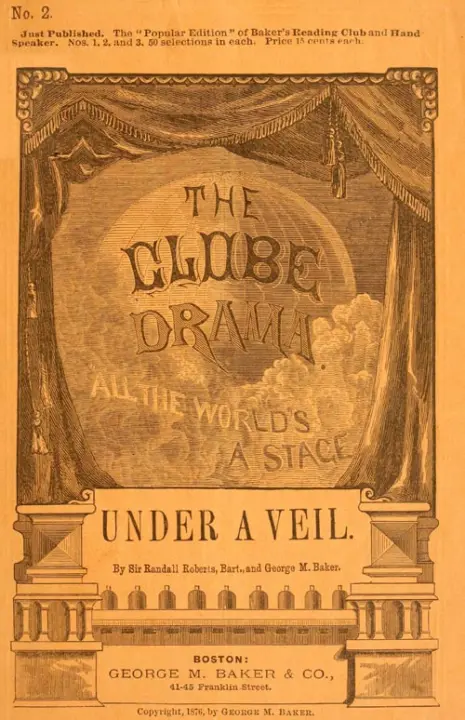
Under a Veil: A Comedietta in One Act
Randal H. (Randal Howland), Sir Roberts & George M. (George Melville) Baker
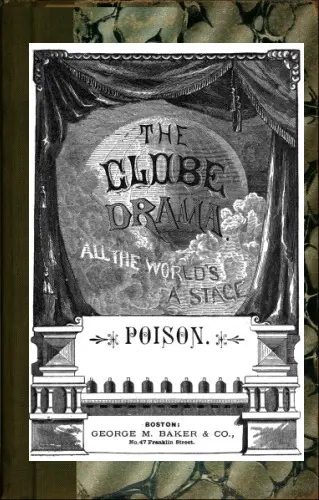
THE CLASSIC COLLECTION · 1876
"Poison: A Farce" by George M. Baker is a comedic play written in the late 19th century. The work is a farce that explores themes of misunderstanding and mistaken identity, centering around the amusing misadventures of its characters. The setting is primarily in the breakfast room of a suburban villa, highlighting the domestic hilarities that ensue. The story revolves around Mr. Theophilus Twitters, a retired sugar merchant, who is beset by a series of comedic complications. As he prepares for a journey, he faces interference from various characters, including his daughter's suitor, Dr. Squillcox, and the mother of his late wife. Amidst the chaos of breakfast interruptions and an ominous letter warning of poison in his sugar, Twitters navigates through misunderstandings that threaten his plans and familial relationships. The characters' interactions lead to humorous situations, culminating in an outrageous resolution where mistaken identities and motives are revealed, making for a lively and entertaining performance.
Introduction adapted from the source catalogue; source summaries may be automatically generated.
Free to read · English · 7,977 words · No account needed
MAKE TIME FOR A GOOD BOOK
On by default. Untick to stop anonymous reading totals. Each page counts after 10 seconds in view. How this works.
Anonymous counting is on unless you have switched it off.
CLARA (approaching him). Why, papa, you look ill.
TWITTERS. Ill! Yes, this is a wicked world, Clara. I meant to strew your path with roses, to hide from you the villainy--
HUNKER (without, shouting). Towels, Twitters.
CLARA. O, dear! What is that?
TWITTERS (rising). It is the voice of fate. (Calling.) Coming, sir.
CLARA. What do you mean?
HUNKER (without). Found ’em! No matter!
TWITTERS. A gentleman is come to stay with me, dear; and while he is here, we shall have so much business together that I have been thinking that it might be well for you to visit your kind grandmother.
CLARA. But I don’t want to. Grandma has horrid things to eat. Who is
this gentleman?
TWITTERS. You saw him here, this morning.
CLARA. That horrid, dirty man!
TWITTERS. An old friend of my boyhood, Clara--a worthy man, whom the world has dog’s-eared by hard usage. I am superior to prejudice, but I cannot expect you to be.
CLARA. I should hope not.
TWITTERS. So you had better go at once, dear. I’ll send your things. He is rough, I know, but he has a gentle, kind heart--
HUNKER (without). I say, Twitters! Where are you? Damn you!
TWITTERS (calling). Here, sir. (To Clara.) Go away, dear, quickly.
(Clara goes toward door. As she reaches it, Hunker appears and meets her, face to face. He is showily dressed in clothes of Twitters’, somewhat too small.)
HUNKER (bowing). Much obliged, miss; you were coming to show me the way, I ’spose. I’ve found it, you see. I heard your lovely voice.
TWITTERS. My daughter was going out, Mr. Hunker.
HUNKER. I guess she’d better not. It ain’t a nice day out.
CLARA. I beg your pardon, sir.
HUNKER. Twitters, this young woman mustn’t go out. Do you twig?
CLARA. Good-bye, papa.
TWITTERS. You had better stay, dear. (Clara stops, amazed.)
HUNKER. So I think. (Drawing long breath.) I feel like a new man, and I’m going to give the new man a drink. (Pouring out brandy again.) What’s her name, Twitters?
TWITTERS. My daughter is named Clara, sir.
HUNKER. Lovely name. Here’s to Clara (drinking). Sit down; we’ll soon
be pals.
TWITTERS. Sit down, dear. (Clara sits amazed.)
HUNKER. Two young people like us can’t be thrown together in a house without liking each other pretty well?
CLARA (to Twitters). I cannot submit to this, papa.
TWITTERS (to Clara). We should never take offence when none is meant,
dear.
Your reading position is saved on this browser. Take it to another device with a library code. Reading pages adapt to text, rather than matching a printed edition.
Randal H. (Randal Howland), Sir Roberts & George M. (George Melville) Baker
George M. (George Melville) Baker
Rachel Baker Gale & George M. (George Melville) Baker
George M. (George Melville) Baker
BEHIND THE BOOK
This eBook is for the use of anyone anywhere in the United States and most other parts of the world at no cost and with almost no restrictions whatsoever. You may copy it, give it away or re-use it under the terms of the Project Gutenberg License included with this eBook or online at www.gutenberg.org. If you are not located in the United States, you will have to check the laws of the country where you are located before using this eBook. Read the source licence.
The original source file, including credits and licence, is retained by this library. Request an original-format copy at no charge. Please include the book title and Project Gutenberg identifier #49480.
KEEP YOUR CURIOSITY GOING
Maurice Baring
W. B. (William Butler) Yeats
Edward Martyn

John Brougham & Charlotte Brontë
Marguerite Merington
Leonid Andreyev