
Life of Harriet Beecher Stowe Compiled From Her Letters and Journals by Her Son Charles Edward Stowe
Harriet Beecher Stowe
THE CLASSIC COLLECTION · 1878
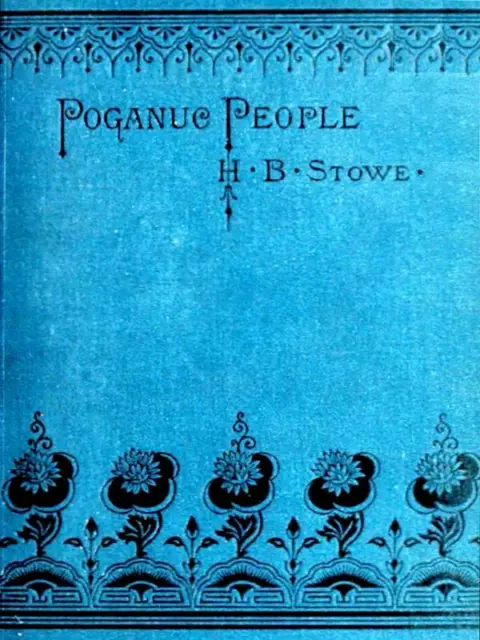
"Poganuc People: Their Loves and Lives" by Harriet Beecher Stowe is a novel written in the late 19th century. The book explores the lives and loves of the residents of the fictional New England town of Poganuc, focusing especially on the experiences of a young girl named Dolly Cushing. Through her narration, the story delves into themes of childhood innocence, familial dynamics, and the contrasting social and religious structures of the time. The opening of the novel introduces us to Dolly Cushing and her interactions with Nabby, a kitchen maid, as they discuss the upcoming Christmas celebrations. Dolly, the youngest of ten children in a minister's household, grapples with feelings of confusion and longing as she learns about Christmas, a holiday her father does not condone. As she listens to Nabby's explanation of the church's "lumination" preparations and expresses her desire to attend, the narrative sets the stage for Dolly's adventures, detailing her innocent curiosity and the complexities of growing up in a religiously rigid environment. The scenes capture the warmth of home life contrasted with the constraints of her father’s strict beliefs, hinting at the larger societal conflicts to come.
Introduction adapted from the source catalogue; source summaries may be automatically generated.
Free to read · English · 80,768 words · No account needed
MAKE TIME FOR A GOOD BOOK
On by default. Untick to stop anonymous reading totals. Each page counts after 10 seconds in view. How this works.
Anonymous counting is on unless you have switched it off.
"Why, that's just the way it was when they crossed the Red Sea," said Dolly, eagerly; "wasn't it, Papa?"
"Something so, my dear," said her father; but her mother made her a
sign not to talk.
"How long did it take to do the whole thing?"
"Well, thanks to those Marblehead boys, by daybreak the greater part of the army were safe on the New York side. A little after daylight we marched off quietly and went down to the ferry. Washington was still there, and we begged him to go in the first boat; but no, he was immovable. He saw us all off, and went himself in the very last boat, after every man was in."
"What a glorious fellow!" said the Doctor.
"Please, sir," said Will, who, with distended eyes, had been listening, "what did the British say when they found out?"
The Colonel laid his head back and gave a hearty laugh.
"They had a message sent them, by a Tory woman down by the ferry, what was going on. She sent her black servant, and he got through our American lines but was stopped by the Hessians, who could not understand his gibberish, and so kept him till long after all was over. Then a British officer overhauled him and was pretty well amazed at his story. He gave the alarm, and General Howe's aid-de-camp, with a body of men, climbed over the intrenchments and found all deserted. They hurried down to the landing just in time to see the rear boats half way across the river."
"Well, that is almost like the crossing of the Red Sea," said the
Doctor.
"Oh, weren't the British furious!" cried Bill.
"Yes, they did fire away at the boats, and one straggling boat they hit and forced the men to return; but it turned out only three vagabonds that had come to plunder."
It was after the nine o'clock bell had dismissed the Colonel and his lady that the Doctor noticed the wide and radiant eyes of little Dolly and his boys.
"My children," he said, "to use the name of the great God solemnly and earnestly for a great and noble purpose is not to 'swear.' Swearing is taking God's holy name in vain, in a trifling way, for a trivial purpose--a thing which our great and good general never did. But this story I would rather you would never repeat. It might not be understood."
"Certainly," said Bill, with proud gravity; "common boys wouldn't understand--and, Dolly, don't you tell."
"Of course I shouldn't," said Dolly. "I never shall tell even Nabby,
nor Bessie, nor anybody."
Your reading position is saved on this browser. Take it to another device with a library code. Reading pages adapt to text, rather than matching a printed edition.
Harriet Beecher Stowe

Harriet Beecher Stowe
Harriet Beecher Stowe

Harriet Beecher Stowe
BEHIND THE BOOK
This eBook is for the use of anyone anywhere in the United States and most other parts of the world at no cost and with almost no restrictions whatsoever. You may copy it, give it away or re-use it under the terms of the Project Gutenberg License included with this eBook or online at www.gutenberg.org. If you are not located in the United States, you will have to check the laws of the country where you are located before using this eBook. Read the source licence.
The original source file, including credits and licence, is retained by this library. Request an original-format copy at no charge. Please include the book title and Project Gutenberg identifier #48190.
KEEP YOUR CURIOSITY GOING
Coulson Kernahan

Maurice Baring
Frances Wright
Cécile Tormay

Frederic Jesup Stimson

W. H. P. (William Henry Pope) Jarvis