THE CLASSIC COLLECTION✦Letters of a Traveller; Or, Notes of Things Seen in Europe and AmericaCLASSIC FREE BOOKS
Letters of a Traveller; Or, Notes of Things Seen in Europe and America
William Cullen Bryant
THE CLASSIC COLLECTION · 1849
"Poems by William Cullen Bryant" by William Cullen Bryant is a collection of poetry written in the mid-19th century. This collection showcases the author's deep connection with nature, life, death, and the human experience, touching on various themes such as beauty, loss, and reflection on the passage of time. Through a variety of lyrical forms, Bryant’s work emphasizes both the serene and tumultuous aspects of existence. The opening of the collection includes a note by the author expressing the pleasure in allowing his poems to be published for readers in Europe, signifying the international appeal of his work. This is followed by several poems, including "The Ages," which explores the themes of mortality and the cyclical nature of life, and "Thanatopsis," where the poet offers reflections on death and the solace found in connecting with nature. Through these pieces, readers are introduced to Bryant's contemplative style and the rich imagery he employs to articulate complex themes, inviting them to ponder profound truths about life and existence.
Introduction adapted from the source catalogue; source summaries may be automatically generated.
Free to read · English · 50,514 words · No account needed
MAKE TIME FOR A GOOD BOOK
On by default. Untick to stop anonymous reading totals. Each page counts after 10 seconds in view. How this works.
Anonymous counting is on unless you have switched it off.
Oh! could I hope the wise and pure in heart
Might hear my song without a frown, nor deem
My voice unworthy of the theme it tries,--
I would take up the hymn to Death, and say
To the grim power: The world hath slandered thee
And mocked thee. On thy dim and shadowy brow
They place an iron crown, and call thee king
Of terrors, and the spoiler of the world,
Deadly assassin, that strik'st down the fair,
The loved, the good--that breathest on the lights
Of virtue set along the vale of life,
And they go out in darkness. I am come,
Not with reproaches, not with cries and prayers,
Such as have stormed thy stern, insensible ear
from the beginning. I am come to speak
Thy praises. True it is, that I have wept
Thy conquests, and may weep them yet again:
And thou from some I love wilt take a life
Dear to me as my own. Yet while the spell
Is on my spirit, and I talk with thee
In sight of all thy trophies, face to face,
Meet is it that my voice should utter forth
Thy nobler triumphs; I will teach the world
To thank thee.--Who are thine accusers?--Who?
The living!--they who never felt thy power,
And know thee not. The curses of the wretch
Whose crimes are ripe, his sufferings when thy hand
Is on him, and the hour he dreads is come,
Are writ among thy praises. But the good--
Does he whom thy kind hand dismissed to peace,
Upbraid the gentle violence that took off
His fetters, and unbarred his prison cell?
Raise then the hymn to Death. Deliverer!
God hath anointed thee to free the oppressed
And crush the oppressor. When the armed chief,
The conqueror of nations, walks the world,
And it is changed beneath his feet, and all
Its kingdoms melt into one mighty realm--
Thou, while his head is loftiest and his heart
Blasphemes, imagining his own right hand
Almighty, thou dost set thy sudden grasp
Upon him, and the links of that strong chain
That bound mankind are crumbled; thou dost break
Sceptre and crown, and beat his throne to dust.
Then the earth shouts with gladness, and her tribes
Gather within their ancient bounds again.
Else had the mighty of the olden time,
Nimrod, Sesostris, or the youth who feigned
His birth from Libyan Ammon, smitten yet
The nations with a rod of iron, and driven
Their chariot o'er our necks. Thou dost avenge,
In thy good time, the wrongs of those who know
No other friend. Nor dost thou interpose
Only to lay the sufferer asleep,
Where he who made him wretched troubles not
His rest--thou dost strike down his tyrant too.
Oh, there is joy when hands that held the scourge
Drop lifeless, and the pitiless heart is cold.
Thou too dost purge from earth its horrible
And old idolatries;--from the proud fanes
Each to his grave their priests go out, till none
Is left to teach their worship; then the fires
Of sacrifice are chilled, and the green moss
O'ercreeps their altars; the fallen images
Cumber the weedy courts, and for loud hymns,
Chanted by kneeling multitudes, the wind
Shrieks in the solitary aisles. When he
Who gives his life to guilt, and laughs at all
The laws that God or man has made, and round
Hedges his seat with power, and shines in wealth,--
Lifts up his atheist front to scoff at Heaven,
And celebrates his shame in open day,
Thou, in the pride of all his crimes, cutt'st off
The horrible example. Touched by thine,
The extortioner's hard hand foregoes the gold
Wrung from the o'er-worn poor. The perjurer,
Whose tongue was lithe, e'en now, and voluble
Against his neighbour's life, and he who laughed
And leaped for joy to see a spotless fame
Blasted before his own foul calumnies,
Are smit with deadly silence. He, who sold
His conscience to preserve a worthless life,
Even while he hugs himself on his escape,
Trembles, as, doubly terrible, at length,
Thy steps o'ertake him, and there is no time
For parley--nor will bribes unclench thy grasp.
Oft, too, dost thou reform thy victim, long
Ere his last hour. And when the reveller,
Mad in the chase of pleasure, stretches on,
And strains each nerve, and clears the path of life
Like wind, thou point'st him to the dreadful goal,
And shak'st thy hour-glass in his reeling eye,
And check'st him in mid course. Thy skeleton hand
Shows to the faint of spirit the right path,
And he is warned, and fears to step aside.
Thou sett'st between the ruffian and his crime
Thy ghastly countenance, and his slack hand
Drops the drawn knife. But, oh, most fearfully
Dost thou show forth Heaven's justice, when thy shafts
Drink up the ebbing spirit--then the hard
Of heart and violent of hand restores
The treasure to the friendless wretch he wronged.
Then from the writhing bosom thou dost pluck
The guilty secret; lips, for ages sealed,
Are faithless to the dreadful trust at length,
And give it up; the felon's latest breath
Absolves the innocent man who bears his crime;
The slanderer, horror-smitten, and in tears,
Recalls the deadly obloquy he forged
To work his brother's ruin. Thou dost make
Thy penitent victim utter to the air
The dark conspiracy that strikes at life,
And aims to whelm the laws; ere yet the hour
Is come, and the dread sign of murder given.
Your reading position is saved on this browser. Take it to another device with a library code. Reading pages adapt to text, rather than matching a printed edition.
William Cullen Bryant
William Cullen Bryant
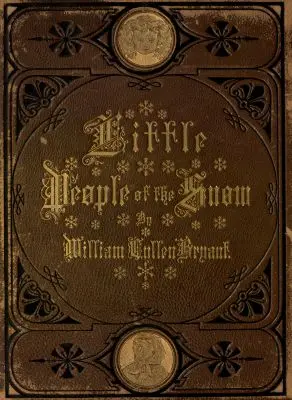
William Cullen Bryant
William Cullen Bryant
BEHIND THE BOOK
This eBook is for the use of anyone anywhere in the United States and most other parts of the world at no cost and with almost no restrictions whatsoever. You may copy it, give it away or re-use it under the terms of the Project Gutenberg License included with this eBook or online at www.gutenberg.org. If you are not located in the United States, you will have to check the laws of the country where you are located before using this eBook. Read the source licence.
The original source file, including credits and licence, is retained by this library. Request an original-format copy at no charge. Please include the book title and Project Gutenberg identifier #16341.
KEEP YOUR CURIOSITY GOING

Eric Mackay
Edmund Gosse
Sophia Margaretta Hensley
Gilbert Parker
George MacDonald

Elizabeth Bibesco