THE CLASSIC COLLECTION✦Some Notes on Early Woodcut Books, with a Chapter on Illuminated ManuscriptsCLASSIC FREE BOOKS
Some Notes on Early Woodcut Books, with a Chapter on Illuminated Manuscripts
William Morris
THE CLASSIC COLLECTION · 1891
"Poems By the Way" by William Morris is a collection of poetry written in the late 19th century. The work reflects Morris's romantic sensibilities, encompassing themes of nature, love, and the interplay between reality and myth. It may appeal to readers who appreciate lyrical poetry that evokes strong emotions and vivid imagery. The opening of the volume introduces the poem "From the Upland to the Sea," where the speaker expresses a longing for a shared moment with a beloved, wandering through nature as spring unfolds. The imagery captures the beauty of the changing seasons, highlighting the joy and melancholy intertwined with love. Following this, the excerpt transitions into "Of the Wooing of Hallbiorn the Strong," a narrative piece that tells the story of a character's pursuit of love against the backdrop of Icelandic lore. This mixture of personal reflection and storytelling sets a tone that invites readers to explore the broader explorations of human experience found throughout the collection.
Introduction adapted from the source catalogue; source summaries may be automatically generated.
Free to read · English · 32,025 words · No account needed
MAKE TIME FOR A GOOD BOOK
On by default. Untick to stop anonymous reading totals. Each page counts after 10 seconds in view. How this works.
Anonymous counting is on unless you have switched it off.
O burning Sun, O master of unrest,
Why must we, toiling, cast away the best,
Now, when the bird sleeps by her empty nest?
See, with my garland lying at her feet,
In lonely labour stands mine own, my sweet,
Above the quern half-filled with half-ground wheat.
O red taskmaster, that thy flames were done!
The Maidens.
O love, to-night across the half-shorn plain
Shall I not go to meet the yellow wain,
A look of love at end of toil to gain?
What flaming sun can keep us long alone?
The Youths.
To-morrow, said I, is grape gathering o'er;
To-morrow, and our loves are twinned no more
To-morrow came, to bring us woe and war.
What have I done, that I should stand with these
Hearkening the dread shouts borne upon the breeze,
While she, far off, sits weeping 'neath her trees?
Alas, O kings, what is it ye have done?
The Maidens.
Come, love, delay not; come, and slay my dread!
Already is the banquet table spread;
In the cool chamber flower-strewn is my bed:
Come, love, what king shall keep us long alone?
The Youths.
O city, city, open thou thy gate!
See, with life snatched from out the hand of fate!
How on thy glittering triumph I must wait!
Are not her hands stretched out to me? Her eyes,
Grow they not weary as each new hope dies,
And lone before her still the long road lies?
O golden city, fain would I be gone!
The Maidens.
And thou art happy, amid shouts and songs,
And all that unto conquering men belongs.
Night hath no fear for me, and day no wrongs.
What brazen city gates can keep us, lone?
The Youths.
O long, long road, how bare thou art, and grey!
Hill after hill thou climbest, and the day
Is ended now, O moonlit endless way!
And she is standing where the rushes grow,
And still with white hand shades her anxious brow,
Though 'neath the world the sun is fallen now,
O dreary road, when will thy leagues be done?
The Maidens.
O tremblest thou, grey road, or do my feet
Tremble with joy, thy flinty face to meet?
Because my love's eyes soon mine eyes shall greet?
No heart thou hast to keep us long alone.
The Youths.
O wilt thou ne'er depart, thou heavy night?
When will thy slaying bring on the morning bright,
That leads my weary feet to my delight?
Why lingerest thou, filling with wandering fears My lone love's tired heart; her eyes with tears For thoughts like sorrow for the vanished years? Weaver of ill thoughts, when wilt thou be gone?
The Maidens.
Your reading position is saved on this browser. Take it to another device with a library code. Reading pages adapt to text, rather than matching a printed edition.
William Morris
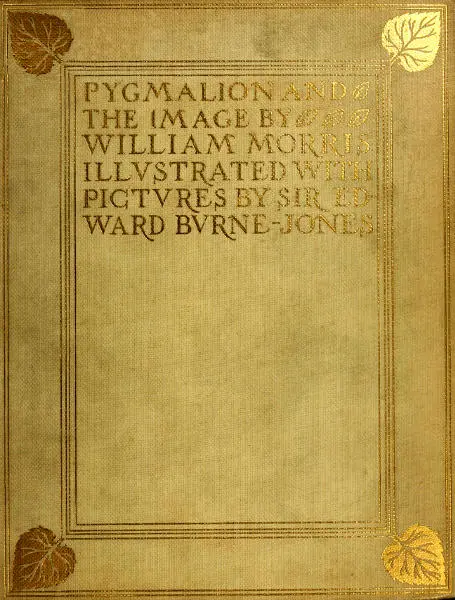
William Morris
William Morris
William Morris
BEHIND THE BOOK
This eBook is for the use of anyone anywhere in the United States and most other parts of the world at no cost and with almost no restrictions whatsoever. You may copy it, give it away or re-use it under the terms of the Project Gutenberg License included with this eBook or online at www.gutenberg.org. If you are not located in the United States, you will have to check the laws of the country where you are located before using this eBook. Read the source licence.
The original source file, including credits and licence, is retained by this library. Request an original-format copy at no charge. Please include the book title and Project Gutenberg identifier #3468.
KEEP YOUR CURIOSITY GOING

Eric Mackay
Edmund Gosse
Sophia Margaretta Hensley
Gilbert Parker
George MacDonald

Elizabeth Bibesco