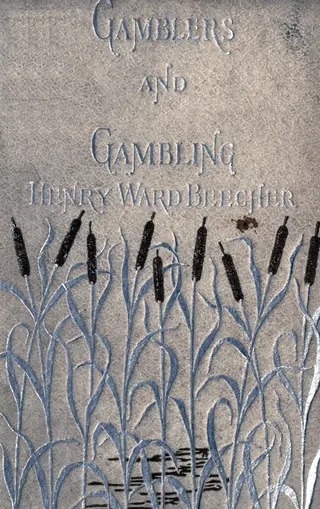
Gamblers and Gambling
Henry Ward Beecher
THE CLASSIC COLLECTION · 1874
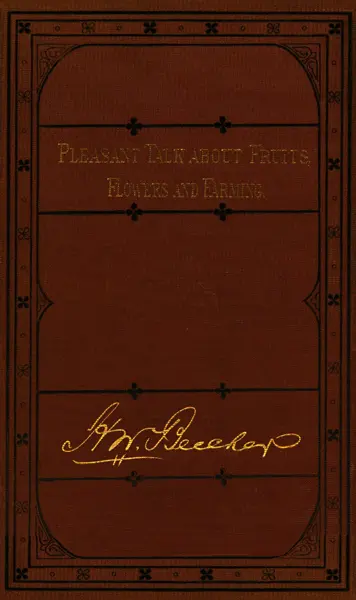
"Pleasant Talk About Fruits, Flowers and Farming" by Henry Ward Beecher is a collection of essays focused on horticulture, agriculture, and the joys of rural life written in the late 19th century. This work reflects the author's deep appreciation for nature, plants, and their relationships with people, as well as the philosophical insights they inspire. The book combines practical advice on gardening and farming with thoughtful observations about the impact of these activities on human life. At the start of the work, Beecher introduces the origins of his writings, discussing how they were derived from articles he contributed to newspapers over many years. He shares anecdotes about the cultural significance of the apple, emphasizing it as a quintessentially American fruit, and its accessibility to all people, symbolizing democracy and the common good. Through this exploration, he highlights not only the practical aspects of fruit cultivation but also its broader social and political implications, setting the tone for a pleasurable and informative discourse throughout the collection.
Introduction adapted from the source catalogue; source summaries may be automatically generated.
Free to read · English · 161,689 words · No account needed
MAKE TIME FOR A GOOD BOOK
On by default. Untick to stop anonymous reading totals. Each page counts after 10 seconds in view. How this works.
Anonymous counting is on unless you have switched it off.
The list of autumn apples is very large and continually augmenting. But fall apples are, ordinarily, less desirable than any others; not from inferior quality, but because they ripen at the season of the year when peaches and pears are in their glory.
15. GLORIA MUNDI or Monstrous Pippin. Tree, one of the most upright, top close, and resembling the pear. Wood medium sized, healthy, vigorous growth, wood ripens early, not subject to frost-blight; bears on moderately young trees. It works well from the bud, and also extremely well grafted on roots, and grows straight and finely for nursery purposes. Fruit very large, green, changes when dead-ripe to a yellowish white. Flavor mild, subacid; flesh melting and spicy. Ripens in November, at the same time with the Golden Russet, but will not keep as long. A native.
16. BLACK APPLE.—Tree low, spreading, and round topped; wood of medium vigor, healthy, ripens early, and not subject to frost-blight. Grafts on the root kindly; not so favorable for budding as the No. 15; bears remarkably young, and abundantly to a fault. Fruit medium sized; color very dark red, almost black, with grey rusty spots about the stem; flesh tender, breaking; moderately juicy, flavor rather sweet, though not a real sweet apple. No apple would stand fairer as an early winter fruit, were it not for a peculiar, dry, raw taste, somewhat resembling the taste of uncooked corn meal. Ripens from November to January. It is a native.
17. NEWTON SPITZENBURG.—Tree, not large, upright but not compact, top open; wood of medium size and vigor of growth; healthy, ripens early, and yet, now and then, it takes the frost-blight; bears moderately young, every other year, very abundantly; grafts well on the root, buds only moderately well, good for nursery handling. Fruit, varying much in size, but often large, flesh melting, juicy; flavor rich, spicy, subacid; ripens from November to January.
18. RHODE ISLAND GREENING.—Tree large, very spreading and drooping, grows vigorously, healthy, ripens early, not subject to frost-blight; bud takes well; but, whether grafted on the root, or budded, it will plague the nurseryman by its disposition to spread and twist about like a quince bush. It should be budded on strong stocks at the height at which the top is to be formed; but it always overgrows the stock. Fruit very large, color green, with cloudy spots dotted with pin-point black specks; flesh breaking, tender and juicy: flavor mild, rich, subacid; a very popular fruit. Ripens from November to January.
19. HUBBARDSTON NONESUCH.—Admirable in nursery; works well on root or by bud. We give Downing’s description, as it has not fruited in this region.
Your reading position is saved on this browser. Take it to another device with a library code. Reading pages adapt to text, rather than matching a printed edition.
Henry Ward Beecher
Henry Ward Beecher
BEHIND THE BOOK
This eBook is for the use of anyone anywhere in the United States and most other parts of the world at no cost and with almost no restrictions whatsoever. You may copy it, give it away or re-use it under the terms of the Project Gutenberg License included with this eBook or online at www.gutenberg.org. If you are not located in the United States, you will have to check the laws of the country where you are located before using this eBook. Read the source licence.
The original source file, including credits and licence, is retained by this library. Request an original-format copy at no charge. Please include the book title and Project Gutenberg identifier #56640.
KEEP YOUR CURIOSITY GOING

David Patterson (Spirit) Hatch

David Patterson (Spirit) Hatch

David Patterson (Spirit) Hatch

Ralph Waldo Emerson

Maurice Baring

Oscar Wilde & James McNeill Whistler