THE CLASSIC COLLECTION✦Lost DiariesCLASSIC FREE BOOKS
Lost Diaries
Maurice Baring
THE CLASSIC COLLECTION · 1920
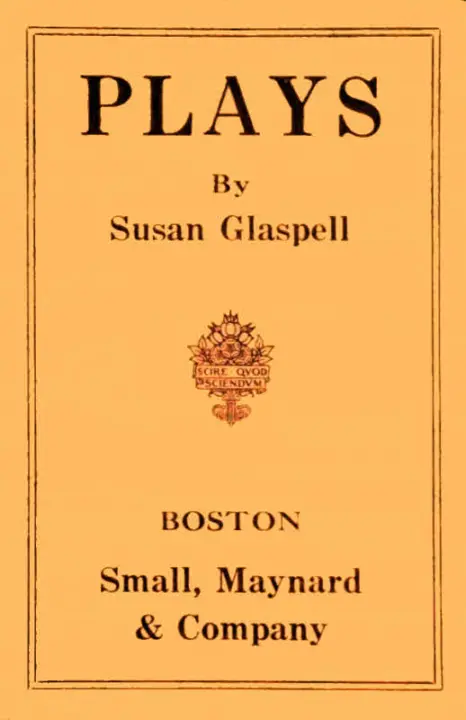
"Plays by Susan Glaspell" is a collection of dramatic works written in the early 20th century. This volume contains several one-act plays, including the well-known piece "Trifles," which explores themes of gender roles, social justice, and the complexities of human experience through the lives of its characters. The collection often revolves around women's perspectives and the societal issues they face, highlighting their experiences in a male-dominated society. The opening of the collection introduces "Trifles," setting the stage in a gloomy farmhouse where a group of men, including the County Attorney and Sheriff, are investigating the murder of John Wright. They are joined by their wives, Mrs. Peters and Mrs. Hale, who initially seem to occupy trivial roles. However, as the men dismiss various domestic objects as insignificant, the women begin to uncover deeper truths about Wright’s life and the emotional turmoil of his wife, Minnie. As the men search for tangible evidence, the women piece together the psychological narrative that ultimately reveals the motivations behind the crime, highlighting the theme of understanding versus ignorance across gender lines.
Introduction adapted from the source catalogue; source summaries may be automatically generated.
Free to read · English · 51,046 words · No account needed
MAKE TIME FOR A GOOD BOOK
On by default. Untick to stop anonymous reading totals. Each page counts after 10 seconds in view. How this works.
Anonymous counting is on unless you have switched it off.
If you had been a success you would have fired that woman with so great a courage that she would proudly prop The People on the pillow!
[Who is sketching THE FIREBRAND.] It was my pictures got us under the
bed.
[Haughtily.] I was definitely told it was my last “Talk with God” put
us under the bed.
Can you not see that she puts you under the bed because you yourselves have made concessions to the bourgeoisie? Cows! Geese!
It must be more frivolous!
It must print more poetry.
[They glare at one another.
It should be more serious.
It must be more frivolous!
[Enter THE BOY from Georgia--dressed like a freshman with a good
allowance.
Is this the office of The People?
No, this is a lunatic asylum.
[After a bewildered moment.] Oh, you’re joking. You know [Confidentially], I wondered about that--whether you would joke here. I thought you would. [Stepping forward.] I came to see the Editor--I want to tell him--
So many people are telling me so many things, could you tell yours a
little later?
Oh, yes. Of course there must be many important things people have to
tell you.
Well--many.
[THE BOY goes out--reluctantly.
[Who has all the time been glaring at OSCAR.] Speaking for the artists, I want to say right now--
Speaking for the writers, I wish to say before we go further--
A more serious approach--
A lighter touch--
Speaking for myself--
Speaking for the truth--
[Phone rings, OSCAR answers. Enter THE MAN from the Cape--slow,
heavy.
You have come to tell us something about this paper?
Yes.
There are a number ahead of you. Will you wait your turn? [A look of disappointment.] I’ll be glad to see you as soon as I can. There in the outside office?
[A moment THE MAN stands there, a mute ponderous figure, then very
slowly goes out.
[Hanging up receiver.] Moritz Paper Company. Bill got to be paid
today. And here--
[Takes from his drawer a huge packet of bills.
You could pay your bills if you were not afraid to be serious!
You could pay your bills if you were not afraid to be gay!
[From the door, solemnly.] A more earnest approach would save The
People.
A lighter touch would turn the trick!
[With that they leave.
[Going over and pounding on THE EDITOR’S desk.] To hell with the
bourgeoisie! Apes!
Efficiency has put out the spark.
Your reading position is saved on this browser. Take it to another device with a library code. Reading pages adapt to text, rather than matching a printed edition.
BEHIND THE BOOK
This eBook is for the use of anyone anywhere in the United States and most other parts of the world at no cost and with almost no restrictions whatsoever. You may copy it, give it away or re-use it under the terms of the Project Gutenberg License included with this eBook or online at www.gutenberg.org. If you are not located in the United States, you will have to check the laws of the country where you are located before using this eBook. Read the source licence.
The original source file, including credits and licence, is retained by this library. Request an original-format copy at no charge. Please include the book title and Project Gutenberg identifier #59432.
KEEP YOUR CURIOSITY GOING
Maurice Baring
W. B. (William Butler) Yeats
Edward Martyn

John Brougham & Charlotte Brontë
Marguerite Merington
Leonid Andreyev