THE CLASSIC COLLECTION✦An outlaw’s diary: the CommuneCLASSIC FREE BOOKS
An outlaw’s diary: the Commune
Cécile Tormay
THE CLASSIC COLLECTION · 1906
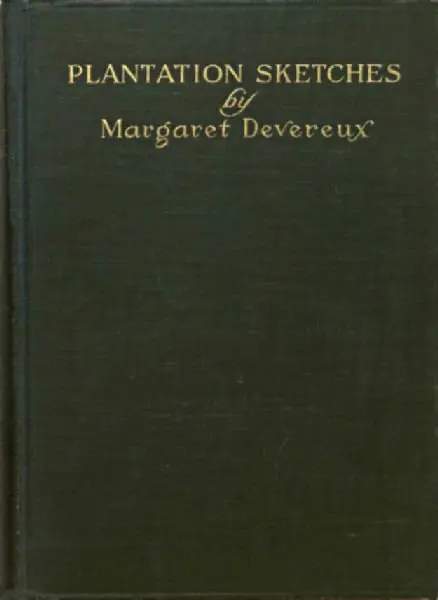
"Plantation Sketches" by Margaret Devereux is a collection of reminiscences detailing Southern life and culture, written in the early 20th century. The work offers a nostalgic glimpse into the lives of plantation families, focusing on both the relationships within these communities and their interactions with the enslaved population that constituted a significant aspect of that world. The author presents vivid illustrations of the customs, daily activities, and in particular the characters that were part of her upbringing on the plantations in North Carolina. The opening of "Plantation Sketches" frames the author's purpose, explaining that her sketches were originally conceived as stories for her grandchildren, aiming to preserve a true picture of Old South life, away from simplified narratives of cruelty and despair often associated with slavery. The text features the author's detailed memories of her family and their plantation lifestyle, describing her impressions of the environment, her experiences as a housewife, and the relationships with her household staff, including humorous anecdotes and poignant observations. Through her reflections, Devereux aims to provide her descendants an understanding of their heritage, highlighting both the idyllic and challenging aspects of life on the plantation.
Introduction adapted from the source catalogue; source summaries may be automatically generated.
Free to read · English · 30,959 words · No account needed
MAKE TIME FOR A GOOD BOOK
On by default. Untick to stop anonymous reading totals. Each page counts after 10 seconds in view. How this works.
Anonymous counting is on unless you have switched it off.
One day General Logan came to the door and said that he had reason to believe that a Confederate officer was concealed in the house, and, if I kept his presence a secret, he threatened me with the consequences. The Federals, while searching for buried treasure, had discovered the amputated arm of poor young Butler, and had jumped to the conclusion that he was concealed in the house. At all events, it served as a plea for them to claim that he was there. When I assured him that this rumor was quite false, his manner was so utterly incredulous that I requested him to satisfy himself of the truth of my assertion by making a search of the entire house and outbuildings. I entreated him to do this, for his threats had so alarmed me that I felt that in that alone lay our preservation. His reply, with an insolent, jeering laugh, was: "I will not take that trouble, for my boys will settle that question."
The safeguards stationed both at the back and front protected the house. For, whatever might have been their feelings, they dared not relax in their vigilance. The discipline in that army was perfect.
Not long after the above-mentioned interview with Logan, we were told (by a servant, I think), that the whole division was going to leave that night. This was true. It was before the articles of the surrender had been signed, and Logan was in pursuit of General Johnston. It was a night of such commotion that not one of the family retired to rest. It was discovered, when too late for redress, that Logan had withdrawn our safeguards, taken every commanding officer with him, and had left us to the mercy of his wagon train of bummers and of negroes. That night of terror terminated in a violent storm, in the midst of which your grandfather set out for the headquarters in town for the purpose of demanding a safeguard. With daylight came a greater feeling of safety, so we separated, the girls going to their rooms, and I to mine, in order to refresh ourselves and make a fresh toilet. While so engaged, I kept hearing the bells ringing and tinkling incessantly, and, while I was hurrying to put on my dress in order to inquire the meaning of this, Caroline and Adelaide rushed in, exclaiming that men were climbing the walls of the house, and the tinkling of the bells was caused by their twisting them off the wires. These women, whose natural color was bright mulatto, now looked ashy. I do not think that I spoke a word, but just flew into the nursery, took the children, and ran up the stairs. As I passed by the sitting, room, I met Kate, all disheveled, running out and saying that men were climbing into her window. I just took time to lock the door between her room and the sitting-room, and then we all ran upstairs, where the Burgwyns and my other girls were quietly dressing, in entire ignorance of what was taking place. It seems strange that I should recollect every trifle so vividly; I remember, even now, that, as I ran up the stair, my throat and mouth became so dry that I could not speak. From the window at the head of the stair nothing was visible but a sea of upturned faces; not just by the house, but away down the slope, as far as the eye could reach, were men's upturned faces. I can never forget the look upon Mrs. Burgwyn's face as she whispered, "We can throw ourselves from the window." My poor, craven heart might have failed me, but I am convinced that she could have done it. While we thus stood, a poor, cowering, terror-stricken group, steps were heard approaching, and a tall figure slowly ascended the stairs, and a grim, saturnine-faced man stood before us, and said, "I don't know that I can save you, but for the sake of my mother and sisters I will do all that I can do." I do not remember whether any one made a reply or not, I only recollect that he went as deliberately as he had come. When your grandfather returned, having with difficulty succeeded in procuring the permit for a safeguard, the mob had begun to disperse. Our deliverer was a man named Fort. He was division quartermaster, and had been left in charge of the wagon trains. He was from one of the Western States, Iowa, I believe. He was a good man, and was God's instrument to save us from destruction. He remained near the house all through the day, and at first said that he would sleep that night inside the dwelling, but afterwards told your grandfather that, upon further consideration, he thought it best that he should stay outside, so his tent was pitched close to the house, and there he remained until his command left. He was forbidding in manner, and would accept no thanks. I think that he hated us as Southerners, but acted from humanity.
Your reading position is saved on this browser. Take it to another device with a library code. Reading pages adapt to text, rather than matching a printed edition.
BEHIND THE BOOK
This eBook is for the use of anyone anywhere in the United States and most other parts of the world at no cost and with almost no restrictions whatsoever. You may copy it, give it away or re-use it under the terms of the Project Gutenberg License included with this eBook or online at www.gutenberg.org. If you are not located in the United States, you will have to check the laws of the country where you are located before using this eBook. Read the source licence.
The original source file, including credits and licence, is retained by this library. Request an original-format copy at no charge. Please include the book title and Project Gutenberg identifier #22673.
KEEP YOUR CURIOSITY GOING
Cécile Tormay

Moritz Busch
John L. Ransom
Frances Wright
Cécile Tormay

Mabel Potter Daggett