THE CLASSIC COLLECTION✦An outlaw’s diary: the CommuneCLASSIC FREE BOOKS
An outlaw’s diary: the Commune
Cécile Tormay
THE CLASSIC COLLECTION · 1906
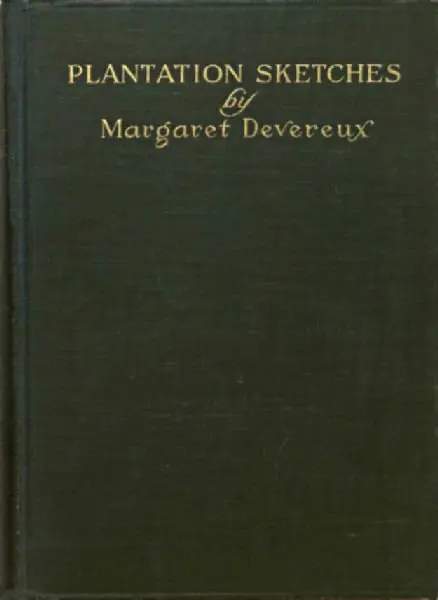
"Plantation Sketches" by Margaret Devereux is a collection of reminiscences detailing Southern life and culture, written in the early 20th century. The work offers a nostalgic glimpse into the lives of plantation families, focusing on both the relationships within these communities and their interactions with the enslaved population that constituted a significant aspect of that world. The author presents vivid illustrations of the customs, daily activities, and in particular the characters that were part of her upbringing on the plantations in North Carolina. The opening of "Plantation Sketches" frames the author's purpose, explaining that her sketches were originally conceived as stories for her grandchildren, aiming to preserve a true picture of Old South life, away from simplified narratives of cruelty and despair often associated with slavery. The text features the author's detailed memories of her family and their plantation lifestyle, describing her impressions of the environment, her experiences as a housewife, and the relationships with her household staff, including humorous anecdotes and poignant observations. Through her reflections, Devereux aims to provide her descendants an understanding of their heritage, highlighting both the idyllic and challenging aspects of life on the plantation.
Introduction adapted from the source catalogue; source summaries may be automatically generated.
Free to read · English · 30,959 words · No account needed
MAKE TIME FOR A GOOD BOOK
On by default. Untick to stop anonymous reading totals. Each page counts after 10 seconds in view. How this works.
Anonymous counting is on unless you have switched it off.
Mars Jones, warming to the subject, now waxed more and more eloquent over his grievances, until, having exhausted his pent up wrath, he had leisure to observe old Jerry's ashen face and shaking limbs, and he exclaimed:--
"Why, what's the matter with you? are you sick?"
"Yes, Mars Jones, I's been po'ly dis liblong day, an' I's gittin' sassifrax for to make me a little drap o' tea, I's got sich a mis'ry."
"Sassafras!" here broke in Mars Jones; and, good-natured, despite his roughness, he took from his pocket a tickler, and handing Jerry a dram, said:
"Drink this, you old blockhead. Sassifrax, indeed!--what good you reckon sassifrax goin' do you?"
With a scrape and a bow and a "Thank ye, Marster," the old man gulped down the dram, and Mars Jones, replacing his tickler, was turning away, when his foot slipped in something, and looking down he saw that it was blood.
The dram had put so much heart into the old man that he was able to reply glibly to Mars Jones's questions.
"Its jes' wha' I's been markin' hogs, Marster."
"I don't believe you; I believe you've been killin' one of your master's hogs--that's what you've been at."
But as this did not concern him, he did not wait to inquire further, and so, turning on his heel, he strode off.
The hog-feeder, too, hastening away, took the shortest path back to
his cart.
The deserted barnyard lay silent in the white moonlight when the little cart creaked through the gate; but up at the "great house" there were lights and movements where the family watched the coming of the boys.
Thursday, Friday, and Saturday passed without tidings, and the hope that they had been caught by the rising water and imprisoned upon some isolated knoll had been abandoned after the swamps had been searched in every direction. To add to the grief of the household, the master, already enfeebled, now lay prostrated in a condition that almost forbade hope.
Upon Sunday the waters began to abate, fences again appeared, and patches of drowned corn showed themselves above the wastes of water, to the no small joy of the flocks of blackbirds which chattered and fluttered amongst them.
Mr. Jones, tired of the loneliness of his water-girt home, made his way to the meeting-house, more for the sake of a gossip with some of the neighbors than for the day's preaching, and it was there that he first heard the startling news of the unaccountable disappearance of Squire Brace's nephews.
Your reading position is saved on this browser. Take it to another device with a library code. Reading pages adapt to text, rather than matching a printed edition.
BEHIND THE BOOK
This eBook is for the use of anyone anywhere in the United States and most other parts of the world at no cost and with almost no restrictions whatsoever. You may copy it, give it away or re-use it under the terms of the Project Gutenberg License included with this eBook or online at www.gutenberg.org. If you are not located in the United States, you will have to check the laws of the country where you are located before using this eBook. Read the source licence.
The original source file, including credits and licence, is retained by this library. Request an original-format copy at no charge. Please include the book title and Project Gutenberg identifier #22673.
KEEP YOUR CURIOSITY GOING
Cécile Tormay

Moritz Busch
John L. Ransom
Frances Wright
Cécile Tormay

Mabel Potter Daggett