THE CLASSIC COLLECTION✦An outlaw’s diary: the CommuneCLASSIC FREE BOOKS
An outlaw’s diary: the Commune
Cécile Tormay
THE CLASSIC COLLECTION · 1906
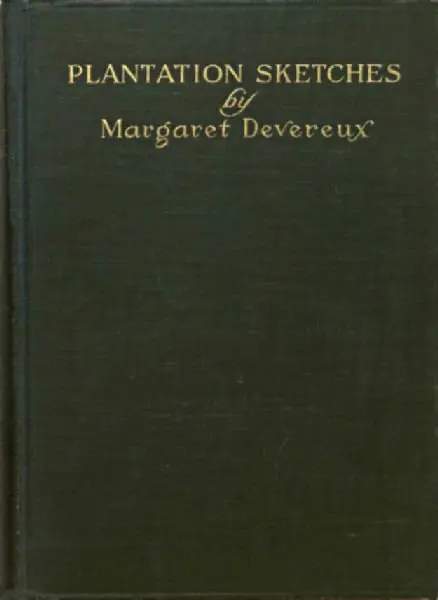
"Plantation Sketches" by Margaret Devereux is a collection of reminiscences detailing Southern life and culture, written in the early 20th century. The work offers a nostalgic glimpse into the lives of plantation families, focusing on both the relationships within these communities and their interactions with the enslaved population that constituted a significant aspect of that world. The author presents vivid illustrations of the customs, daily activities, and in particular the characters that were part of her upbringing on the plantations in North Carolina. The opening of "Plantation Sketches" frames the author's purpose, explaining that her sketches were originally conceived as stories for her grandchildren, aiming to preserve a true picture of Old South life, away from simplified narratives of cruelty and despair often associated with slavery. The text features the author's detailed memories of her family and their plantation lifestyle, describing her impressions of the environment, her experiences as a housewife, and the relationships with her household staff, including humorous anecdotes and poignant observations. Through her reflections, Devereux aims to provide her descendants an understanding of their heritage, highlighting both the idyllic and challenging aspects of life on the plantation.
Introduction adapted from the source catalogue; source summaries may be automatically generated.
Free to read · English · 30,959 words · No account needed
MAKE TIME FOR A GOOD BOOK
On by default. Untick to stop anonymous reading totals. Each page counts after 10 seconds in view. How this works.
Anonymous counting is on unless you have switched it off.
Slowly the little cart crept along the narrow plantation lanes, crept past the level cornfields and into the wide pasture, where sunburnt mares were grazing with their wild-eyed, unkempt colts; crept past the marsh, where the heron, disturbed in her solitary vigil, rose upon silent wing and sought some more secluded haunt amid the dim recesses of the swamp.
Turning at length into the forest, where the gray moss hanging from the trees almost obscured the deep blue autumnal sky, the cart slowly creaked through the rustling leaves until it came upon a cross fence which barred the way. Here, as Rachel came to a full stop, Ung Jerry awoke from his nap, descended from his perch, and, unslinging his horn, blew one long blast.
One was enough. In a moment the deep stillness of the forest was broken by the pattering of many little feet; from the thickets the hogs came; each hurrying with might and main to be foremost, they rushed, grunting, squealing, crowding to the fence, where, standing with upturned faces and small covetous eyes, they awaited the feast of golden grain which the old man hastened to scatter amongst them. Then, leaning upon the fence, he noted each greedy grunter as he wriggled his small tail in keenest enjoyment and cracked the sweet corn.
No need was there to count; to the hog-feeder each animal possessed an individuality so marked that in all the drove the absence of the most insignificant was at once detected. So now, as he leaned upon the fence, he cast anxious glances into the dimness beyond. Evidently some were missing.
Drive, too, divining his master's thoughts, stood with look intent and anxious yelp, impatient for the search to begin.
Then the word came, "Seek, boy!"
Scrambling through the fence, he dashed into every covert or tangle wherein a hog might lurk, but without result; there came no rush of feet, no shaking of the brown leaves, no startled grunt. All was still, save for the quick panting of the old hound.
The old man then turned his eyes again upon the greedy mob, still hoping to discover the missing ones amongst them. 'T was all in vain.
"De listed sow, she done gone, an' de big white hogue, he done gone, an' seben head o' shotes!" he at length murmured, still, however, casting expectant glances toward the thickets, in which Drive was still sniffing with uneasy yelpings.
"Seem like dem creturs is clean gone, sho' nuf," he exclaimed, with an air of unwilling conviction; then adding, "well, ef dey's gone, I 'se got 'em to fine, dat's de trufe."
Your reading position is saved on this browser. Take it to another device with a library code. Reading pages adapt to text, rather than matching a printed edition.
BEHIND THE BOOK
This eBook is for the use of anyone anywhere in the United States and most other parts of the world at no cost and with almost no restrictions whatsoever. You may copy it, give it away or re-use it under the terms of the Project Gutenberg License included with this eBook or online at www.gutenberg.org. If you are not located in the United States, you will have to check the laws of the country where you are located before using this eBook. Read the source licence.
The original source file, including credits and licence, is retained by this library. Request an original-format copy at no charge. Please include the book title and Project Gutenberg identifier #22673.
KEEP YOUR CURIOSITY GOING
Cécile Tormay

Moritz Busch
John L. Ransom
Frances Wright
Cécile Tormay

Mabel Potter Daggett