
The Residuary Legatee; Or, The Posthumous Jest of the Late John Austin
Frederic Jesup Stimson
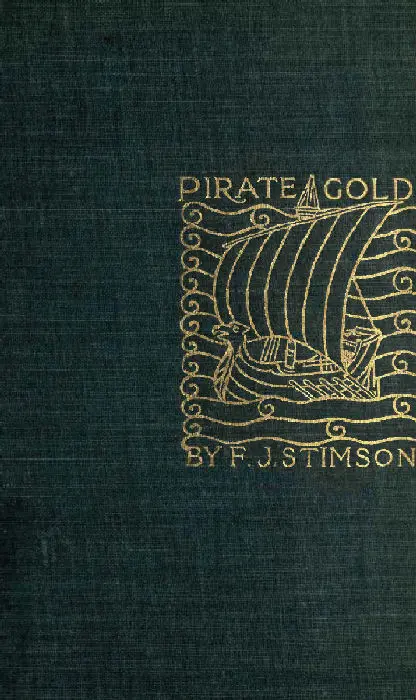
THE CLASSIC COLLECTION · 1895
"Pirate Gold" by Frederic Jesup Stimson is a novel written in the late 19th century. The story revolves around themes of piracy, adventure, and romance, centered on the character James Bowdoin and his interactions with other characters, including a young clerk named Jamie McMurtagh and the pirate's daughter, Mercedes Silva. As they navigate the complexities of treasure, loyalty, and societal expectations, the narrative explores their intertwined fates, rich with historical context and human emotion. At the start of the novel, we are introduced to a mysterious bag of pirate gold discovered in an old bank vault, which has significant implications for the lives of those involved. The protagonist, James Bowdoin, is a clerk drawn into the saga of the gold after it is linked to a real pirate, Romolo de Soto. As Bowdoin and his colleague, McMurtagh, interact with the bank’s new discovery, they also find themselves entwined in the life of a young girl named Mercedes, who is deeply affected by her father's past. The opening portion sets up a narrative full of intrigue and character development, where the implications of love, sacrifice, and societal norms begin to unfold.
Introduction adapted from the source catalogue; source summaries may be automatically generated.
Free to read · English · 40,707 words · No account needed
MAKE TIME FOR A GOOD BOOK
On by default. Untick to stop anonymous reading totals. Each page counts after 10 seconds in view. How this works.
Anonymous counting is on unless you have switched it off.
Every minute the crowd increased: men and women, well dressed, sober-looking, crying, "Shame! shame!" and topping by a head the little squad of undersized soldiers (for the regular army was then recruited almost entirely from foreigners) who marched hurriedly forward, with eyes cast straight before and downward, and dressed in that shabby blue that ten years later was to pour southward in serried column, all American then, to free those slaves whom now they hunted down.
"To the Court House! To the Court House!" cried the mob.
"It's that fellow Simms," said Mr. Bowdoin, but was interrupted by sounds as of a portly person running downstairs; and they saw the front door fly open and Mrs. Bowdoin run across the street, her cap-strings streaming in the air.
"By Jove, if Abolitionism can make your grandma run, I'll forgive it a
lot!" cried Mr. Bowdoin.
"Do you know the facts, sir?" suggested Harley.
"No, nor don't want to," said Mr. Bowdoin. "I know that we are jeopardizing the grandest experiment in free government the world has ever seen for a few African darkies that we didn't bring here, and have already made Christians of, and a d----d sight more comfortable than they ever were at home. But come, let's go over, or I believe your grandma will be attacking the United States army all by herself!"
But the rescue was made unnecessary by the return of that lady,
panting.
"Now, sir," gasped Mrs. Bowdoin, "I hope you're satisfied, that foreign Hessians control the laws of Massachusetts!"
"I am always glad to see the flag of my country sustained," said Mr. Bowdoin dryly; "though we don't fly it from our club."
"I think you misunderstand, sir," ventured Harley. "This Simms is arrested by the Boston sheriff for stabbing a man; and the Southerners have got the federal commissioner to refuse to give him up to justice."
"If he stabbed a man, it's cheaper to let them sell him as a slave than keep him five years in our state prison."
"The poor man seems to prefer it though," said Harley gently. "Have
you seen him?"
"No; what should I see the fellow for?" cried Mr. Bowdoin irritably.
"I understand the State Court House is held like a fort by federal soldiers, and thugs who call themselves deputy marshals."
Mr. Bowdoin growled something that sounded like, "What if it is?"
The two started to walk down town. Tremont Street was crowded with running men, and School Street packed close; and as they came in sight of the Court House they saw that it was surrounded by a line of blue soldiers.
"Let's go to the Court House," said Harley.
Your reading position is saved on this browser. Take it to another device with a library code. Reading pages adapt to text, rather than matching a printed edition.
Frederic Jesup Stimson
Frederic Jesup Stimson

Frederic Jesup Stimson

Frederic Jesup Stimson
BEHIND THE BOOK
This eBook is for the use of anyone anywhere in the United States and most other parts of the world at no cost and with almost no restrictions whatsoever. You may copy it, give it away or re-use it under the terms of the Project Gutenberg License included with this eBook or online at www.gutenberg.org. If you are not located in the United States, you will have to check the laws of the country where you are located before using this eBook. Read the source licence.
The original source file, including credits and licence, is retained by this library. Request an original-format copy at no charge. Please include the book title and Project Gutenberg identifier #20025.
KEEP YOUR CURIOSITY GOING
Coulson Kernahan

Maurice Baring
Frances Wright
Cécile Tormay
Frederic Jesup Stimson

W. H. P. (William Henry Pope) Jarvis