
Life of Harriet Beecher Stowe Compiled From Her Letters and Journals by Her Son Charles Edward Stowe
Harriet Beecher Stowe
THE CLASSIC COLLECTION · 1871
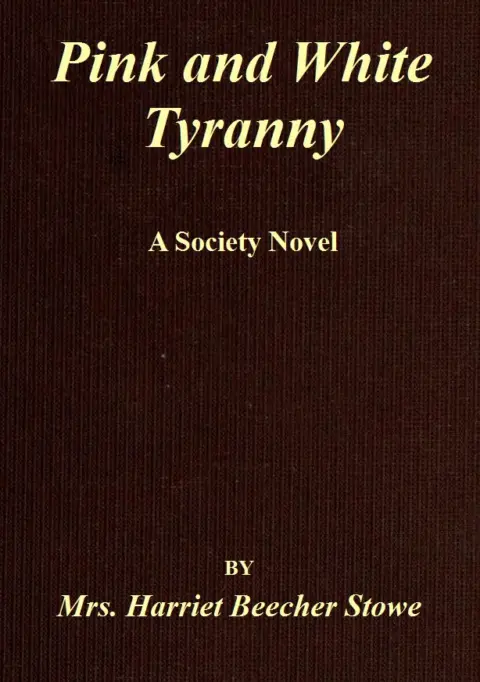
"Pink and White Tyranny" by Harriet Beecher Stowe is a society novel written during the late 19th century. The story revolves around the lives and relationships of a select circle of characters, particularly focusing on John Seymour and his engagement to Lillie Ellis, famed for her beauty and social charm. The narrative promises to explore themes of societal expectation, personal aspirations, and the complex dynamics of love and marriage. The opening of the novel introduces John Seymour, an earnest and respectable man, who is enchanted by the captivating Lillie Ellis. As he gazes at her, drawn to her ethereal beauty, John grapples with his insecurities and romantic ideals. Meanwhile, Lillie, a renowned belle, is presented as a shallow character whose interests lie predominantly in fashion and social status. As the narrative progresses, the reader learns of John's infatuation with Lillie and his hope that she will adapt to the domestic life he envisions for them. However, it becomes evident that their intentions diverge sharply; John seeks a sensible and beneficial partnership, while Lillie seems more inclined towards a life of luxury and superficiality. The contrast establishes a foundation for tension and exploration of character motivations in the unfolding story.
Introduction adapted from the source catalogue; source summaries may be automatically generated.
Free to read · English · 82,608 words · No account needed
MAKE TIME FOR A GOOD BOOK
On by default. Untick to stop anonymous reading totals. Each page counts after 10 seconds in view. How this works.
Anonymous counting is on unless you have switched it off.
There was a sound of stamping feet at the front door; and John came in, all ruddy and snow-powdered, but looking, on the whole, uncommonly cheerful.
“Well, Gracie,” he said, “the fact is, I shall have to let Lillie go to New York for a week or two, to see those Follingsbees. Hang them! But what’s the matter, Gracie? Have you been crying, or sitting up all night reading, or what?”
The fact was, that Gracie had for once been indulging in a good cry, rather pitying herself for her loneliness, now that the offer of relief had come. She laughed, though; and, handing John her letter, said,—
“Look here, John! here’s a letter I have just had from Walter Sydenham.”
John broke out into a loud, hilarious laugh.
“The blessed old brick!” said he. “Has he turned up again?”
“Read the letter, John,” said Grace. “I don’t know exactly how to
answer it.”
John read the letter, and seemed to grow more and more quiet as he read it. Then he came and stood by Grace, and stroked her hair gently.
“I wish, Gracie dear,” he said, “you had asked my advice about this matter years ago. You loved Walter,—I can see you did; and you sent him off on my account. It is just too bad! Of all the men I ever knew, he was the one I should have been best pleased to have you marry!”
“It was not wholly on your account, John. You know there was our
father,” said Grace.
“Yes, yes, Gracie; but he would have preferred to see you well married. He would not have been so selfish, nor I either. It is your self-abnegation, you dear over-good women, that makes us men seem selfish. We should be as good as you are, if you would give us the chance. I think, Gracie, though you’re not aware of it, there is a spice of Pharisaism in the way in which you good girls allow us men to swallow you up without ever telling us what you are doing. I often wondered about your intimacy with Sydenham, and why it never came to any thing; and I can but half forgive you. How selfish I must have seemed!”
“Oh, no, John! indeed not.”
“Come, you needn’t put on these meek airs. I insist upon it, you have been feeling self-righteous and abused,” said John, laughing; “but ‘all’s well that ends well.’ Sit down, now, and write him a real sensible letter, like a nice honest woman as you are.”
“And say, ‘Yes, sir, and thank you too’?” said Grace, laughing.
Your reading position is saved on this browser. Take it to another device with a library code. Reading pages adapt to text, rather than matching a printed edition.
Harriet Beecher Stowe

Harriet Beecher Stowe
Harriet Beecher Stowe

Harriet Beecher Stowe
BEHIND THE BOOK
This eBook is for the use of anyone anywhere in the United States and most other parts of the world at no cost and with almost no restrictions whatsoever. You may copy it, give it away or re-use it under the terms of the Project Gutenberg License included with this eBook or online at www.gutenberg.org. If you are not located in the United States, you will have to check the laws of the country where you are located before using this eBook. Read the source licence.
The original source file, including credits and licence, is retained by this library. Request an original-format copy at no charge. Please include the book title and Project Gutenberg identifier #12354.
KEEP YOUR CURIOSITY GOING
Coulson Kernahan

Maurice Baring
Frances Wright
Cécile Tormay

Frederic Jesup Stimson

W. H. P. (William Henry Pope) Jarvis