THE CLASSIC COLLECTION✦The Letter of CreditCLASSIC FREE BOOKS
The Letter of Credit
Susan Warner
THE CLASSIC COLLECTION · 1877
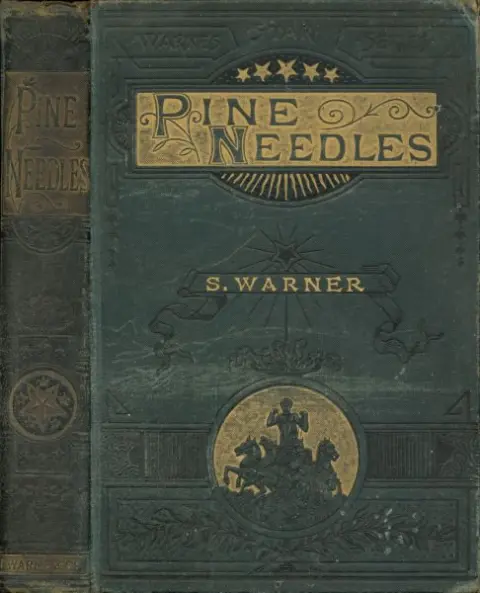
"Pine Needles" by Susan Warner and Louis Harms is a fictional work written in the late 19th century. The narrative unfolds primarily around the experiences of the Franklin and Candlish families at Mosswood, as they navigate the joys of friendship and the beauty of nature, intertwined with deeper themes of faith and heroism. The book appears to explore both ordinary familial interactions and significant moral questions reflecting on Christian values, suggesting a thoughtful examination of personal growth and the impact of relationships. The opening of the story sets the stage for the reuniting of the Franklin and Candlish families at Mosswood, introducing characters like Maggie, Meredith, Flora, and Esther. As they prepare for a day in the woods, the excitement among the children builds, particularly around their plans for a picnic and their desire to invite their Uncle Eden, highlighting themes of joy and youthful adventure. During their outing, Meredith engages with a missionary story from a German pastor, hinting at deeper discussions about morality, faith, and cultural history. This premise creates a rich tapestry of both light-hearted moments and thoughtful reflections, especially regarding the characters' appreciation of their environment and relationships.
Introduction adapted from the source catalogue; source summaries may be automatically generated.
Free to read · English · 81,976 words · No account needed
MAKE TIME FOR A GOOD BOOK
On by default. Untick to stop anonymous reading totals. Each page counts after 10 seconds in view. How this works.
Anonymous counting is on unless you have switched it off.
"They were, though; but you see, they began by giving themselves to the Lord; and when people do that, I guess they generally find that there is a good deal else to give. Oh, they were poor enough; but it would cost a great deal, you know, to pay their passage in a ship belonging to other people, and the freight on all the goods they must carry, for they were going out not merely to preach, but to establish a colony and live among the heathen. And then, whenever new recruits for the mission were sent out, the expense would have to be incurred over again, so they thought the cheapest way in the end would be to build their own ship."
"And they did build it?" said Maggie.
"Certainly. The good ship 'Candace.' And everybody helped in some way. The shoemakers made shoes, and the tailors made clothes, to go out with the mission; the women knitted and sewed. Do you want to hear what Pastor Harms says about it?"
"Oh, yes, Ditto, please!"
"Yes, read on--anything," said Flora.
"Two men of the first twelve had died, and two others had proved false. Eight left, to whom another eight joined themselves, who would go out as colonists. Now I will read:--
"'So by God's grace, everything was ready. And now one should have seen the busy industry, the lively expectation, the gleesome bustle, as the last hand, I may say, was put to everything. In the Mission-house, what learning and counselling and arranging; in the workshops belonging to it, what smithwork and cabinetwork and tailoring; how our women and girls sewed! Our village shoemaker worked with his might at the foot-gear to be taken along; our village cooper did the same at the great water casks for the ship; my brother went out with the Mission pupils in leisure hours and picked berries which were to be taken along. Here people brought dried apples, pears and plums; there buckwheat and buckwheat groats; here rye, flour, peas, wheat; there sides of bacon, hams, and sausages. Then again house-furnishing articles, tools, heather brooms, trumpets and horns, even live hogs and poultry, and even potatoes were hauled along--and all was to go. Even a fir-tree with its roots was planted in a large pot filled with earth, in order that on the ocean the travellers might light up a Christmas-tree. Then again came packages of linen made up, and of stuff. And there was a great deal that never came to Hermannsburg. Whatever was prepared on the other side of the Elbe, in Hamburg, Luebeck, Haide, &c., was kept in Hamburg, and we never saw it at all. In Hamburg alone there were handed over from female friends of the Mission, one hundred and twenty-eight cotton shirts, all finished and ready; from Haide forty striped shirts for the natives; from Luebeck and Mechlenburg, besides beautiful under-linen, all sorts of pictures and little things for the heathen; from some children here came writing boxes, pens, and writing books for the heathen children. Also from here, from Osnabrueck, Schaumburg, Lueneburg, Bremen, and neighbourhood, whole rolls of linen cloth. There was a stir and spring of love that moved people's hearts. Every one of the emigrants was to take a gun with him, for in East Africa there are a great many wild beasts, lions, elephants, serpents, &c. Scarcely had this become known, when guns, rifles, double-barrelled rifles, pistols, and daggers came in, till we had enough to leave some for a future party that might be sent out. Then would come our harbourmaster, or our captain, from Harburg, to arrange this or that; then our pupils journeyed to Harburg to bring money for the ship. One hardly knew where his head was.'"
Your reading position is saved on this browser. Take it to another device with a library code. Reading pages adapt to text, rather than matching a printed edition.
Susan Warner
Susan Warner
Susan Warner
Susan Warner
BEHIND THE BOOK
This eBook is for the use of anyone anywhere in the United States and most other parts of the world at no cost and with almost no restrictions whatsoever. You may copy it, give it away or re-use it under the terms of the Project Gutenberg License included with this eBook or online at www.gutenberg.org. If you are not located in the United States, you will have to check the laws of the country where you are located before using this eBook. Read the source licence.
The original source file, including credits and licence, is retained by this library. Request an original-format copy at no charge. Please include the book title and Project Gutenberg identifier #38922.
KEEP YOUR CURIOSITY GOING
Cécile Tormay

Moritz Busch
Coulson Kernahan
John L. Ransom

Maurice Baring
Frances Wright