THE CLASSIC COLLECTION✦The Letter of CreditCLASSIC FREE BOOKS
The Letter of Credit
Susan Warner
THE CLASSIC COLLECTION · 1877
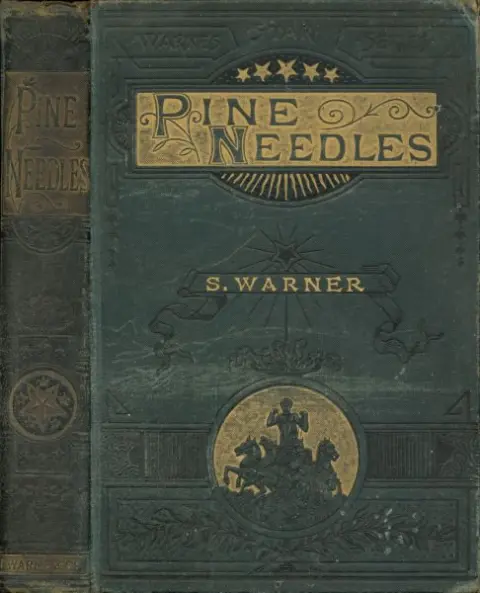
"Pine Needles" by Susan Warner and Louis Harms is a fictional work written in the late 19th century. The narrative unfolds primarily around the experiences of the Franklin and Candlish families at Mosswood, as they navigate the joys of friendship and the beauty of nature, intertwined with deeper themes of faith and heroism. The book appears to explore both ordinary familial interactions and significant moral questions reflecting on Christian values, suggesting a thoughtful examination of personal growth and the impact of relationships. The opening of the story sets the stage for the reuniting of the Franklin and Candlish families at Mosswood, introducing characters like Maggie, Meredith, Flora, and Esther. As they prepare for a day in the woods, the excitement among the children builds, particularly around their plans for a picnic and their desire to invite their Uncle Eden, highlighting themes of joy and youthful adventure. During their outing, Meredith engages with a missionary story from a German pastor, hinting at deeper discussions about morality, faith, and cultural history. This premise creates a rich tapestry of both light-hearted moments and thoughtful reflections, especially regarding the characters' appreciation of their environment and relationships.
Introduction adapted from the source catalogue; source summaries may be automatically generated.
Free to read · English · 81,976 words · No account needed
MAKE TIME FOR A GOOD BOOK
On by default. Untick to stop anonymous reading totals. Each page counts after 10 seconds in view. How this works.
Anonymous counting is on unless you have switched it off.
"'Nevertheless, I am continually with thee.' 'Then they went quietly to sleep in the wood, and lodged there beautifully, warm and safe under the wings of their God, and beneath the sheltering arms of the fir-trees; so that the sun was already shining through the branches when they waked up. Then they milked the cows, to get some breakfast for the children, and after that they all gathered round the old father to remind him of his promise. And the old man did not delay, but prayed first the twenty-seventh, and then the forty-second and forty-third psalms, and for the last, the twelfth chapter of the Epistle to the Hebrews; so devoutly and so confidingly and so unhesitatingly, that they all could not have supposed but that he was reading to them out of the big Bible that had been under the arm-chair; and in most of the parts they prayed with him word for word. Then they looked gratefully to the old man, and after they had first asked the blessing, then drunk the milk, and at last said grace, the others remained in the wood; but the two peasants, Drewes and Hinz, with their two servants, set out to go back to the place where their houses had stood. As they went off, the old Father Hinz called after them, as if he were in a dream,--"Children, see about the books too!" Slowly they drew near the place of the conflagration; carefully listening and looking around them; but nothing was to be seen or heard, all was as still as death, only the birds were hopping and singing in the branches. At last they came within view of the place where the fire had been; but just as they were about to run thither, a low moaning came to their ears from the corner of the wood, near the place of the fire. They were Christians, therefore they did not do like the priest and the Levite, but like the kind-hearted Samaritan; they went off towards the quarter from which the moans came; and what did they see? Two badly-wounded soldiers, sitting in the two grandfather's chairs at the corner of the wood. How came they there? The troops on their march through had had these wounded fellows with them; who for their weakness proved unable to go any further; so their comrades determined to leave them behind. But to let the houses stand for the sake of affording them shelter, was more than the inflamed rage of the soldiers, disappointed at finding everything empty, could see their way to. However to show some sort of humanity to their comrades, they had dragged the two old chairs out of the houses to the corner of the wood, placed the wounded men in them, and then completed their work of destruction; following which they had all marched off. And now, when the wounded soldiers saw standing before them the four men whose houses their comrades had laid in ashes, they looked for nothing else but death. But not anger nor revenge, but peace, yes, blessed joy, beamed from the faces of those four men; God had certainly saved their beloved books for them. Now they did not care that their houses were gone. The soldiers were treated, not as foes, but as benefactors. They carried them away into the wood where the rest of the people were; and when the chairs were seen, and the seats were lifted up, and the books found uninjured, then there was a thanksgiving and praising and glorifying so loud and so glad, that the angels in heaven must have joined in; the very little children ran to the books and kissed them devoutly and gleefully. The two soldiers were tended as if they had been blood kindred; milk was given them to drink; and now, also, since the host of incendiaries had marched away, the way was open to fetch food again out of the villages. It was proposed to bring the wounded men to the nearest hamlet; but they were too weak for it; and they begged that they might be kept in the huts in the wood. And now it came to pass that nothing refreshed those two soldiers more than old Father Hinz's talk from the Word of God, and his prayers. Even at the eleventh hour, they turned to the Lord Jesus; and the pastor in Hermannsburg gave them the Holy Communion after they had confessed their sins, had received the assurance of forgiveness, and had declared that they believed in Jesus Christ, the only-begotten Son of God, and were persuaded that His body and blood were truly represented to them in the bread and the wine. This communion was a right blessed day of joy for the inhabitants of the wood. But God was preparing for them yet another special rejoicing. For when the last hour of the two soldiers was drawing near, they summoned the old father and the two peasants to their dying bed, thanked them anew with tears in their eyes for the salvation which they had found for their souls, and made over to them the legacy of their military doublets; with the intimation, that after they were dead, they should rip out the seams of them. This was done, when the men had first been honourably buried; and now were discovered, sewed into the doublets, such a stock of gold pieces, that not only the burned-down houses and stables could be built again, but also the men and maids might receive a handsome reward, and a new altar cloth could be given to the church at Hermannsburg.
Your reading position is saved on this browser. Take it to another device with a library code. Reading pages adapt to text, rather than matching a printed edition.
Susan Warner
Susan Warner
Susan Warner
Susan Warner
BEHIND THE BOOK
This eBook is for the use of anyone anywhere in the United States and most other parts of the world at no cost and with almost no restrictions whatsoever. You may copy it, give it away or re-use it under the terms of the Project Gutenberg License included with this eBook or online at www.gutenberg.org. If you are not located in the United States, you will have to check the laws of the country where you are located before using this eBook. Read the source licence.
The original source file, including credits and licence, is retained by this library. Request an original-format copy at no charge. Please include the book title and Project Gutenberg identifier #38922.
KEEP YOUR CURIOSITY GOING
Cécile Tormay

Moritz Busch
Coulson Kernahan
John L. Ransom

Maurice Baring
Frances Wright