THE CLASSIC COLLECTION✦The Letter of CreditCLASSIC FREE BOOKS
The Letter of Credit
Susan Warner
THE CLASSIC COLLECTION · 1877
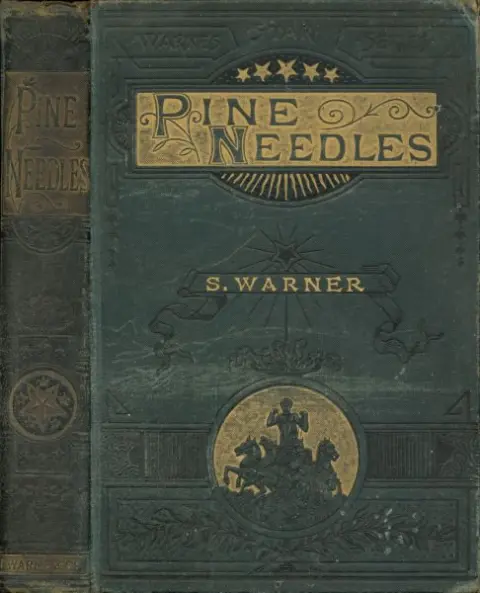
"Pine Needles" by Susan Warner and Louis Harms is a fictional work written in the late 19th century. The narrative unfolds primarily around the experiences of the Franklin and Candlish families at Mosswood, as they navigate the joys of friendship and the beauty of nature, intertwined with deeper themes of faith and heroism. The book appears to explore both ordinary familial interactions and significant moral questions reflecting on Christian values, suggesting a thoughtful examination of personal growth and the impact of relationships. The opening of the story sets the stage for the reuniting of the Franklin and Candlish families at Mosswood, introducing characters like Maggie, Meredith, Flora, and Esther. As they prepare for a day in the woods, the excitement among the children builds, particularly around their plans for a picnic and their desire to invite their Uncle Eden, highlighting themes of joy and youthful adventure. During their outing, Meredith engages with a missionary story from a German pastor, hinting at deeper discussions about morality, faith, and cultural history. This premise creates a rich tapestry of both light-hearted moments and thoughtful reflections, especially regarding the characters' appreciation of their environment and relationships.
Introduction adapted from the source catalogue; source summaries may be automatically generated.
Free to read · English · 81,976 words · No account needed
MAKE TIME FOR A GOOD BOOK
On by default. Untick to stop anonymous reading totals. Each page counts after 10 seconds in view. How this works.
Anonymous counting is on unless you have switched it off.
This brought the party to their feet. And now, some went at unpacking and arranging the things which had been brought along in bag and basket; Flora lit the spirit lamp and set the coffee a-going; while Meredith and Fenton put the potatoes in the ashes and took care of the process of roasting the oysters. It was not so warm to-day that the fire was disagreeable, which was lucky, as the oysters demanded a good bed of coals; the potatoes likewise. Finally, Meredith set about making a friar's omelet. When all was ready and the tea drawn, they sat round the fire on the grass, and made a most miscellaneous and most enjoyable meal.
"Coffee! how good the coffee is!" said Meredith.
"And did you ever see such good roast oysters?" cried Maggie.
"They ought to be good," Fenton growled; "they cost a precious sight of work to get 'em up here."
"And Ditto's omelet is so nice!"--Maggie went on.
"If one could live in the open air!" said Meredith, "how good it would be. I do not mean the omelet! but everything else. It's a great loss to live in houses."
"Lots of convenience, though," said Fenton.
"Look at the heap of oyster-shells Fenton is throwing behind him!" cried
Maggie presently.
"What's that to you?" said Fenton. "There are oysters enough. Don't meddle. If anything is a nuisance it is a meddling girl."
"How about a meddling boy?" Mr. Murray asked.
"Boys don't meddle," said Fenton. "It is girls."
"I suppose that is because the boys do the things that have to be meddled with," said Maggie sagely.
Fenton scowled, but the others laughed, and the meal went merrily
forward.
"How much time have we?" Flora asked.
"For what?"
"For staying here, and reading. How long before we must break up and go
home?"
"We can take our own time," said Meredith. "The tide will be good. Indeed it will be only getting better and better. It will turn about two o'clock."
"We must get home in time for dinner," observed Fenton, however.
"I really should think you might wait a while for that," said Esther. "Uncle Eden, if anybody else comes here this fall, they will see exactly what we had for lunch."
"How so?"
"There are the egg-shells, and potato-skins, and Fenton's heap of
oyster-shells."
"You do not think we will leave them here? Besides, there are several heaps of oyster-shells, I think; they are not all Fenton's."
"Fenton's is the biggest. But what will you do with all these things,
Uncle Eden?"
"Carry them away."
"Where to, sir?" asked Fenton.
"Down the hill."
"Why, sir?"
Your reading position is saved on this browser. Take it to another device with a library code. Reading pages adapt to text, rather than matching a printed edition.
Susan Warner
Susan Warner
Susan Warner
Susan Warner
BEHIND THE BOOK
This eBook is for the use of anyone anywhere in the United States and most other parts of the world at no cost and with almost no restrictions whatsoever. You may copy it, give it away or re-use it under the terms of the Project Gutenberg License included with this eBook or online at www.gutenberg.org. If you are not located in the United States, you will have to check the laws of the country where you are located before using this eBook. Read the source licence.
The original source file, including credits and licence, is retained by this library. Request an original-format copy at no charge. Please include the book title and Project Gutenberg identifier #38922.
KEEP YOUR CURIOSITY GOING
Cécile Tormay

Moritz Busch
Coulson Kernahan
John L. Ransom

Maurice Baring
Frances Wright