THE CLASSIC COLLECTION✦The Letter of CreditCLASSIC FREE BOOKS
The Letter of Credit
Susan Warner
THE CLASSIC COLLECTION · 1877
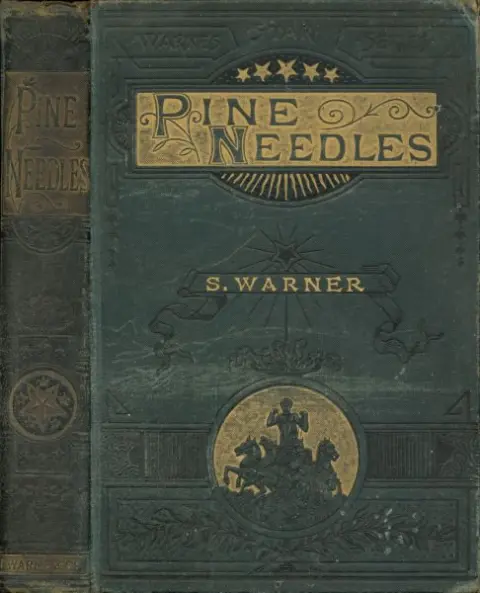
"Pine Needles" by Susan Warner and Louis Harms is a fictional work written in the late 19th century. The narrative unfolds primarily around the experiences of the Franklin and Candlish families at Mosswood, as they navigate the joys of friendship and the beauty of nature, intertwined with deeper themes of faith and heroism. The book appears to explore both ordinary familial interactions and significant moral questions reflecting on Christian values, suggesting a thoughtful examination of personal growth and the impact of relationships. The opening of the story sets the stage for the reuniting of the Franklin and Candlish families at Mosswood, introducing characters like Maggie, Meredith, Flora, and Esther. As they prepare for a day in the woods, the excitement among the children builds, particularly around their plans for a picnic and their desire to invite their Uncle Eden, highlighting themes of joy and youthful adventure. During their outing, Meredith engages with a missionary story from a German pastor, hinting at deeper discussions about morality, faith, and cultural history. This premise creates a rich tapestry of both light-hearted moments and thoughtful reflections, especially regarding the characters' appreciation of their environment and relationships.
Introduction adapted from the source catalogue; source summaries may be automatically generated.
Free to read · English · 81,976 words · No account needed
MAKE TIME FOR A GOOD BOOK
On by default. Untick to stop anonymous reading totals. Each page counts after 10 seconds in view. How this works.
Anonymous counting is on unless you have switched it off.
"May I choose, sir? It touches what we have been talking about, another little story. It is a story by the bedside of a sick day-labourer."
"I don't believe we shall like it, Ditto," said his sister.
"It will not hold us long. Let me try.--
"'It is a long while ago, that I was once standing by the bedside of a sick day-labourer, who had a wife and four children. The man had been ill for weeks, and the sickness had swallowed up all his money. Death was near, and he was glad of it; he had only one remaining wish, that he might receive the symbols of the body and blood of the Lord Jesus in the Holy Communion. I administered them to him.
"'We sang with a number of friends and neighbours who were gathered
together, the song,
"Who knows how near my end may be!"
"'He sang the words correctly along with us, for he knew the hymn by heart. His wife and children sang too. As we stopped at the fifth verse, I saw great tears in his eyes; but I said nothing at the time. The sick man spoke his confession devoutly, and afterwards received the bread and the wine which are in figure the body and blood of our Lord Jesus Christ. His eye beamed with joy. Then after the blessing was said we sang the most glorious verse of the same hymn,--"I have fed on Jesus' blood," &c. The neighbours and friends went away, after they had cordially pressed his hand and said to him, "In the Lord's presence we'll be together again." I remained alone with the sick man and his family. Then I asked, why he had wept when we were singing, whether perhaps it was a trouble to him that he must go away from his wife and children? He looked at me with open eyes, almost reproachfully, when I said that, and answered, "Does not Jesus stay with them then? Has not the Lord said He would be 'the father of the fatherless and a judge of the widow'? No; they will be well looked after; I have prayed the Lord that He would be a guardian to them. Isn't it so, mother, that thou art not worried either, and thy heart is not anxious? Thou, too, hast faith in Jesus!" "Surely," said the woman, "I believe in Jesus; and I am glad thou art going to Jesus. In good time I will come after thee with the children. Jesus will help me by His Holy Spirit to bring them up." "Well--why did you shed tears then?" "For joy. I was thinking, if the singing goes so lovely even down here, how beautiful it will be when the angels sing with us. That was what made me weep, for joy, because such blessedness is so near before me." And now he made a sign to his wife. She understood the sign, went to the cupboard, and fetched out a little sort of a cup dish, which was her husband's money-box. Six groschen were in it, all that was left over of his possessions. He took them out with trembling fingers, laid them in my hand, and said, "The heathen are to have those, that they too may learn how to die happy." I looked at the wife; she nodded her head pleasantly and said, "We have agreed upon that. When all is paid that will be needed for the funeral, it will leave just these six groschen over." "And what will you keep?" "The Lord Jesus," said she. "And what are you going to leave to your wife and children?" I asked the man again. "The Lord Jesus," said he; and with that whispered me in the ear, "He is very good and very rich." So I took the six groschen for the heathen, and put them, as a great treasure, in the mission money-box; and it was hard for me to give them out again; only if I had not paid them out, I should not have fulfilled the dying man's wish. In the following night he fell asleep. We buried him as a Christian should be buried, that is, publicly, with the ringing of the bell, with preaching, singing and prayer; and there was no weeping done, neither by his wife nor by his three oldest children, neither in the church nor by the grave. But the youngest child, a boy of five years old, who followed the bier along with the rest, wept bitterly. I asked him afterwards, why he had wept so bitterly at his father's grave? The child answered me, "I was so troubled because father didn't take me with him to the Lord Jesus; I had begged him so hard to take me." "My child," said I, "your father could not take you along with him; only the Saviour could do that; you ought to have asked Him." "Shall I ask Him now then?" he questioned. "No, my child. See--when the Saviour wants you, He will call you Himself. But if He chooses that you shall grow to be a man first, then you must help your mother and let her live with you. Will you?" He said, "I would like to go to Jesus; and I would like to be big too, so that mother can live with me." "Well, then, say to the Lord Jesus that He shall choose." "That is what I will do," said the boy; and was quite contented and pleased.
Your reading position is saved on this browser. Take it to another device with a library code. Reading pages adapt to text, rather than matching a printed edition.
Susan Warner
Susan Warner
Susan Warner
Susan Warner
BEHIND THE BOOK
This eBook is for the use of anyone anywhere in the United States and most other parts of the world at no cost and with almost no restrictions whatsoever. You may copy it, give it away or re-use it under the terms of the Project Gutenberg License included with this eBook or online at www.gutenberg.org. If you are not located in the United States, you will have to check the laws of the country where you are located before using this eBook. Read the source licence.
The original source file, including credits and licence, is retained by this library. Request an original-format copy at no charge. Please include the book title and Project Gutenberg identifier #38922.
KEEP YOUR CURIOSITY GOING
Cécile Tormay

Moritz Busch
Coulson Kernahan
John L. Ransom

Maurice Baring
Frances Wright