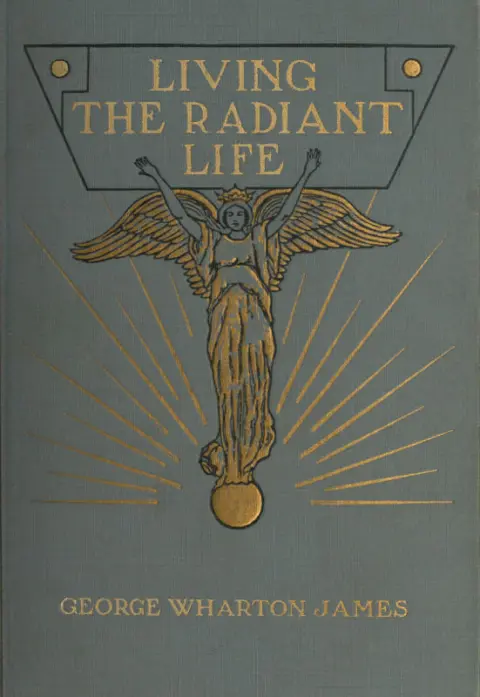
Living the Radiant Life: A Personal Narrative
George Wharton James
THE CLASSIC COLLECTION · 1916
"Picturesque Pala" by George Wharton James is a historical account written in the early 20th century. The book examines the story of the Mission Chapel of San Antonio de Padua in Pala, California, and its connection to the larger context of California's Franciscan Missions, particularly Mission San Luis Rey. The work likely focuses on the intertwining lives of the mission, its founders, the Native Americans involved, and the historical significance of the site over time. The opening of the text sets the stage by providing a foreword that explains the establishment of the Franciscan Missions in California and highlights the unique historical background of the Pala Chapel. It mentions how the Pala Valley was a home for Native Americans, the efforts of the Franciscans to provide them with a church, and the subsequent destruction of parts of the original structures due to natural disasters. The narrative details the early initiatives by Father George D. Doyle to clear the chapel's ruins and raise funds to restore its iconic Campanile, reflecting the community's investment in both their cultural heritage and spiritual life. The initial chapters further explore the founding of Pala, its inhabitants, and the vibrant history of the Mission, all while hinting at the challenges and resilience of the local Native community.
Introduction adapted from the source catalogue; source summaries may be automatically generated.
Free to read · English · 22,226 words · No account needed
MAKE TIME FOR A GOOD BOOK
On by default. Untick to stop anonymous reading totals. Each page counts after 10 seconds in view. How this works.
Anonymous counting is on unless you have switched it off.
Procuring the church keys was not so simple a matter, as the building is now closed and services are held at very rare intervals. This is the result of litigation. The law has invaded this sheltered haven. Years ago, when times were different and the mission was making some pretense to be a living church, in the course of their duties a party of government surveyors came here. As a result of their surveys one of them told Mr. Viele in confidence that the entire mission holdings, olive orchards and lands were all on government property. Mr. Viele at once took steps to claim all, and did so. The secret leaked out, and others came in and attempted to settle on parts of the property under various claims of title, and soon the Catholic church and the claimants were engaged in a long lawsuit, which proved the death struggle of the church's interests. Mr. Viele emerged victorious, sole owner of the church, the orchard, the bells, and even the graveyard. Afterward, by deed of gift, he gave the church authorities the tumble-down ruin of the church, the dark adobe robing room, the bells and the graveyard, but, because Mr. Viele still withheld the valuable lands from the church, no services are held there, and the quarrel has gone on year by year. Mr. Viele clings to what he terms his legal rights, and the church is locked up and the Indian left largely to his own devices. Once in possession of the keys, we found them immense pieces of iron, and it took some time to unlock the door. The services of one of the Indian pupils materially assisted us in our investigations. The church is a veritable curiosity, narrow, long, low and dark, with adobe walls and heavy beams roughly set in the sides to furnish support for the roof. Canes and tules constitute this part of the structure. The earthen walls are covered with rude paintings of Indian design and of strange coloring that have preserved their tone very well indeed. Great square bricks badly worn pave the floor, and, set in deep niches along the walls at intervals, are various utensils of battered copper and brass that would arouse the cupidity of a collector of bric-a-brac. The door is strongly barred and has iron plates set with large rivets. The strange light that comes through the narrow windows and broken roof sheds an unnatural glow on the paintings upon the walls and puts into strange relief the ruined altar far distant in the church. Three wooden images yet remain upon the altar, but they are sadly broken and their vestments are gone. One is a statue of St. Louis, and is held in great veneration by the Indians. They say it was secretly brought from the San Luis Rey Mission and placed here for safe keeping. When the annual reunion of the Indians takes place this image is decorated in cheap trappings and occupies the post of honor in the procession. The robing room is a small, dark apartment behind the altar, where not a ray of light could enter. We dragged a trunkful of altar trappings and saints' vestments out into the light. The dust lay thickly upon the garments in these old chests, and it is to be hoped that no one with a shade less of morality than we had will ever explore their treasures, or the church may be robbed and the images suffer much loss of their decorative attire. Undoubtedly everything of value has long since been removed, but what remains is very quaint and odd, being largely of Indian workmanship. Everything about this simple structure spoke of slow and patient work by the native workmen, and it needed but little imaginative power to conjure up the scene when men were hauling trees from the mountains, making the shallow, square bricks, preparing the adobe, and later painting these walls as earnestly perhaps as did some of the greater artists in the gorgeous chapels of cultivated Rome. The hinges creaked loudly and the great key grated harshly in the rusty lock as we spent some time in securing the fastenings at our departure. The beauty of the valley and the bright sunlight were in great contrast to the cool shadows of the dimly-lighted church. Once outside, we again made the circuit of the outlying walls, where birds sing and grasses grow from the ruined walls of the adobes. Through gaps in them we passed from one enclosure to another, this one roofless, that one nearly so, and a third so patched up as to hold a few Indians who make it their home, and in tiny gardens cultivate a few flowers or vegetables and prepare their food in basins sunken in the firm earth. A few baskets are yet left in this community, but of poor quality, the more valuable ones having been long since gathered by collectors, or sold and gambled by the Indians themselves. Many curious relics still exist, however, for those who are willing to pay several times the value of each article.
Your reading position is saved on this browser. Take it to another device with a library code. Reading pages adapt to text, rather than matching a printed edition.
George Wharton James

George Wharton James
George Wharton James
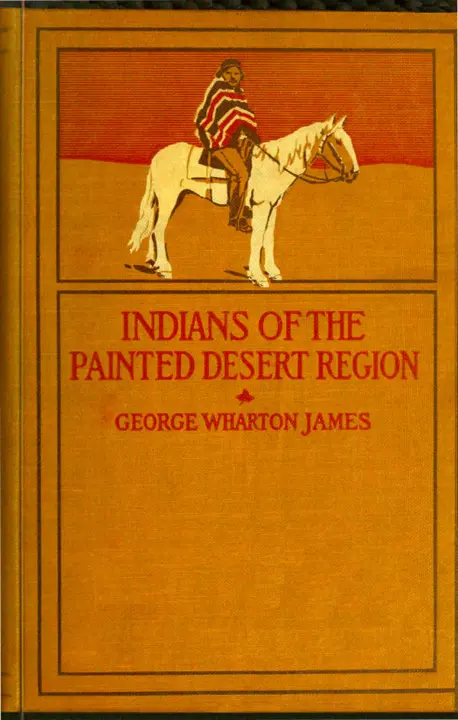
George Wharton James
BEHIND THE BOOK
This eBook is for the use of anyone anywhere in the United States and most other parts of the world at no cost and with almost no restrictions whatsoever. You may copy it, give it away or re-use it under the terms of the Project Gutenberg License included with this eBook or online at www.gutenberg.org. If you are not located in the United States, you will have to check the laws of the country where you are located before using this eBook. Read the source licence.
The original source file, including credits and licence, is retained by this library. Request an original-format copy at no charge. Please include the book title and Project Gutenberg identifier #41561.
KEEP YOUR CURIOSITY GOING
Cécile Tormay

Moritz Busch
John L. Ransom
Frances Wright
Cécile Tormay

Mabel Potter Daggett