
Through One Administration
Frances Hodgson Burnett

THE CLASSIC COLLECTION · 1894
"Piccino, and other child stories" by Frances Hodgson Burnett is a collection of short stories written in the late 19th century. The central topic of the collection revolves around the lives and adventures of children, with a particular focus on Piccino, an Italian peasant boy whose extraordinary beauty and innocence bring both opportunities and challenges. The stories seem to explore themes of childhood, poverty, culture, and the sometimes comical or poignant misunderstandings between children and adults, particularly between classes and nationalities. The opening of "Piccino" introduces the reader to a tiny, beautiful Italian boy living in poverty near the city of Ceriani, whose striking appearance attracts the attention of wealthy foreign tourists. Piccino becomes a means for his family to gain favors and money from these visitors, culminating in an impulsive English lady, Lady Aileen, "purchasing" him to take to her villa. The narrative then follows the bewildering and often distressing experience Piccino undergoes as he is thrust into the unfamiliar world of wealthy foreigners, subjected to repeated baths, strange food, and uncomfortable clothing, all while feeling acute homesickness for his family, donkey, and rustic life. Despite the good intentions of Lady Aileen, Piccino never adjusts to his new environment and eventually escapes, finding his way home, which brings the story full circle and highlights the deep divide between his simple joys and the alien world of the upper class.
Introduction adapted from the source catalogue; source summaries may be automatically generated.
Free to read · English · 45,888 words · No account needed
MAKE TIME FOR A GOOD BOOK
On by default. Untick to stop anonymous reading totals. Each page counts after 10 seconds in view. How this works.
Anonymous counting is on unless you have switched it off.
I knew things must be pretty bad then. He would never have been so desperate and determined if he had not meant to do his worst, and when I made my way back I felt sick with fear. Master Lionel was sitting by the bit of fire in the grate when I opened the door, and he turns round and looks at me, and changes color.
“Rabbett,” he says, “there is blood on your face.”
“Perhaps so, sir,” I says. “I’ve had a fall.”
And then I sits down and tells him all about it; about what I had meant to do, and what I had done, and I ends up by asking him what he thinks we had better do, now that my plans had failed.
“Master Lionel,” I says, “it would seem a dreadful hard sort of thing to do, if we spoke to the captain.”
He turns quite pale at the thought of it.
“Oh, no,” he says, “Rabbett, I wouldn’t do it. He would be so angry with Rose, and even with mamma. You remember my telling you what he said before.”
I remembered well enough, and a pretty hard thing it was to say, even if it had been said in a passion, and not half meant. He had threatened to turn Miss Rose out of doors if she spoke to Roscoe again. He must have heard something bad enough, to have been so roused.
“Well,” I ventures, “what can we do, sir?”
“Watch,” says he. “I can think of nothing else to do just yet, Rabbett. I will watch Rose, and you shall watch Roscoe; and if the worst comes, and we must tell papa, we must. I suppose, Rabbett, that Roscoe will try to run away with Rose, as Farquhar ran away with that pretty Miss Lewis?”
“Yes, sir,” I answers, “I’m afraid he will. But he is a worse man than Farquhar; and if Miss Rose goes away with him, I’m afraid he’ll treat her hard enough when he tires of her, as such men as him always tires of young ladies.”
“It would be better, Rabbett,” says he, fixing his dark eyes solemnly on the fire, “it would be better that Rose should die. I know that.”
“I am afeard, sir,” says I, “that you are right.”
God knows how he had learned to understand, but understand he did, and he were that sad and wise about it that my very heart ached. He had seen an old enough side of life, had Master Lionel, living among the set he did, but he were a young gentleman as nothing could spoil, his nature were that fine-grained.
Your reading position is saved on this browser. Take it to another device with a library code. Reading pages adapt to text, rather than matching a printed edition.
Frances Hodgson Burnett

Frances Hodgson Burnett

Frances Hodgson Burnett
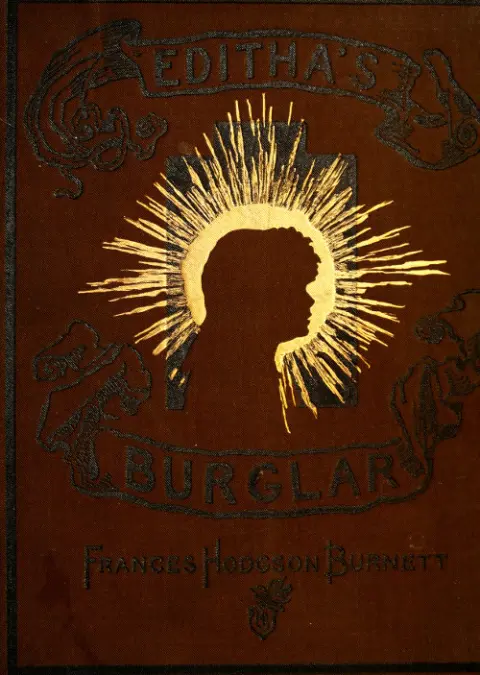
Frances Hodgson Burnett
BEHIND THE BOOK
This eBook is for the use of anyone anywhere in the United States and most other parts of the world at no cost and with almost no restrictions whatsoever. You may copy it, give it away or re-use it under the terms of the Project Gutenberg License included with this eBook or online at www.gutenberg.org. If you are not located in the United States, you will have to check the laws of the country where you are located before using this eBook. Read the source licence.
The original source file, including credits and licence, is retained by this library. Request an original-format copy at no charge. Please include the book title and Project Gutenberg identifier #76009.
KEEP YOUR CURIOSITY GOING
Coulson Kernahan

Maurice Baring
Frances Wright
Cécile Tormay

Frederic Jesup Stimson

W. H. P. (William Henry Pope) Jarvis