
The Writing of News A Handbook with Chapters on Newspaper Correspondence and Copy Reading
Charles G. (Charles Griffith) Ross
THE CLASSIC COLLECTION · 1887
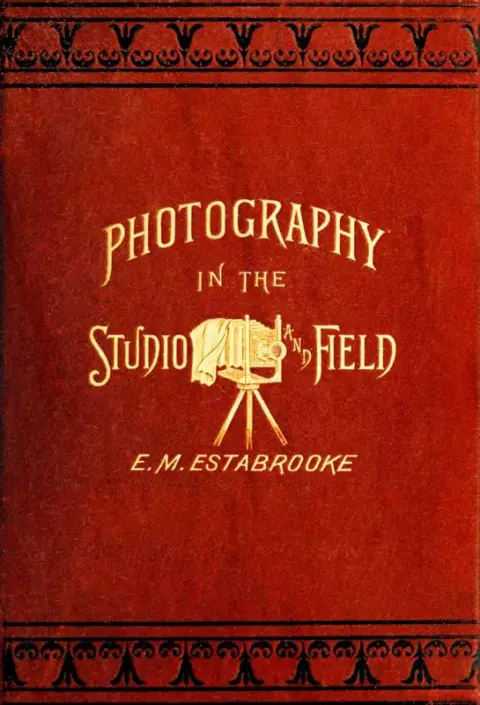
"Photography in the Studio and in the Field" by Edward M. Estabrooke is a practical manual designed for both professional and amateur photographers, written in the late 19th century. This comprehensive guide covers a variety of photographic processes, including both the collodion method and the more modern gelatine bromide dry plates. It aims to provide readers with the necessary knowledge to successfully take and develop photographs, making it a valuable resource in the burgeoning field of photography. At the start of the manual, the author discusses the significant advancements in photographic techniques, particularly the introduction of the gelatine bromide dry plate, which improved upon the collodion process previously in use. Estabrooke emphasizes the importance of these developments for amateurs and professionals alike, promising that by studying this handbook, readers can quickly learn to capture and develop images effectively. He outlines specific procedures for preparing glass plates and detailing the necessary materials and processes, illustrating a step-by-step approach to mastering the art of photography.
Introduction adapted from the source catalogue; source summaries may be automatically generated.
Free to read · English · 51,525 words · No account needed
MAKE TIME FOR A GOOD BOOK
On by default. Untick to stop anonymous reading totals. Each page counts after 10 seconds in view. How this works.
Anonymous counting is on unless you have switched it off.
Now, to develop a 5x8 plate, take three ounces of No. 1 and to this add one quarter of a dram of bromide of potassium solution (which is water one ounce, bromide of potassium twelve grains), then add half an ounce of No. 2; this forms the developer. [p175]
Then transfer the plate to a developing disk, and pour over it the developer. If the picture comes out gradually and develops sufficiently, it is good so far, but if from under-exposure the details hang back and refuse to develop further, then add two drams, or half an ounce, more of No. 2, which will bring out the picture with full details, unless greatly under-exposed.
Never exceed one ounce of No. 2 (iron) to three ounces of No. 1 (potash), for if you do you will form a sandy deposit and discontinue the action of the developer.
Always develop until the picture seems sunken into the surface. Do not judge by looking through the negative only. Wash and fix in hypo, 1 ounce; water, 8 to 10 ounces. After fixing, wash well.
For pictures taken instantaneously, use no bromide in the developer.
No. 1. Anthony's Sodium Sulphite Crystals 3/4 lb. Distilled water 2 qts. Anthony's Pyrogallic Acid 2 ozs.
No. 2. Anthony's Sal Soda Crystals 1/2 lb. Water 2 qts.
To develop, take
No. 1 2 ozs. No. 2 2 " Water 2 "
For restraining over-exposure use the above quantity of developer,
one-half to one dram of
Bromide potassium 1 oz. Water 6 "
"It is always advisable to use two developing trays, [p176] and have the normal developer in one and the restrained developer in the other. Then, by changing the plate from one tray to the other, the character of the negative is under full control. Four to six plates can be developed in one lot of developer.
"This developer can be used for a number of plates, and gives fine negatives of good printing quality.
"After development, return your old developer to a stoppered bottle, and keep for commencing development.
"The reason for doing this is as follows:
"As a rule, I give a little more time than necessary to make a full-timed negative, and, by commencing with the old developer, give the high lights a start of the shadows, which I can readily soften afterwards by the use of a stronger developer at the finish, thus obtaining the sparkling high lights so much admired in the wet plate; and so seldom found in the average Dry Plate Pictures.
"This developer never becomes muddy, and may be used repeatedly with
fine effect.
"Always place plates in a strong solution of alum after developing and rinsing, and before fixing. This gives brilliancy to the negative and prevents the possibility of softening.
Your reading position is saved on this browser. Take it to another device with a library code. Reading pages adapt to text, rather than matching a printed edition.
BEHIND THE BOOK
This eBook is for the use of anyone anywhere in the United States and most other parts of the world at no cost and with almost no restrictions whatsoever. You may copy it, give it away or re-use it under the terms of the Project Gutenberg License included with this eBook or online at www.gutenberg.org. If you are not located in the United States, you will have to check the laws of the country where you are located before using this eBook. Read the source licence.
The original source file, including credits and licence, is retained by this library. Request an original-format copy at no charge. Please include the book title and Project Gutenberg identifier #42982.
KEEP YOUR CURIOSITY GOING
Charles G. (Charles Griffith) Ross
Hannah Webster Foster

Emily Lawless
Edwin Hamlin Carr

Charles De Lano Hine
Andrew Ure