The justice of Gideon
Eleanor Gates
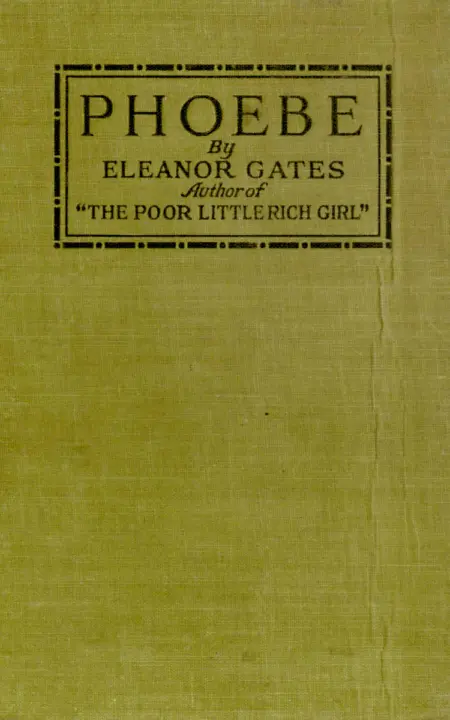
THE CLASSIC COLLECTION · 1919
"Phœbe" by Eleanor Gates is a novel written in the early 20th century. It follows the life of a young girl named Phœbe Blair, who is suddenly uprooted from her familiar life in New York to stay with her distant relatives in a smaller city. The story explores themes of innocence, family dynamics, and the impact of adult issues, as Phœbe navigates her new surroundings and grapples with the troubling changes in her mother's health and the implications of divorce. The opening of the novel presents a critical moment as Phœbe receives a telegram from her mother, instructing her to pack and leave for her grandmother's house. The reader is introduced to Phœbe's tender relationship with her father, who accompanies her on the train. As she embarks on this journey, Phœbe's reflections reveal her confusion and sense of loss, particularly regarding her mother's sudden departure and the ominous suggestion of a family tragedy. Upon arrival at her grandmother's house, Phœbe encounters a new and unfamiliar world, populated by relatives she barely knows, which deepens her sense of isolation and longing for her mother. The stage is set for a coming-of-age story that promises to delve into the complexities of family relationships and the fears of a young girl confronting adult realities.
Introduction adapted from the source catalogue; source summaries may be automatically generated.
Free to read · English · 49,326 words · No account needed
MAKE TIME FOR A GOOD BOOK
On by default. Untick to stop anonymous reading totals. Each page counts after 10 seconds in view. How this works.
Anonymous counting is on unless you have switched it off.
“I tell her, ‘Don’t you budge’,” cried Mrs. Botts. (Phœbe noted that there was an accent, slight, but enough to give what Phœbe thought was the perfect touch. This was no ordinary villain!)
“Phœbe,” said Uncle Bob, mildly, “how does Manila happen to be here?”
“Tell! Yes!” added Mrs. Botts, wrathfully. “I hear about this Phœbe. She is smart. She knows everything.”
Phœbe drew herself up. “Well, I know one thing,” she returned coolly.
“Ye-e-es! And what?” Mrs. Botts folded her arms and hung her weight on
one foot.
“I know that all step-mothers are cruel.”
Out leaped Mrs. Botts’s arms. She swept around upon the Judge. “You hear it?” she demanded. “You hear it? She is permitted to insult me!”
It was not to be denied that Mrs. Botts was doing her part to make the whole thing really dramatic. Phœbe had to give her credit for that.
“Phœbe?”—Uncle Bob was as mild as ever.
Phœbe wished that she might have had a different tale to tell. If only she had thought to gag Manila, and tie her hands! If only she could tell of, say, a kidnapping plot, of a great, black limousine, and Mexicans with knives! But——
“Well, Uncle Bob,” she began calmly, “I did go over and get her. Miss Ruth told us she was crying. Well, she wasn’t. She was cutting paper dolls. Anyhow, I stole her, and she’s cried a lot since. Uncle John says I’m too big for dolls, so I intend to adopt her.”
“Adopt her!” exploded Uncle Bob.
“Oh, just look at her!” implored Phœbe. “She’s had such bad luck!—a step-mother, and the awful name of Botts, and she’s red-haired, and freckled, and she’s got adenoids!”
Mrs. Botts sprang forward. “So-o-o!” she answered. “She is like that. But she can mind her own business. And she does not talk too much. She might be worse—as bad as you!”
“Phœbe,” said Uncle Bob. He crossed to her, anxiously Phœbe thought.
“You are a little thief!” Mrs. Botts stuck a fist close to Phœbe’s nose. “And I will have you arrested! The whole town knows about you. Miss Simpson, she——”
Uncle Bob put a hand over each of Phœbe’s ears then, shutting out that shrill voice. Once Phœbe heard “school,” and twice she heard “your mother.” Then Mrs. Botts flung herself away and out.
“What did she say, Uncle Bob?” asked Phœbe. “What did you cover my ears for? What did she say?”
Your reading position is saved on this browser. Take it to another device with a library code. Reading pages adapt to text, rather than matching a printed edition.
Eleanor Gates
Eleanor Gates
Eleanor Gates
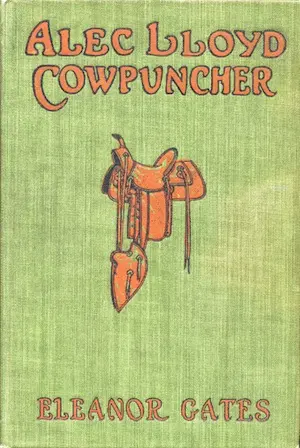
Eleanor Gates
BEHIND THE BOOK
This eBook is for the use of anyone anywhere in the United States and most other parts of the world at no cost and with almost no restrictions whatsoever. You may copy it, give it away or re-use it under the terms of the Project Gutenberg License included with this eBook or online at www.gutenberg.org. If you are not located in the United States, you will have to check the laws of the country where you are located before using this eBook. Read the source licence.
The original source file, including credits and licence, is retained by this library. Request an original-format copy at no charge. Please include the book title and Project Gutenberg identifier #63642.
KEEP YOUR CURIOSITY GOING
Coulson Kernahan

Maurice Baring
Frances Wright
Cécile Tormay

Frederic Jesup Stimson

W. H. P. (William Henry Pope) Jarvis