The justice of Gideon
Eleanor Gates
THE CLASSIC COLLECTION · 1919
"Phœbe" by Eleanor Gates is a novel written in the early 20th century. It follows the life of a young girl named Phœbe Blair, who is suddenly uprooted from her familiar life in New York to stay with her distant relatives in a smaller city. The story explores themes of innocence, family dynamics, and the impact of adult issues, as Phœbe navigates her new surroundings and grapples with the troubling changes in her mother's health and the implications of divorce. The opening of the novel presents a critical moment as Phœbe receives a telegram from her mother, instructing her to pack and leave for her grandmother's house. The reader is introduced to Phœbe's tender relationship with her father, who accompanies her on the train. As she embarks on this journey, Phœbe's reflections reveal her confusion and sense of loss, particularly regarding her mother's sudden departure and the ominous suggestion of a family tragedy. Upon arrival at her grandmother's house, Phœbe encounters a new and unfamiliar world, populated by relatives she barely knows, which deepens her sense of isolation and longing for her mother. The stage is set for a coming-of-age story that promises to delve into the complexities of family relationships and the fears of a young girl confronting adult realities.
Introduction adapted from the source catalogue; source summaries may be automatically generated.
Free to read · English · 49,326 words · No account needed
MAKE TIME FOR A GOOD BOOK
On by default. Untick to stop anonymous reading totals. Each page counts after 10 seconds in view. How this works.
Anonymous counting is on unless you have switched it off.
Manila saw her, and hoisted the window. “Hullo,” she greeted, with one eye on the work in her hands. “What’re you doin’ out there?”
“Manila Botts,” cried Phœbe, crossly, “I have come to save you!”
Manila, hanging upon the window-sill, thrust out her under lip rebelliously. “But I’m cutting paper dolls,” she protested.
“Manila Botts!” scolded Phœbe, with a stamp of her foot. “Uncle Bob means to take you away from your step-mother, and I’ve come to get you. Now, are you going to act like this?”
Patiently Manila dropped scissors and paper. Then she disposed herself sidewise, face down, upon the sill, let one leg drop over it leisurely, next, another, and slipped quietly to the ground. A moment later Phœbe drew her through a gap in the fence.
Manila seemed not only indifferent, but even reluctant, about being rescued. As for gratitude, there was not a trace of it. As the two made off together along the tradesmen’s dirt road that ran behind the row of houses, she pointed out now one thing, and now another, in a way that made Phœbe more irritated than ever.
“But haven’t you been locked up?” Phœbe wanted to know; “and in a room without a bed?”
“Aw, well,” returned Manila, philosophically, “you betcha I wouldn’t let Mrs. Botts know I cared.”
When the rear gate leading to the Blair house was reached, Manila began to hang back. “Wisht I didn’t come,” she declared.
“Wha-a-at?” Phœbe stopped short.
“I’m scairt,” confided Manila.
“Scared nothing!” Phœbe said stoutly, slamming the gate behind them. “You’re with us now.”
“Mrs. Botts told me, ‘Don’t you budge’.”
“You don’t have to mind her any more. After this you mind just me.”
“She won’t let me.”
“She can’t help herself. Because I’m going to adopt you. You’re going to be—let me see! I don’t know which, my sister or my daughter.”
Manila halted and pulled back. “Phœbe, she’ll come after me.”
“Don’t you worry. I’ve seen lots worse than her.”
“Worse’n her?” repeated Manila, incredulous.
“In the pictures. And I’ve noticed that the hero or the heroine always
comes out ahead.”
Manila allowed herself to be led across the rear lawn toward the Blair house, but she was not convinced. “This ain’t no movie,” she reminded.
“It’s better than a movie,” asserted Phœbe, “because it’s
honest-to-goodness true!”
Manila looked back over a shoulder. Her concern was growing fast. “But what if she seen us run away?”
Your reading position is saved on this browser. Take it to another device with a library code. Reading pages adapt to text, rather than matching a printed edition.
Eleanor Gates
Eleanor Gates
Eleanor Gates
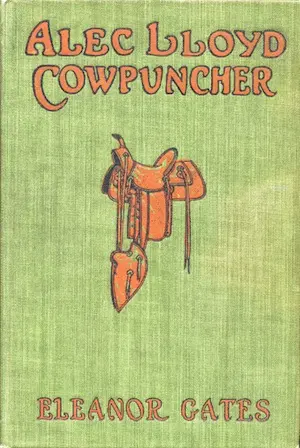
Eleanor Gates
BEHIND THE BOOK
This eBook is for the use of anyone anywhere in the United States and most other parts of the world at no cost and with almost no restrictions whatsoever. You may copy it, give it away or re-use it under the terms of the Project Gutenberg License included with this eBook or online at www.gutenberg.org. If you are not located in the United States, you will have to check the laws of the country where you are located before using this eBook. Read the source licence.
The original source file, including credits and licence, is retained by this library. Request an original-format copy at no charge. Please include the book title and Project Gutenberg identifier #63642.
KEEP YOUR CURIOSITY GOING
Coulson Kernahan

Maurice Baring
Frances Wright
Cécile Tormay

Frederic Jesup Stimson

W. H. P. (William Henry Pope) Jarvis