The justice of Gideon
Eleanor Gates
THE CLASSIC COLLECTION · 1919
"Phœbe" by Eleanor Gates is a novel written in the early 20th century. It follows the life of a young girl named Phœbe Blair, who is suddenly uprooted from her familiar life in New York to stay with her distant relatives in a smaller city. The story explores themes of innocence, family dynamics, and the impact of adult issues, as Phœbe navigates her new surroundings and grapples with the troubling changes in her mother's health and the implications of divorce. The opening of the novel presents a critical moment as Phœbe receives a telegram from her mother, instructing her to pack and leave for her grandmother's house. The reader is introduced to Phœbe's tender relationship with her father, who accompanies her on the train. As she embarks on this journey, Phœbe's reflections reveal her confusion and sense of loss, particularly regarding her mother's sudden departure and the ominous suggestion of a family tragedy. Upon arrival at her grandmother's house, Phœbe encounters a new and unfamiliar world, populated by relatives she barely knows, which deepens her sense of isolation and longing for her mother. The stage is set for a coming-of-age story that promises to delve into the complexities of family relationships and the fears of a young girl confronting adult realities.
Introduction adapted from the source catalogue; source summaries may be automatically generated.
Free to read · English · 49,326 words · No account needed
MAKE TIME FOR A GOOD BOOK
On by default. Untick to stop anonymous reading totals. Each page counts after 10 seconds in view. How this works.
Anonymous counting is on unless you have switched it off.
Phœbe looked back at the house, and lowered her voice confidentially. “Why did Uncle Bob say he wished Miss Ruth lived at our house?” she asked. “He said he’d been saying she ought to for years and years and years.”
At first Sophie did not answer. But when they reached the gate, past which Phœbe was not to go, Sophie put it between them, then turned to lean upon it.
“If I tell you, you’ll tell,” she charged.
“Cross my heart to die!” vowed Phœbe.
“Well, y’ see, the fact is the Judge just worships Miss Ruth.”
“O-o-oh.”
“Yes, he’s in love with her.—Now, don’t you dare say I told you, because I’d lose my job.—But he’s been in love with her since before you was born.”
“I don’t blame him,” declared Phœbe. “She’s dear, and she’s pretty. And I love her.”
A strange look came into Sophie’s eyes—a searching look. “Say! You let everybody see you love her, will y’?” she asked.
“Of course! Because I do.”
“You show your grammaw how y’ feel, and your uncles, and also your
papa.”
“I will.”
“Because Miss Ruth is good,” Sophie went on. She was oddly grave, for some reason. “Don’t forget that, Phœbe. She’s the nicest woman in this town. But—she’s never been happy.” Sophie sighed. “Things’ve never gone right for Miss Ruth, some way.”
“And she doesn’t love Uncle Bob?” persisted Phœbe.
Sophie drew back. “You know all you oughta know about it,” she said, laughing. “Now run home, dearie, to Grammaw.”
“Uncle Bob isn’t handsome,” conceded Phœbe. “He’s too short, and he’s bald, and a little old, too——”
“Miss Ruth ain’t a girl no more,” reminded Sophie. “She looks awful young. But she was nineteen the year your daddy got married, and so she must be about thirty-three or so.”
“My!” marveled Phœbe. “I thought she was twenty-five, maybe.”
“Bein’ a probation officer don’t take it out of you like housework,”
reminded Sophie.
“But she doesn’t hate Uncle Bob, does she?” went on Phœbe.
“Naw! Don’t they see each other every day at the Court House?”
“But she doesn’t come here any more. Why?”
Far down the street a man could be seen, slowly approaching. “Well, I’ve got to be trottin’,” said Sophie, fixing her hair and giving a touch to hat and dress.
“If Uncle Bob likes her, and I like her, and you like her,” argued Phœbe, “why doesn’t she come?”
Your reading position is saved on this browser. Take it to another device with a library code. Reading pages adapt to text, rather than matching a printed edition.
Eleanor Gates
Eleanor Gates
Eleanor Gates
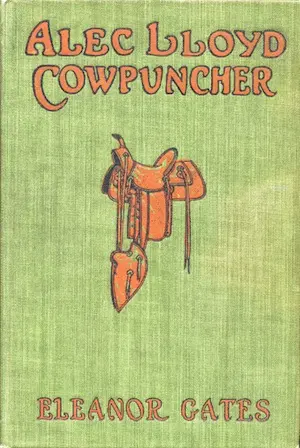
Eleanor Gates
BEHIND THE BOOK
This eBook is for the use of anyone anywhere in the United States and most other parts of the world at no cost and with almost no restrictions whatsoever. You may copy it, give it away or re-use it under the terms of the Project Gutenberg License included with this eBook or online at www.gutenberg.org. If you are not located in the United States, you will have to check the laws of the country where you are located before using this eBook. Read the source licence.
The original source file, including credits and licence, is retained by this library. Request an original-format copy at no charge. Please include the book title and Project Gutenberg identifier #63642.
KEEP YOUR CURIOSITY GOING
Coulson Kernahan

Maurice Baring
Frances Wright
Cécile Tormay

Frederic Jesup Stimson

W. H. P. (William Henry Pope) Jarvis