The justice of Gideon
Eleanor Gates
THE CLASSIC COLLECTION · 1919
"Phœbe" by Eleanor Gates is a novel written in the early 20th century. It follows the life of a young girl named Phœbe Blair, who is suddenly uprooted from her familiar life in New York to stay with her distant relatives in a smaller city. The story explores themes of innocence, family dynamics, and the impact of adult issues, as Phœbe navigates her new surroundings and grapples with the troubling changes in her mother's health and the implications of divorce. The opening of the novel presents a critical moment as Phœbe receives a telegram from her mother, instructing her to pack and leave for her grandmother's house. The reader is introduced to Phœbe's tender relationship with her father, who accompanies her on the train. As she embarks on this journey, Phœbe's reflections reveal her confusion and sense of loss, particularly regarding her mother's sudden departure and the ominous suggestion of a family tragedy. Upon arrival at her grandmother's house, Phœbe encounters a new and unfamiliar world, populated by relatives she barely knows, which deepens her sense of isolation and longing for her mother. The stage is set for a coming-of-age story that promises to delve into the complexities of family relationships and the fears of a young girl confronting adult realities.
Introduction adapted from the source catalogue; source summaries may be automatically generated.
Free to read · English · 49,326 words · No account needed
MAKE TIME FOR A GOOD BOOK
On by default. Untick to stop anonymous reading totals. Each page counts after 10 seconds in view. How this works.
Anonymous counting is on unless you have switched it off.
But the other seemed tongue-tied. Her mouth was open, but not a word came forth. She fidgeted, and a blush suffused her many freckles, clothing them from sight.
“Now, what do you want?” encouraged Phœbe again. “Please. Just say it
right out.”
“Th’ Judge,”—with not a movement of the lips.
Phœbe stared. She understood. Uncle Bob, reigning over the local Juvenile Court, looked after children exclusively. Here, helpless, homely, and pathetic, was one of his charges. “Have you been a bad child?” she asked sorrowfully.
“Naw.”
“Then what—what have you been?”
“L-l-licked!”
“Oh!” Phœbe went to her, taking one of the red hands, and drew her to a chair. “You poor little girl! Here! Sit down. Now tell me. Who licked you?”
The pale eyes became suddenly alive with fear. The drooping mouth tightened, and trembled. “Step-mother!”
“Oh!” cried Phœbe again. “You—so you’ve got a step!”
“Uh-huh.”
Phœbe sat down and regarded her visitor, marveling at her. A step-mother—a cruel step-mother who beat and tortured, exactly like the step-mothers in the movies! “Then you’re Manila Botts,” she declared.
“Yop.”
Somehow, Phœbe, hearing the name from Miss Ruth, had thought of Manila Botts as some one tall and plump—quite a grown person. And here—! “Tell me about your step-mother,” she bade.
“She’s a woman,” ventured Manila, helplessly.
“Well?”
“And she’s married to my father—but she don’t like him.”
“I know.” Phœbe nodded sadly. “They sit at the table, and don’t speak, and don’t kiss each other good-night.”
“But she spends all Paw’s money,” went on Manila. “And she hits me. Look!” She drew up a loose sleeve. There on the thin arm was a dark welt.
Phœbe gasped.
Manila, pleased with the effect she had produced, warmed to further details. “She hits me with a piece of harness. It’s half of a tug. And once she hurt me so bad that I went to Court.”
“But doesn’t your daddy help you?” demanded Phœbe.
“Nope. Just boozes.” She lowered the sleeve resignedly.
Phœbe gave a quick look around. Then, “It’s almost like a picture I once saw:” she said; “Her Terrible Sin. There was a woman in it who got whipped by a man who was tipsy.”
“Gosh!” breathed Manila. “And what’ll you do if you get a step?”
Phœbe sat back. “Me?” she demanded, and swallowed.
Manila nodded.
Phœbe said nothing. She felt her heart swelling; her ears sang. She wanted to take hold of Manila and pound at her with a fist. She hated her! She hated——!
Your reading position is saved on this browser. Take it to another device with a library code. Reading pages adapt to text, rather than matching a printed edition.
Eleanor Gates
Eleanor Gates
Eleanor Gates
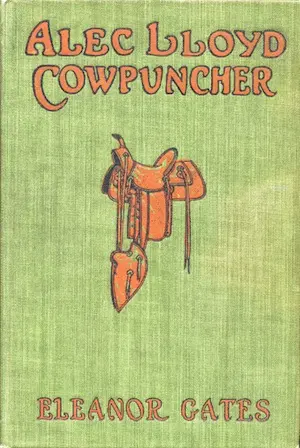
Eleanor Gates
BEHIND THE BOOK
This eBook is for the use of anyone anywhere in the United States and most other parts of the world at no cost and with almost no restrictions whatsoever. You may copy it, give it away or re-use it under the terms of the Project Gutenberg License included with this eBook or online at www.gutenberg.org. If you are not located in the United States, you will have to check the laws of the country where you are located before using this eBook. Read the source licence.
The original source file, including credits and licence, is retained by this library. Request an original-format copy at no charge. Please include the book title and Project Gutenberg identifier #63642.
KEEP YOUR CURIOSITY GOING
Coulson Kernahan

Maurice Baring
Frances Wright
Cécile Tormay

Frederic Jesup Stimson

W. H. P. (William Henry Pope) Jarvis